SEO-AI-Search-traffic

What Happens When AI Search Reduces Clicks and Traffic to Websites?

How Should  SEOs Prepare Clients for the New Search Reality?

For over 20 years, SEO relied on search engines functioning as referral engines.  Users typed in a query, search engines presented a ranked list of blue links, and websites competed to earn clicks. Visibility equaled traffic, and traffic powered conversions, brand growth, and revenue.

But AI-driven search experiences — from Google’s AI Overviews to platforms like Perplexity, ChatGPT, and even Bing Copilot — are fundamentally shifting this model. Increasingly, users don’t need to click through to websites to get answers. Instead, the answer is generated on the search platform itself.

For SEOs, this raises the most pressing question clients will (and already do) ask:

“What happens to our website if AI search starts sending less traffic?”

Let’s explore :

  • The implications of reduced organic traffic
  • The challenges and opportunities this creates for businesses,
  • Actionable strategies SEOs can use to guide clients through this historic transition.

The Shift: From Referral Engines to Answer Engines

Since the advent of online search, the search engines have always been gateways to information. Their success depended on how well they directed users to external websites. CTR (click thru rate) has been the measure of relevance.

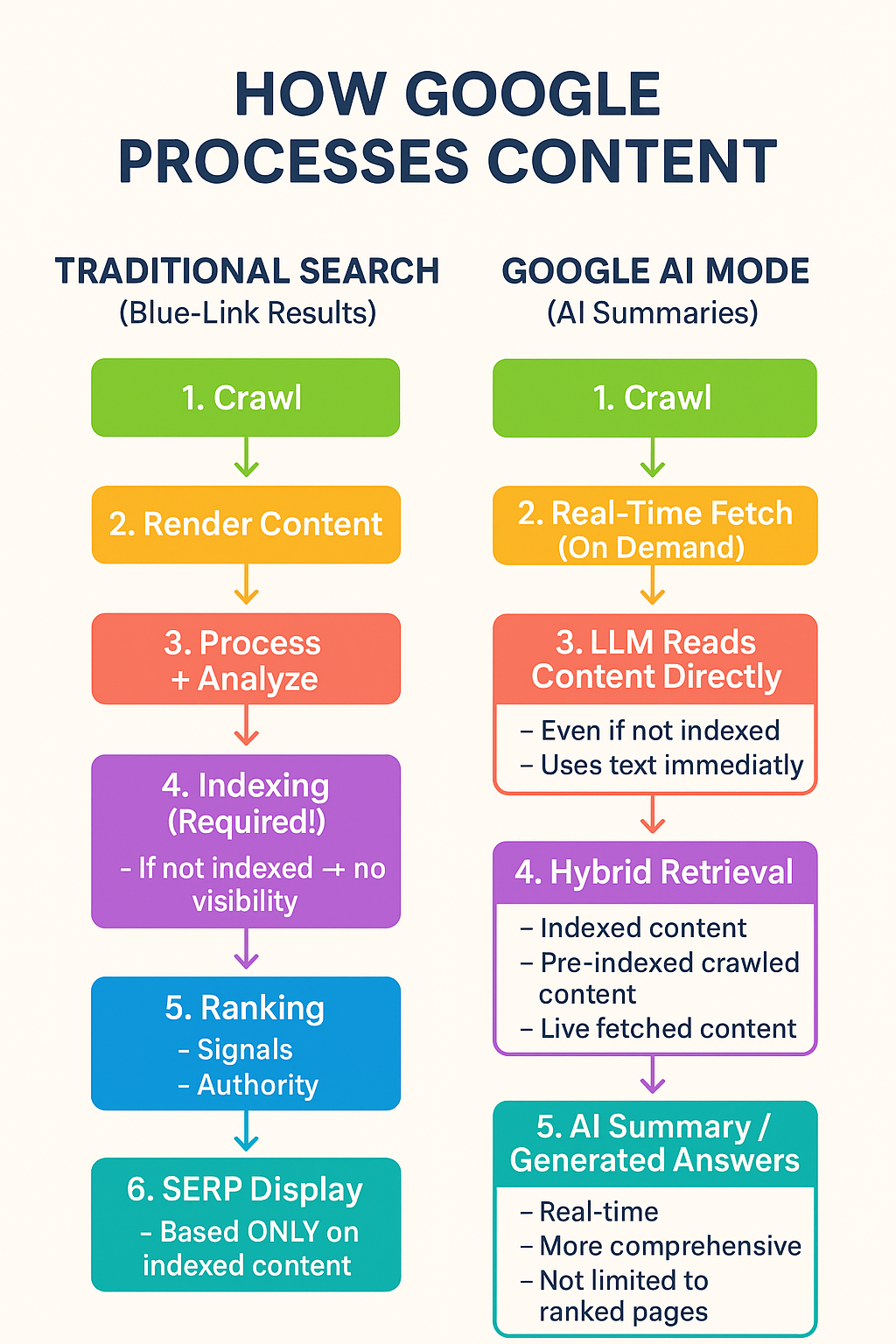
AI search, however, is different. It acts as an answer engine: synthesizing information from multiple sources, generating a direct response, and reducing the need for users to leave the platform.

This shift has several consequences:

  1. Decline in overall organic traffic. Websites that relied on informational queries will see drops as AI answers satisfy user intent directly.
  2. Changes in click quality. Users who do click are those seeking more depth, nuance, or validation — higher-intent visitors.
  3. Loss of visibility for non-authoritative sites. AI platforms are biased toward citing authoritative, trusted sources, which reshapes competition.

Who Gets Hit the Hardest?

Not all websites will be affected equally. Understanding which categories are most vulnerable helps SEOs set realistic expectations with clients.

  1. Publishers and Ad-Driven Sites

News sites, niche publishers, recipe blogs, and how-to sites often rely on high-volume, top-of-funnel traffic. AI-generated summaries can replace much of that quick-hit informational content.

Example: Instead of clicking on a recipe website, a user might get the ingredients and method directly from an AI overview.

  1. Affiliate Content Websites

Comparison blogs, product reviews, and “best of” lists risk being bypassed if AI presents consolidated shopping recommendations.

  1. Local Businesses with Weak Branding

Local intent searches (e.g., “best dentist near me”) may increasingly be answered directly via AI summaries powered by Google Maps, Yelp, or first-party data — squeezing out smaller businesses without strong visibility or reviews.

  1. E-commerce Stores

While AI won’t eliminate shopping clicks, it can shift visibility to platforms like Amazon, Google Shopping, and major brands, reducing long-tail organic discovery.

Who Might Benefit?

It’s not all bad news. Some sites can thrive in an AI-first world:

  1. Strong Brands with Authority Signals
    Websites recognized as trustworthy (e.g., government agencies, universities, thought leaders, industry associations) are more likely to be cited.
  2. Niche Experts with Depth
    AI often needs to reference reliable niche content. Highly specialized websites with unique expertise may gain visibility even if overall clicks decline.
  3. Content That Can’t Be Summarized
    Interactive tools, calculators, proprietary data, or community-driven platforms provide value AI can’t replicate in a single overview.
  4. Transactional Pages
    Users ready to buy still need to click. AI can inform, but transactions require websites — keeping opportunities alive for e-commerce and lead-gen.

The Client Conversation: What SEOs Must Prepare For

Experienced SEOs are already facing tough conversations with clients who see traffic decline and demand answers. Here are some core talking points to help frame the situation:

  1. Traffic ≠ Business Value

The volume of traffic may drop, but quality may rise. Clients should measure success by leads, sales, and brand mentions — not just raw sessions.

  1. AI Isn’t the End of SEO, It’s the Evolution

SEO isn’t dying; it’s shifting. Just as we adapted to mobile-first indexing, featured snippets, and zero-click searches, SEOs now must adapt to AI-first experiences.

  1. Visibility Still Matters

Even if users don’t click, being cited in AI answers builds authority, awareness, and trust. Think of it like brand advertising: presence in AI search is itself valuable.

  1. Diversification Is No Longer Optional

Over-reliance on organic search has always been risky. With AI reducing referral volume, SEOs must help clients diversify via:

  • Direct audience-building (email, social, communities)
  • Paid visibility (search, social, display)
  • Owned channels (apps, podcasts, newsletters)

Strategic SEO Adaptations for the AI Era

Here’s where SEOs can get practical and proactive:

 1. Optimize for AI Visibility (Not Just SERPs)

  • Ensure content is authoritative, well-structured, and clear enough to be ingested by LLMs.
  • Use schema markup and structured data so AI systems can understand and attribute your content correctly.
  • Publish expert-led content that signals EEAT (Experience, Expertise, Authoritativeness, Trustworthiness).

 2. Double Down on Content Depth and Differentiation

Thin, generic articles won’t cut it. Instead:

  • Produce in-depth guides, original research, and insights that AI can’t easily summarize.
  • Develop interactive elements (calculators, assessments, tools) to create “un-summarizable” value.

 3. Treat Brand as the New SEO Moat

In a world where AI chooses what to cite, brand authority is everything. Invest in:

  • PR and thought leadership campaigns
  • Partnerships and co-marketing
  • Social proof (reviews, testimonials, citations)

 4. Invest in Multi-Channel Presence

  • Grow email newsletters to own direct relationships.
  • Build communities on LinkedIn, Slack, Discord, or industry forums.
  • Leverage YouTube and podcasts for visibility beyond text-based search.

 5. Re-Engineer Measurement Frameworks

Instead of obsessing over organic clicks alone, measure:

  • AI visibility and citations
  • Engagement rates on traffic that does arrive
  • Assisted conversions from branded searches or multi-touch journeys
  • Customer lifetime value (CLV) of higher-intent visitors

Preparing for an AI-First SEO World: Scenario Planning

Clients will want clarity on “what’s next.” SEOs should prepare with scenario planning:

  • Scenario 1: Mild Impact
    AI reduces low-value informational clicks, but transactional and branded searches remain stable. Businesses adapt without major disruption.
  • Scenario 2: Significant Impact
    Traffic drops across broad query types. Brands must invest heavily in building direct audiences and diversifying marketing.
  • Scenario 3: Transformational Impact
    AI search becomes the default interface for discovery. Websites survive by becoming trusted data sources and strong brands.

Having these scenarios mapped out helps SEOs provide proactive recommendations instead of reactive excuses.

SEO in the Age of AI Search: Client FAQs

  1. If clicks are going down because of AI search, why should we still invest in SEO?

Even if clicks decline, SEO ensures your brand is visible, credible, and trusted in AI results. Being cited in AI overviews builds awareness and drives direct traffic and conversions.

  1. Can we measure how much traffic AI search is taking away?

Tracking is limited today but improving. We use Google Search Console, analytics, and new AI-monitoring tools to measure changes in impressions, clicks, and brand mentions — giving us a picture of visibility beyond just traffic.

  1. If people get answers from AI, who will come to our website?

The users who still click are the most valuable ones — they need more details or are ready to act (buy, sign up, contact). That means fewer clicks, but better conversion potential.

  1. How do we make sure our content gets picked up in AI answers?

We optimize content to be:

  • Concise and fact-rich
  • Structured in Q&A style
  • Supported with schema markup
  • Regularly updated and authoritative

This makes it more likely AI platforms select your site as a trusted source.

  1. What if AI gets the answer wrong about our brand or product?

We actively monitor AI results for accuracy. By publishing clear, authoritative, and consistent brand content, we reduce misinterpretations and guide AI models to cite us correctly.

  1. How do we maintain growth if organic search sends fewer visitors?

We diversify growth strategies:

  • Strengthen direct channels (email, communities, newsletters)
  • Expand visibility on LinkedIn, YouTube, and social media
  • Explore AI-first platforms like Perplexity and ChatGPT integrations
  • Focus on quality traffic that converts, not just volume
  1. Is SEO becoming irrelevant with AI search?

No — SEO is evolving. Just like we adapted from desktop to mobile and from keywords to intent, we now adapt to AI search. The goal remains the same: help your business get found, trusted, and chosen.

Bottom Line:
AI search changes the landscape, but SEO remains the foundation for visibility, credibility, and conversions. The strategy shifts — the value doesn’t.

The Future Role of SEOs

In this AI-first era, SEOs are no longer just traffic optimizers. They must evolve into:

  • Content Strategists: Ensuring content is valuable enough to be cited.
  • Brand Builders: Elevating trust and authority signals.
  • Data Interpreters: Shifting KPIs from traffic to visibility, conversions, and brand equity.
  • Advisors: Guiding clients through technological, behavioral, and strategic shifts.

Point To Ponder

The rise of AI search doesn’t mean the end of SEO, but it does mean the end of SEO as we knew it. Websites may see less traffic, but the clicks that remain will be more meaningful. For SEOs, this is both a challenge and an opportunity.

We must help clients reframe success, diversify visibility, and build authority that ensures their brands aren’t just visible in SERPs — they’re cited, trusted, and remembered in AI-driven search.

The future of SEO is not about chasing traffic; it’s about earning trust in an AI-mediated world of discovery.

✅ As SEOs, our role isn’t shrinking. It’s expanding. The brands that recognize this shift and prepare now will be the ones who thrive in the next era of search.


SEO-AEO

If Your SEO Is Done Right, You Need Not Worry About AEO (AI Search)

The search industry has a new buzzword every few years. Today, everyone is talking about AEO – AI Engine Optimization or Answer Engine Optimization – GEO Generative Engine Optimization.

👉 “While I generally avoid using acronyms like AEO or GEO, I’ve included them here only to draw a clear distinction and reinforce the point made in the title.”

The rise of AI mode of Google Search, Bing Copilot, Perplexity, and ChatGPT with browsing has made marketers ask: Do we need to optimize differently for AI-driven search results?

The short, simple and straight forward answer is: Not really—if your SEO fundamentals are strong. Let’s delve deep and understand - why genuine SEO still wins in the age of AI.

For years, SEO professionals have been building websites that are crawlable, understandable, and trustworthy. We’ve focused on structured data, authoritative content, internal linking, and credibility signals. Ironically, these are the exact foundations that AI search systems also rely on when they extract and summarize answers.

I would like to clarify here why traditional SEO done right already positions you well for AI search, what small nuances might matter in the AI era, and provides a practical checklist to guide clients.

Why Traditional SEO Covers the Ground for AI Search

  1. AI Search Still Feeds on the Open Web

Large Language Models (LLMs) don’t invent authority out of thin air. They consume, summarize, and reference web content. If your site already ranks well because of strong SEO, it is in the right place to be surfaced by AI summaries.

  1. Structured Data Is Your Best Friend

Schema markup, FAQs, How To, Product Pages, and review schema provide clarity to search engines. This same structured information also makes it easier for AI to extract clean, contextual snippets. If you’ve been disciplined about structured data, you’ve already optimized for AEO without realizing it.

  1. E-E-A-T Matters More Than Ever

Expertise, Experience, Authoritativeness, and Trustworthiness have always been SEO cornerstones. In the AI era, these signals help LLMs choose which sites to trust when citing answers. About Us pages, author bios, team LinkedIn references, and external mentions are vital trust markers.

  1. Depth and Clarity Win

Thin content rarely survives in classic SEO, and it won’t work in AI search either. In-depth, well-structured, and clearly segmented content gives AI systems something they can confidently summarize and cite.

  1. Internal and External Linking Are Context Builders

AI models rely on context. Your internal links show relationships between topics. External authoritative links signal reliability. Both help AIs understand where your content fits into the broader knowledge graph.

How AI Search Differs Slightly

While the fundamentals overlap, there are subtle differences worth noting:

  1. Conversational Queries
    AI search often comes from multi-turn, natural language questions. Pages that directly answer questions in a conversational tone stand out.
  2. Content Granularity
    AI search loves snippets. Breaking content into digestible sections with clear subheadings, FAQs, and summaries increases the chance of being cited.
  3. Attribution Isn’t Guaranteed
    Unlike traditional blue links, AI results may summarize your work without a click. This means measuring “traffic impact” is trickier, but brand visibility and trust still benefit.
  4. Answer Formatting
    Content formatted with bullet points, numbered steps, and direct answers works well because it aligns with how AIs generate answers.
  5. Emerging Schema & Entity Use
    As AI search evolves, we may see schema evolve too. Early adopters of newer schema types may gain an edge.

The Checklist: Traditional SEO vs AI Search SEO

Area Traditional SEO AI Search SEO
Content Depth Long-form, authoritative articles covering intent Still long-form, but broken into bite-sized, clear sections for AI extraction
Structured Data FAQ, Review, Product, HowTo schema Same, but emphasis on Q&A and snippet-friendly markup
E-E-A-T Author bios, About Us, external credibility Same, but extra emphasis on transparency (LinkedIn, expertise signals)
Tone Informational, keyword-optimized Conversational, natural language, answers specific questions
Internal Linking Topic clusters, logical linking Same, but ensure every subtopic is easily discoverable
External Linking To authoritative references Same, AI trusts pages that reference credible sources
User Intent Match keywords and search intent Match natural questions and conversational prompts
Visibility Rankings and click-through Snippet extraction, mentions, citations
Traffic Measurement Sessions, clicks from SERPs Mentions, citations, impressions—even when clicks are fewer

What About Zero-Click AI Search?

The rise of AI-driven search has sparked a legitimate concern: if users get answers directly from AI, won’t clicks decline? And if clicks decline, does that mean businesses should reduce their SEO investment?

The short answer is again No.

  1. AI Still Needs Your Website

AI engines rely on web content for training and answers. If your site isn’t maintained, it won’t be included in AI summaries or citations.

  1. Visibility > Clicks

Being cited or mentioned in an AI-generated response builds trust and brand authority—even if fewer clicks come through. Awareness is still valuable.

  1. Trust and Freshness Win

AI favors updated, authoritative, and transparent sources. Cutting SEO budgets risks making your site stale, decreasing your chances of being referenced.

  1. SEO Extends Beyond Search

Optimized content supports PR, social, newsletters, knowledge bases, and voice assistants. SEO is the foundation of your digital presence, not just Google rankings.

  1. Quality Over Quantity

While casual “quick answer” traffic may decline, those who click are more qualified buyers, leading to higher conversions.

  1. Cutting Budgets Is Short-Sighted

Think of SEO like hygiene for your website. An unoptimized, outdated site hurts credibility across all channels, not just search.

Key Takeaways for website owners

  1. AEO is not separate from SEO. It’s the natural evolution of good SEO practices. By implementing ethical and comprehensive SEO practices, you are effectively preparing your strategy for the evolving landscape of AI-driven search.
  2. Don’t chase shortcuts. Just as “keyword stuffing” failed in SEO, gimmicky tactics won’t work for AEO. Focus on user-first, authoritative content.
  3. Stay snippet-ready.  While in-depth content is necessary, ensure every article has sections that answer questions directly.
  4. Double down on trust signals. Human authorship, organizational transparency, and verified credibility matter more than ever.
  5. Measure differently. Traffic may decline, but citations and brand mention in AI responses are signs of authority. Clients must see visibility as broader than just clicks.
  6. Don’t cut SEO budgets. AI search may change traffic patterns, but SEO remains the foundation for visibility, authority, and credibility.

Points To Ponder On…

The panic around AEO is understandable—AI search is changing how information is consumed. But the reality is, sites with strong SEO fundamentals have little to fear.

AI engines don’t replace the need for structured, authoritative, trustworthy websites; they reinforce it. If you are already doing SEO right—with schema, depth, E-E-A-T, and clean linking—you’re also optimizing for AI-driven search.

So, the message for clients is clear: stick to ethical SEO best practices. Don’t fall for the hype of a new acronym. AEO is simply SEO, rebranded for the AI age.

And when it comes to zero-click AI search: don’t cut back, double down. The brands that maintain a strong, trustworthy web presence will be the ones AI continues to cite, recommend, and elevate.

Author’s Note: This perspective comes from over two decades in SEO, watching the industry evolve from directories to search engines to AI. The fundamentals remain the same: serve the user, provide clarity, and build trust.


From Keywords to Prompts: The Communication Shift Shaping the Future of Search

In the early 2000s, we learned to “Google it.” Knowing how to search effectively using the right keywords became an essential digital skill. Today, we’re witnessing the next evolution in digital communication: learning how to “prompt” an AI.

Welcome to the age of Prompt Engineering—a skillset that’s rapidly emerging as the cornerstone of effective interaction with AI systems. Much like search literacy revolutionized how we access information, prompt literacy is reshaping how we communicate, create, and make decisions in a world increasingly shaped by artificial intelligence.

But Prompt Engineering is more than just a tool for productivity—it’s a sustainability skill, a cognitive discipline, and a new mode of digital etiquette. In a time when each interaction with AI involves energy consumption (server loads, GPU cycles, data center water use), crafting precise, accurate prompts not only leads to better outputs but also minimizes the invisible cost behind the scenes.

From Search Queries to AI Prompts

For decades, we optimized our language for search engines. SEO professionals mastered keyword strategy, semantic relevance, and search intent. But interacting with generative AI tools like ChatGPT, Claude, Gemini, and Perplexity requires a different kind of language finesse.

Instead of stringing together two or three keywords, AI tools expect you to ask questions or give instructions in natural language. The more context and clarity you provide, the better the response. This shift from search query to AI prompt is not just technological—it's behavioral, even cultural.

A prompt is not just a question. It is a direction. It sets context, defines the tone, scope, and intent of what you're trying to accomplish—whether that’s generating marketing copy, summarizing a legal document, writing code, or brainstorming product ideas.

Why Prompt Engineering Matters Now

There are three core reasons why Prompt Engineering is becoming a critical skill:

  1. Efficiency in Output
    Large Language Models (LLMs) are trained on vast corpora of human knowledge, but they don’t "know" what you want unless you guide them effectively. A vague prompt wastes time—yours and the model’s—and often leads to irrelevant, verbose, or incorrect answers.
  2. Resource Optimization
    Every AI interaction consumes energy. Data centers powering LLMs rely on electricity and, often, water for cooling. Poor prompts that require multiple corrections or reiterations multiply the energy footprint. In contrast, clear, concise prompts reduce resource usage.
  3. Digital Communication Skills
    Prompting well is a new form of cognitive empathy—how we communicate with non-human agents to get human-relevant results.

The Shift from Keywords to Conversations

  1. Goodbye Keywords, Hello Prompts!

Before AI:
People used short, keyword-based queries like “best restaurants NYC.”

Now with AI:
Users ask conversational, full-sentence questions or even give instructions:

“Find me highly rated vegetarian restaurants open past 10pm near Central Park.”

With AI tools like ChatGPT, Perplexity, and Google AI Overviews, users converse instead of search.

  1. Expectations of Instant, Curated Answers

Traditional Search:
Users scanned through multiple links and evaluated them manually.

AI-Driven Search:
People expect direct, summarized, personalized answers with sources—like talking to a knowledgeable assistant.

Example:
Instead of Googling and checking several sites for “best time to visit Japan,” users now ask AI and get a consolidated answer instantly.

  1. Multi-Search & Contextual Discovery

Tools like Google Lens, Voice Assistants, and AI-integrated browsers support visual, voice, and contextual search.

Users can:

  • Take a photo and ask: “Where can I buy this?”
  • Say: “What’s this plant called?”
  • Highlight text and ask follow-up questions instantly.
  1. AI as a Research Companion

With tools like ChatGPT Pro (web + code + data + images), people now:

  • Refine queries iteratively (like in a conversation)
  • Use AI to brainstorm, compare, summarize, generate ideas, or analyze content—blurring the line between “searching” and “working.”
  1. Personalized, Predictive Search

 AI learns user behavior and preferences:

  • Search is becoming proactive—AI assistants suggest content or actions before the user even asks.
  • For example, Google Discover or Gemini might surface content you didn’t search for but are likely to find relevant.
  1. The Rise of Prompt Engineering

The better you frame a prompt, the more accurate and useful the AI-generated output.

Users are learning:

  • How to ask smarter questions
  • How to layer prompts to narrow down or refine output
  • How to specify tone, audience, depth, etc.
  • Searching is evolving into prompt crafting.
  1. Shift from Searching to Delegating

AI tools can:

  • Book appointments
  • Draft emails
  • Create itineraries
  • Summarize legal contracts
This shifts the behavior from finding information to getting tasks done.
  1. Decreasing Reliance on Traditional Search Engines

People increasingly:

  • Start their journey on AI tools (ChatGPT, Perplexity, Claude) instead of Google.
  • Use YouTube, Reddit, TikTok, or niche apps for community-verified answers. Search is decentralizing.

What Makes a Good Prompt?

Just like good SEO copywriting has its rules, good prompting follows best practices:

  1. Be Specific
    Instead of: “Write an article about SEO.”
    Try: “Write a 500-word blog post in a conversational tone explaining the difference between technical SEO and on-page SEO.”
  2. Provide Context
    Instead of:
    “Summarize this.”
    Try: “Summarize this article in 3 bullet points for a LinkedIn post.”
  3. Define Output Format
    Instead of: “Give me some blog ideas.”
    Try: “Suggest 10 blog titles under 60 characters with a power word.”
  4. Set Role or Perspective
    Instead of:
    “Explain AI.”
    Try: “You are a high school teacher. Explain AI with metaphors.”
  5. Iterate and Chain Prompts
    Prompting is interactive—just like a conversation.

Prompt Engineering: A Growing Profession

Courses, certifications, and job roles for Prompt Engineers are becoming mainstream. Titles include:

- AI Prompt Strategist
- Generative Content Engineer
- Prompt Developer

Platforms now offer structured courses for specific use cases. Startups and agencies are hiring dedicated Prompt Engineers to reduce hallucinations and fine-tune AI tools.

This isn’t just a trend. It’s a professional competency.

Implications for SEO and Digital Marketing

Search professionals are seeing the ripple effects of AI-driven search. With tools like Google’s AI Overviews and Perplexity’s answer-first approach, traditional search behavior is evolving.

Prompt Engineering enables marketers to:
- Generate structured content
- Craft personalized responses
- Train teams on AI tools

Prompts are becoming the new queries. Soon we may track prompt performance the way we do CTRs and bounce rates.

Toward a More Ethical and Sustainable AI Future

AI isn’t going anywhere. But how we use it matters.

By learning how to write good prompts, we:
- Reduce digital waste
- Increase productivity
- Improve accessibility
- Encourage responsible AI use

Prompt literacy contributes to a sustainable AI future.

Prompting as a Life Skill

Prompt Engineering isn’t just for marketers or developers. It’s becoming a life skill.

In the coming years, the ability to interact intelligently with AI will determine who creates, who leads, and who saves time.

Whether you’re a student, CMO, creator, or nonprofit leader, prompt literacy is your passport to the future of work and digital engagement.

As the digital landscape transitions from traditional search engines to AI-powered engines, prompt engineering is rapidly emerging as the essential communication skill for the future—not only to obtain more accurate and relevant responses, but also to engage with technology in a more energy-conscious and resource-efficient way.

Each interaction with an AI model taps into powerful data centers, drawing on significant amounts of electricity and water to process and deliver answers. Poorly crafted prompts that lead to vague, incomplete, or repeated queries increase this environmental footprint unnecessarily. In contrast, well-constructed prompts streamline the exchange—minimizing computational waste, reducing server loads, and conserving the infrastructure resources that power AI systems.

Prompt engineering, then, is more than a productivity tool—it’s a sustainability practice. It blends the precision of science with the nuance of human expression, allowing us to interface responsibly with increasingly intelligent systems.

We’ve mastered keyword research—now it’s time to master prompt engineering, the skill that powers meaningful conversations with AI. From keywords to prompts—search is changing, and so must we.  This emerging skill is no longer optional—it’s essential for a digital world striving to be smarter and greener.


From Ask Jeeves to AI Search: Have We Come Full Circle?

A Shout-Out to the SEOs Who Remember Ask Jeeves

Before Google ruled the web and algorithms got smarter than most of us cared to admit, back in 1996 there was Ask Jeeves—a charming digital butler who invited us to “just ask” our questions. It was the dawn of a new digital age, and Ask Jeeves was among the first to imagine a search engine that spoke your language—not just through keywords, but through real, natural questions.

This post begins with a shout-out to all the SEOs who’ve been around long enough to have optimized content for Ask Jeeves. You know who you are—the ones who remember when natural language queries felt like a novelty, not the norm. For you, the current rise of AI-powered search isn’t just an evolution; it’s a déjà vu moment. We’ve come full circle, back to the idea that search should feel like a conversation. Only now, the technology has finally caught up with the vision. This post is for you—the veterans of the SERPs who’ve watched search transform from keywords to context, from ten blue links to tailored answers, and now, to AI-generated conversations.

Fast forward to 2025, and natural language is not just a novelty—it’s the default. With AI engines like ChatGPT, Perplexity, Google Gemini, and Claude shaping how we search, we’ve entered a new phase where interaction mimics human conversation. In a surprising twist, this futuristic era of artificial intelligence is echoing the same ambitions that Ask Jeeves once championed.

So, are we going back to the Ask Jeeves era? Not exactly—but the spirit of Ask Jeeves is very much alive, now supercharged by the power of LLMs (Large Language Models), machine learning, and generative AI.

Let’s take a deeper look at how the two eras compare—what’s similar, what’s fundamentally different, and what it all means for the future of search.

The Origin Story: Ask Jeeves and the Dream of Natural Language

When Ask Jeeves launched in 1996, most search engines relied on keyword matching. Users had to learn the logic of Boolean operators or try combinations of keywords until they got usable results. Ask Jeeves offered something different—an interface that allowed users to ask full questions, just like they would ask a librarian or a friend.

Example:
Instead of typing:
"weather Paris July,"
You could ask: “What’s the weather like in Paris in July?”

The engine would then interpret the query and attempt to return relevant web pages. It also introduced early features like suggested answers, curated Q&A, and guided refinement of queries.

Ask Jeeves was friendly, approachable, and way ahead of its time. But it had limitations:

- It could only parse simple natural language patterns.
- Its backend search results often relied on other engines.
- It couldn't "understand" or generate information—it could only fetch it.

Eventually, Ask Jeeves dropped the butler in 2006 and rebranded as Ask.com. Google had become too powerful, and Jeeves, the friendly search valet, faded from the spotlight.

Fast Forward: The Age of AI Search

Today’s AI search engines are not just assistants—they’re co-thinkers. With models like GPT-4, Claude, and Gemini, search has evolved from lookup to conversation.

Instead of typing keywords or questions into a static search bar, users now:

- Ask complex, multi-part questions.
- Expect summarized answers, not just links.
- Refine their query in real time through follow-up prompts.
- Use search engines like chat partners, not just tools.

This is a radically new experience—and yet, it feels oddly familiar. It’s what Ask Jeeves wanted to be, but never quite could.

Similarities: Echoes of Ask Jeeves in the AI Era

Here’s how the AI search era mirrors the early ambitions of Ask Jeeves:

  1. Natural Language Interface

Ask Jeeves was one of the first search engines to let users ask full questions. Today, natural language is table stakes. Every AI assistant assumes you’ll speak to it conversationally.

The difference is scale. LLMs now parse grammar, intent, tone, and context across complex inputs. But the goal—speak like a human—remains the same.

  1. Single Answer Experience

Ask Jeeves aimed to give you a single, best-fit answer at the top of results. Today’s AI engines take that further by generating the answer directly, often without requiring a click.

This is part of a larger shift from the search engine results page (SERP) to the answer page—or no page at all. AI gives you what you need in a single interaction.

  1. Conversational Refinement

Jeeves sometimes offered follow-up suggestions or rephrasings. AI engines today do this in a much more sophisticated way:

- “Did you mean…?”
- “Would you like a more technical explanation?”
- “Shall I generate a chart?”

This dialogue-based refinement is the spiritual successor to what Ask Jeeves began.

Differences: What Makes the AI Era Fundamentally New

Despite these echoes, today’s AI search era is not just a revival—it’s a complete reinvention. Here’s what makes the two eras fundamentally different.

  1. From Fetching to Generating

Ask Jeeves could search and retrieve. AI engines can understand, reason, and create.

You’re not just being pointed to web pages—you’re getting answers that are synthesized from millions of sources. The AI can:

- Summarize
- Translate
- Write
- Analyze
- Visualize

Ask Jeeves would show you a recipe. ChatGPT can rewrite it to be vegan, scale it for a party of 12, and offer a shopping list.

  1. Contextual Memory and Interaction

Modern AI engines remember your previous questions within a session—or even across sessions if logged in. They learn your preferences, follow your logic, and adjust their tone and depth.

Ask Jeeves had zero memory. Every question was a reset.

  1. Multimodal Capabilities

Today’s AI systems can understand text, images, audio, and video. Ask Jeeves was limited to typed text. There was no visual search, image generation, or PDF summarization.

Now, you can:

- Upload an image and ask, “What’s this rash?”
- Paste a spreadsheet and ask for insights.
- Share a video and ask for scene summaries.

This changes the very nature of search.

  1. Personalized Intelligence

Ask Jeeves treated everyone the same. Today, AI engines can personalize responses based on who you are, your search history, your profession, or your task.

A doctor, student, and journalist asking the same question might receive differently framed answers from a well-tuned AI assistant.

Why Ask Jeeves Failed and AI Search Thrives

Ask Jeeves failed to dominate for several reasons:

- Technology was immature.
- User behavior wasn’t ready for conversational search.
- The internet was small and didn’t have enough structured information.
- Google's ranking algorithm was more efficient and scalable.

Today, AI search thrives because:

- Massive LLMs trained on trillions of tokens allow nuanced understanding.
- User expectations have shifted toward conversational interfaces (thanks to smartphones, voice assistants, and messaging culture).
- Web content is richer, more structured, and easier for AI to analyze.
- Computing power (especially GPUs and cloud infrastructure) enables real-time inference at scale.

In short, Ask Jeeves had the right idea—but the wrong era.

From Questions to Keywords to Prompts: The Evolution of How We Search

The journey from Ask Jeeves to AI search also maps the evolution of how we phrase our queries.

In the early days, we asked questions—natural, conversational ones—like “How do I bake a chocolate cake?”

Then, as search engines like Google rose to dominance, we adapted to keywords: “chocolate cake recipe easy.” Users were trained to speak the language of algorithms.

Now, with the rise of generative AI, we’ve entered the era of prompts—more structured, goal-oriented instructions like: “Write a step-by-step chocolate cake recipe in under 200 words, suitable for kids.” Prompts are not just queries—they are commands, conversations, and creative briefs rolled into one.

This shift reflects how search has evolved from retrieval to interaction, and from finding to generating. It’s not just about getting answers anymore—it’s about achieving outcomes.

Jeeves Reborn: The Spirit of Search in the AI Era

In a way, Jeeves was the proto-persona for everything we now call AI assistants. He was polite, helpful, and tried to understand your question. But he was a 2D butler in a 3D world that hadn’t been built yet.

Today’s AI engines are what Jeeves always wanted to be—intelligent, conversational, context-aware digital assistants. We’ve returned to that original vision, but now it’s no longer a novelty—it’s an expectation.

So yes, we are going back to the Ask Jeeves era.

But this time…
The butler actually knows the answer.


search-queries-AI-Prompts

Are the AI Prompts the New Search Queries?

For over two decades, search engines have defined how we access information online. Whether you were Googling a product, a how-to guide, or a definition, the search query was your digital key to the web. But with the rise of generative AI models like OpenAI’s ChatGPT, Anthropic’s Claude, Google’s Gemini, and emerging hybrid search-AI platforms like Perplexity, something fundamental is changing.

Search queries are evolving — and in many contexts, they’re being replaced.

Welcome to the age of AI prompts.

From Search Queries to Prompts: A Paradigm Shift

At first glance, prompts and search queries seem nearly identical. You type a question or a phrase, hit "Enter," and get results. But dig deeper, and the difference is more than semantics — it’s systemic.

What is a Search Query?

A traditional search query is a short, often keyword-rich string typed into a search engine. It aims to retrieve a ranked list of relevant web pages. Search engines index the web, match terms to documents, and surface links based on relevance, quality, and authority.

What is an AI Prompt?

An AI prompt is a command or question given to a large language model. Instead of returning a list of links, it generates a direct, synthesized, and often conversational response — complete with context, summaries, or creative output. It doesn’t just find — it creates and adapts.


AI Prompts vs. Search Queries: A Side-by-Side Comparison

Feature Traditional Search Query AI Prompt
Goal Retrieve links to documents Get a direct, contextually rich response
Response List of ranked search results Natural language output or task completion
Input Style Keywords or short phrases Full sentences or commands
Interactivity One-off interaction Ongoing, conversational experience
Customization Limited (filters, operators) High (tone, format, length, persona)
Source Transparency Links to real web pages Sources may or may not be cited
Adaptability Generalized answers Hyper-personalized responses


Here's how they're similar:

  • Input-driven: Like search queries, prompts are short pieces of text people type in to get answers or content.
  • Goal-oriented: Both are used to solve problems, answer questions, or find information.
  • Used daily: Just like people "Google" things, they're now increasingly "prompting" AI to get answers, generate content, or help with tasks.


Why This Matters for Search Professionals and Marketers

This shift challenges some of the foundational assumptions behind SEO and search behavior.

  • Fewer clicks: AI answers often replace the need to visit a website.
  • Zero-click behavior accelerates: If ChatGPT can generate a recipe, essay, or product comparison, why go to a website at all?
  • Structured data and optimization must evolve: Instead of optimizing for keyword queries alone, content creators may need to think in terms of promptability — how well can your content feed an LLM?


Real-Life Examples: From Query to Prompt

Let’s look at how classic search queries transform when reframed as prompts.

  1. Learning a Concept

Search Query: how does blockchain work
AI Prompt: "Explain blockchain in simple terms using a supply chain example. Include real-world use cases."

AI prompt adds clarity, audience context, and desired tone.

  1. Professional Writing Help

Search Query: cover letter for marketing job
AI Prompt: "Write a cover letter for a mid-level marketing role emphasizing skills in digital strategy and analytics. Keep it to 300 words."

You don’t just get templates — you get results tailored to your background and job title.


  1. Summarizing Content

Search Query: summary of To Kill a Mockingbird
AI Prompt: "Summarize 'To Kill a Mockingbird' in 5 bullet points for a high school student, focusing on main themes and character arcs."

The AI adapts to audience level, tone, and structure.


  1. Task Completion

Search Query: how to make pasta with tomatoes and spinach
AI Prompt: "Give me a quick vegetarian pasta recipe using only tomatoes, garlic, olive oil, and spinach. Prep time under 20 minutes."

The AI goes beyond finding — it delivers a ready-to-use solution.


Why Users Are Prompting More and Searching Less

There are four main reasons AI prompting is gaining traction:

  1. Speed and Efficiency

AI gives answers, not just options. No need to sift through 10 blue links.

  1. Conversation and Clarification

With search, your query ends with a result. With AI, you can refine your question in real time — like a tutor, not a static index.

  1. Customization

Search is general. AI prompts are personal. You can tell the AI your background, your goals, and even your mood.

  1. Creativity and Execution

Want a haiku about your brand? A legal disclaimer? A meta description? Prompts turn intent into content directly.


Will Search Engines Die? Not Quite.

Search isn't disappearing. It’s evolving — and in many ways, merging with AI. Google’s AI Overviews, and tools like Perplexity.ai are hybrids — combining traditional search infrastructure with generative AI responses.

These platforms blur the line between link-based search and prompt-driven interaction.

What’s clear is this: the interface between users and information is changing. Instead of keywords, we now use full thoughts. Instead of hunting, we prompt.


The Future: Prompt Optimization as the New SEO?

Just as SEO pros once focused on keyword density, headings, and backlinks, a future discipline may emerge around prompt optimization.

  • How do you write content that feeds well into LLMs?
  • How do you structure knowledge so it’s “AI-readable”?
  • What does attribution and traffic look like in an AI-dominated SERP?

Tools like Schema.org, content snippets, and high-quality structured data will still play a role — but we may also see new formats designed specifically for LLM digestion.


So, Are AI Prompts the New Search Queries?

Yes — and no.

Prompts are not a replacement for search queries. They’re an evolution — a more conversational, capable, and task-oriented way to access information. Just like the shift from directories to search engines in the early 2000s, or from desktops to mobile in the 2010s, the way we find and use information is transforming again.

For digital marketers, SEOs, and content creators, this shift means one thing: adapt or fall behind.

Understanding how people use prompts, and how AI understands content, will be crucial for anyone hoping to remain relevant in the new search landscape.


Key Takeaways

  • AI prompts are becoming a dominant way people access information.
  • They are more interactive, specific, and generative than traditional search queries.
  • SEO will not die but must evolve toward prompt-aware content strategies.
  • Search engines are becoming AI-powered interfaces, merging links with synthesis.
  • Understanding intent, tone, and format in prompts will be key to visibility and engagement.


Point to Ponder

Search used to be about what people typed. Now, it’s about what they ask.

And in the world of AI, the better the question — the better the answer.


blogs-short-videos

SEO in the Era of Short-Form Video: Are Blogs Still Relevant in 2025?

The digital landscape in 2025 is dramatically different from what it was even five years ago. Short-form videos—whether on TikTok, Instagram Reels, YouTube Shorts, or Google’s newly enhanced video carousels or on Linkedin for that matter, are now dominant forces in user engagement and content discovery.

Against this visual-first backdrop, many marketers, brands, and even SEO professionals are asking:

Are blogs still relevant in 2025?

The short answer: Absolutely—but only if we evolve our approach.

In this article, we'll explore the role of blogging today, the interplay between SEO and short-form video, and how forward-thinking marketers can strategically blend both mediums for maximum organic success.

  1. The Rise and Reign of Short-Form Video

Before we dive into the future of blogs, it’s crucial to understand why short-form video has exploded:

  • Attention Economics: Humans now have an 8-second average attention span, and snackable videos cater perfectly to quick consumption.
  • Algorithmic Boost: Platforms like TikTok and YouTube Shorts prioritize video virality through discovery algorithms, not follower counts.
  • Multimodal Search: Google has increasingly integrated video into its main search results (not just video tabs), making short videos core to SEO strategies.

Today, it’s normal for users to search for product reviews, how-to guides, or explanations via short videos rather than clicking through traditional web results.

Example:
Search "How to tie a tie" in 2025, and you’re just as likely to see a series of 30-second video tutorials as you are blog articles.

  1. Blogs Are Not Dead—But Blogging Has Evolved

While short-form video garners attention, blogs remain crucial pillars of digital ecosystems—just in a transformed way.

Here's why blogs still matter:

  • Text-based content is still fundamental for indexing. Search engines parse and rank text faster and more thoroughly than video content alone.
  • Written content establishes depth and authority. Google's EEAT guidelines (Experience, Expertise, Authoritativeness, Trustworthiness) still heavily reward detailed written content.
  • Not all queries are video-friendly. For complex, technical, or nuanced queries, users (and AI) still prefer detailed written content.
  • Blogs power multimodal SEO strategies. Blogs feed not just Google Search but also voice assistants, AI chatbots, and knowledge graphs.

In short: Blogs have shifted from being primary destinations to being strategic hubs supporting broader content ecosystems.

  1. Search Engines in 2025: Text + Video = New SEO Norm

In 2025, Google, Bing, and AI-driven discovery platforms prioritize multimodal search results.

Typical 2025 SERP Features:

  • Traditional blog links
  • Video carousels (Shorts, Reels, TikToks)
  • Featured snippets
  • AI-generated summaries
  • Image packs
  • Reddit, Quora, and user-forum integrations

Winning SEO strategies no longer think "text OR video"—they think "text AND video."

Example:
An article titled "Best Hiking Trails in Colorado" now ranks better when accompanied by:

  • A 1-minute TikTok hiking highlight reel
  • A YouTube Short showing the trail's scenery
  • An embedded photo gallery
  • An AI-optimized FAQ section

The best blog posts are becoming multimedia landing experiences.

  1. Why Short-Form Video Alone Isn't Enough for SEO

It’s tempting to think, "If video is king, why bother writing blogs at all?"

Here’s why video-only strategies fall short for SEO:

  • Lack of context: Short videos often miss depth, nuance, and rich internal linking that web pages provide.
  • Limited search intent fulfillment: Complex or multi-step searches (e.g., "comparing CRM software features for mid-size businesses") still require detailed textual content.
  • Poor crawlability: Search engines still struggle to fully extract meaning and context from raw video without accompanying transcripts, metadata, and supporting text.
  • Less control over conversion paths: Blogs allow you to guide users from awareness to decision with CTAs, lead magnets, and integrated journeys—videos often redirect engagement offsite (TikTok, YouTube).

Thus, text-based content remains critical for discoverability, conversion, and context.

  1. Blogs as Content Hubs: The Winning Model

In 2025, blogs are no longer stand-alone diaries—they're strategic content hubs anchoring video, podcasts, visuals, and interactive tools.

Modern blog post anatomy looks like:

  • Short-form video embeds (15-60 seconds, optimized for Reels, Shorts)
  • AI-driven FAQ sections (optimized for SGE and voice assistants)
  • Dynamic visual galleries
  • Summaries designed for AI snippet generation
  • Transcripts of related videos or podcasts

Strategy Tip: Every blog post should have multiple entry points—whether the user finds you through TikTok, Google, or ChatGPT summaries.

Content Hubs = Long-tail SEO insurance + brand authority + AI discoverability.

  1. Integrating Video and Blog SEO: Best Practices

If you want to future-proof your SEO in the video-first era, integration is the key.

Here’s how winning brands are merging blogs and short-form video SEO:

  1. a) Video First, Blog Later (or Vice Versa)
  • Create a 45-second video answering a common search query.
  • Embed it into a detailed blog post that expands on the topic.
  • Crosslink between video description and blog URL.

Pro Tip: Use consistent keywords and branding across both to reinforce relevance.

  1. b) Optimize Video SEO Elements

Every short-form video should have:

  • SEO-friendly titles and descriptions
  • Captions (text crawled by algorithms)
  • Contextual metadata (hashtags, keywords)

Pair videos with structured data markup on blog posts to increase rich snippet chances.

  1. c) Repurpose and Atomize Content

One blog post can fuel:

  • 3-5 short-form videos
  • A carousel post on LinkedIn
  • A series of tweets or Threads
  • An AI-optimized voice snippet for Google Assistant

Maximizing every piece of content multiplies your discoverability across search surfaces.

  1. How AI and AI Overviews Impact Blogging

With Google's rollout of AI Overviews, AI-generated answers increasingly pull from a blend of video, text, and authority sites.

To win in this AI-assisted search future:

  • Create high-trust blog content that answers queries comprehensively.
  • Use short-form videos to boost engagement signals (time on page, dwell time).
  • Focus on originality and human perspective—AI can summarize facts but struggles to replicate lived expertise.

Example:
A blog post titled “Top 5 Mistakes New Gardeners Make” featuring short video demos for each mistake will likely be prioritized in AI Overviews over plain text.

  1. Blogs and Short-Form Video: Not Competitors, but Complements

The debate isn't "blogs vs. short-form video."

It’s about how to orchestrate both mediums to create seamless, high-impact content experiences that match modern search behavior.

Think of it this way:

  • Short videos attract and tease.
  • Blogs inform and convert.
  • Together, they build trust and drive action.

The brands, creators, and SEO professionals who understand this will own the organic ecosystems of the future.

Point to Ponder: Blogs Are Evolving, Not Dying

Are blogs still relevant in 2025?
Yes—but only when integrated into multimodal content strategies that include short-form video, AI optimization, and user-centric design.

Success in the modern SEO landscape requires:

  • Thinking beyond just ranking pages.
  • Crafting experiences that blend video, text, voice, and visuals.
  • Evolving blogs from static articles into dynamic content hubs.

In this short-form video era, blogging isn’t dying—it’s transforming into something richer, more interactive, and, ultimately, more powerful.

The real question isn’t whether blogs still matter. It’s whether you’re ready to evolve your blogging strategy to match the new rules of search.


SEO-Architect

The Changing Role of SEO Professionals: From Optimizers to Experience Architects

In the early 2000s, an SEO professional’s job was relatively straightforward: optimize websites for search engines. This meant tweaking meta tags, stuffing keywords, building backlinks, and ensuring crawlability. Success was measured in rankings, traffic, bounce rate and CTR.

Fast forward to 2025, and the landscape has dramatically shifted. Google’s algorithms have matured beyond keyword matching to user intent understanding. AI systems like SGE (Search Generative Experience/ AI Overviews) and platforms like ChatGPT have blurred the lines between search and conversation. Today, SEO is no longer just about optimization—it's about orchestration.

SEO professionals are evolving into Experience Architects, shaping not only how content is found but how it is perceived, engaged with, and remembered.

Let’s explore this seismic shift—and what it means for the future of SEO.

  1. From Technical Tweaks to Strategic Storytelling

In the early days, SEO was heavily technical. Canonical tags, 301 redirects, robot.txt files—these elements still matter, but they’re no longer enough.

Today’s SEO must craft strategic, compelling narratives that align with a user's journey:

  • Mapping intent across all stages of the funnel (awareness, consideration, decision).
  • Creating holistic content ecosystems rather than isolated blog posts.
  • Designing experiences that meet emotional and informational needs.

Example:
A B2B cybersecurity firm isn’t just optimizing landing pages anymore. They’re architecting a journey that starts with educational blog content ("What is zero-trust security?"), moves into comparison tools ("Zero-trust vs perimeter security"), and culminates in interactive demos and personalized assessments.

In this world, content architecture = search experience.

  1. The Rise of Search Experience Optimization (SXO)

SXO (Search Experience Optimization) is quickly becoming the new SEO.

It’s about merging:

  • SEO principles (visibility, rankings),
  • UX design (usability, accessibility),
  • Content psychology (trust-building, narrative flow).

In short, SEO professionals are responsible for delivering satisfying experiences, not just traffic.

Key SXO Focus Areas:

  • Page Load Speeds: Beyond Core Web Vitals compliance, how emotionally fast does the experience feel?
  • Navigation Intuitiveness: Is the journey smooth, or does it cause friction?
  • Micro-conversions: Are users encouraged subtly to engage without feeling manipulated?

Google’s Helpful Content Update (HCU) was a loud signal: experience matters more than keyword density or superficial optimization.

  1. Embracing Multimodal Search

Voice. Visual. Video. Text.

The modern search journey is multimodal. Users might discover a brand through a YouTube explainer, confirm credibility through a blog, and convert via a chatbot recommendation—all without ever typing a search query.

SEO professionals today must optimize across formats, not just pages:

  • YouTube SEO: Titles, thumbnails, descriptions.
  • Podcast SEO: Audio transcription, keyword-aligned summaries.
  • Visual Search: Image alt texts, schema markup for product images.
  • Conversational AI: Structuring content so that it feeds into AI models and voice assistants.

Being a true experience architect means ensuring that, no matter the mode of search, your brand's story is consistent and accessible.

  1. Data: From Vanity Metrics to Behavioral Insights

There was a time when pageviews and rankings were king.

But in 2025, SEO success is measured in deeper behavioral metrics:

  • Dwell Time
  • Engagement Rate
  • Scroll Depth
  • Session Intent Fulfillment (Did the session end because the user was satisfied?)

Behavioral SEO is the new normal. It’s no longer about just appearing first—it’s about satisfying the searcher’s goal so fully that the search ends.

SEO professionals now need to:

  • Analyze behavioral data to map experience gaps.
  • Create hypotheses and run A/B tests on content and UX.
  • Collaborate with CRO (conversion rate optimization) and UX teams regularly.
  1. Collaboration: SEO is Now a Team Sport

SEO used to be siloed—an arcane practice handled by a few specialists.

Today, it's woven into marketing, development, UX, sales, and even customer support.

Modern SEO Professionals Work Closely With:

  • Content Strategists: To ensure narrative and SEO work together.
  • Web Developers: To implement SEO-friendly architecture.
  • Product Teams: To align SEO with the actual user experience of the service or product.
  • Brand Teams: To ensure that search visibility strengthens brand storytelling.

SEO is no longer just a tactic; it's a strategy that requires cross-functional orchestration.

  1. AI: A Partner, not a Threat

With the rise of AI content tools like ChatGPT, Jasper, and Claude, some feared that SEO professionals would become obsolete.

Instead, AI is a powerful tool in the SEO architect’s toolkit.

How SEO Pros Use AI Today:

  • Content Ideation: Uncover content gaps and new topic clusters.
  • Predictive Analysis: Forecast keyword opportunities based on emerging trends.
  • Personalization Engines: Use AI to dynamically serve content tailored to user personas.
  • SERP Simulation: Model how changes might affect rankings in a dynamic SERP.

But remember while AI can scale production, humans architect experience. Emotion, nuance, cultural sensitivity—these can’t be fully automated.

Human-centered SEO is the differentiator. https://searchengineland.com/the-art-of-ai-enhanced-content-8-ways-to-keep-human-creativity-front-and-center-447314

  1. E-E-A-T: The New Core of SEO Architecture

Google’s concept of E-E-A-T (Experience, Expertise, Authoritativeness, Trustworthiness) has been emphasized more than ever.

Being an Experience Architect means optimizing not only for what you say but who says it and how they say it.

Key Actions:

  • Showcase real-world experience (case studies, testimonials, original research).
  • Build author profiles that reflect genuine expertise.
  • Cultivate brand authority through collaborations, PR, and third-party mentions.
  • Design trust signals into the UX (certifications, privacy assurances, transparent policies).

In short:
SEO is about building digital trust ecosystems, not just page titles.

  1. SEO = Reputation Management

Increasingly, your SEO presence is your brand reputation.

Search results are dynamic. Knowledge panels, featured snippets, review aggregators, Reddit discussions, YouTube, TikTok and Instagram videos—all contribute to a user’s perception of your brand before they even reach your website.

As experience architects, SEO professionals must:

  • Monitor brand mentions across search surfaces.
  • Optimize positive user-generated content.
  • Preemptively address potential negative narratives.

Proactive reputation SEO is becoming a non-negotiable part of digital strategy.

  1. Training the Next Generation: Beyond SEO 101

Today's SEO training cannot be limited to:

  • "This is a title tag."
  • "This is a backlink."

The next generation needs to understand:

  • Behavioral psychology of searchers
  • Story-driven content frameworks
  • Data interpretation and storytelling
  • Ethical AI usage
  • Holistic digital strategy thinking

SEO is no longer an entry-level skill. It is an executive-level strategic discipline.

Universities, training institutes, and in-house onboarding programs must update their curricula accordingly.

The Future Belongs to the Architects

As we stand in 2025 and look ahead, it’s clear:

SEO professionals are not just digital tacticians anymore. They are the architects of search experiences.

They:

  • Understand and map human intent.
  • Shape narratives across multimodal platforms.
  • Optimize not just for visibility but for emotional resonance.
  • Build trust ecosystems at scale.
  • Collaborate cross-functionally to elevate the entire brand experience.

The future of SEO isn’t just about playing the search engine’s game.It’s about understanding the human behind the search query—and architecting a journey so good they choose to stay. The focus is to optimize whatever the platform. Our search campaigns should focus on overall visibility on the web rather than only giving importance to traditional search engine results.


Email-Marketing

The Importance of Email Marketing in 2025

In the ever-evolving digital landscape, email marketing continues to be one of the most effective and reliable marketing channels for businesses. Despite the emergence of social media, AI-powered chatbots, and other digital marketing techniques, email remains a powerful tool for direct and personalized communication with customers. In 2025, email marketing has evolved further with advancements in artificial intelligence (AI), automation, and privacy regulations, making it even more crucial for businesses to leverage this channel effectively.

Let's  understand why email marketing remains vital in 2025, exploring key trends, its advantages over other marketing channels, and best practices for maximizing engagement and ROI.

1. Email Marketing in the Age of AI and Personalization

Hyper-Personalized Campaigns

AI-driven personalization has taken email marketing to new heights in 2025. Marketers can now leverage machine learning to analyze user behavior, preferences, and historical interactions to deliver highly relevant content.

  • Dynamic Content: AI enables emails to adjust in real time based on user interactions, location, and browsing history.
  • Behavioral Triggers: Automated workflows trigger emails based on user actions, such as abandoned carts or recent purchases.
  • Predictive Analytics: AI predicts the best time to send emails, ensuring maximum open and engagement rates.

AI-Generated Content

Gone are the days of manually crafting emails. AI tools can now generate subject lines, body text, and even design elements tailored to audience preferences, saving time and improving efficiency.

2. High ROI & Cost-Effectiveness of Email Marketing

Email marketing continues to deliver one of the highest returns on investment (ROI) among all digital marketing channels. In 2025:

  • The average ROI for email marketing is reported to be $40+ for every $1 spent.
  • Unlike paid advertising, where costs are rising, email marketing allows businesses to maintain direct communication with their audience without incurring significant additional expenses.
  • Automated email sequences reduce manual workload while ensuring customer engagement, leading to higher conversions at a lower cost.

By investing in AI-powered email marketing strategies, businesses can significantly boost revenue while maintaining budget efficiency.

3. Customer Retention & Loyalty Through Email

In 2025, businesses are prioritizing customer retention over acquisition. Email marketing plays a vital role in this by:

  • Building Relationships: Regular newsletters, exclusive offers, and educational content keep customers engaged.
  • Loyalty Programs: Personalized reward programs delivered via email enhance customer loyalty.
  • Re-Engagement Campaigns: Automated emails bring back inactive subscribers with tailored messages and offers.

Brands that use email to nurture their audience and provide consistent value see higher customer lifetime value (CLV) and stronger brand affinity.

4. Privacy-Focused Marketing in a Cookieless World

With third-party cookies being phased out, businesses are increasingly relying on first-party data. Email marketing is at the forefront of this shift:

  • Permission-Based Marketing: Opt-in email lists ensure compliance with privacy laws like GDPR, CCPA, and other evolving regulations.
  • Trust & Transparency: Providing users with clear opt-in options and easy unsubscribe links enhances credibility.
  • Data Ownership: Unlike social media platforms that control user interactions, email allows businesses to have direct ownership of their audience data.

With privacy concerns growing, email marketing stands out as a trusted, compliant, and customer-first approach to digital communication.

5. Integration with Other Marketing Channels

Email marketing is no longer a standalone strategy but part of an integrated, omnichannel approach. In 2025, businesses are combining email with:

  • Social Media: Sharing email content across platforms to increase reach.
  • SMS & Push Notifications: Combining email with SMS for urgent updates and reminders.
  • CRM & Marketing Automation: Syncing email campaigns with CRM systems for better segmentation and lead nurturing.

By integrating email with other marketing channels, businesses can create seamless customer journeys and improve overall engagement.

6. Interactive & Engaging Email Content

Email in 2025 is far from static text and images. Interactive email elements have become a standard feature:

  • Polls & Surveys: Encouraging customer feedback directly within emails.
  • Shoppable Emails: Users can browse and purchase products without leaving their inbox.
  • Live Content Updates: Emails that update in real time with new offers, countdown timers, or live social media feeds.
  • Gamification: Scratch cards, spin-the-wheel incentives, and interactive challenges boost engagement.

Interactive elements ensure that emails remain engaging and provide a frictionless user experience, leading to higher conversion rates.

7. Mobile Optimization & Dark Mode Compatibility

With mobile-first browsing becoming the norm, optimizing emails for mobile devices is essential. In 2025:

  • More than 70% of emails are opened on mobile devices.
  • Dark Mode Compatibility: Emails must be designed to look appealing in both light and dark mode settings.
  • One-Click CTA Buttons: Simplified call-to-action (CTA) buttons for mobile users ensure better usability.

Failing to optimize for mobile can lead to lower engagement rates and lost conversions.

8. Advanced Email Segmentation & Automation

One-size-fits-all email blasts are a thing of the past. In 2025, businesses are leveraging:

  • Micro-Segmentation: Breaking audiences into highly specific groups based on demographics, behavior, and purchase history.
  • Automated Sequences: Welcome emails, lead nurturing campaigns, and post-purchase follow-ups are fully automated.
  • AI-Powered A/B Testing: AI automatically optimizes subject lines, content, and send times for the best results.

Advanced segmentation and automation ensure relevant, timely messaging, which drives higher open rates and conversions.

9. Sustainability & Ethical Marketing Practices

In 2025, consumers are more conscious of ethical marketing practices. Email marketing aligns well with sustainability goals:

  • Reduced Digital Waste: Unlike print marketing, email has a lower environmental impact.
  • Ethical Data Usage: Transparent data collection and respect for user privacy build brand trust.
  • Eco-Friendly Messaging: Brands use email to promote sustainability initiatives, reinforcing their commitment to responsible business practices.

By aligning email marketing with ethical business practices, brands can strengthen their reputation and foster deeper connections with their audience.

10. The Future of Email Marketing Beyond 2025

As technology continues to evolve, the future of email marketing looks promising with:

  • AI-Powered Hyper-Personalization: Emails becoming even more tailored with real-time customization.
  • Voice-Activated Emails: Integration with smart assistants for hands-free email interactions.
  • Blockchain for Email Security: Ensuring better email authentication and reducing spam.
  • Augmented Reality (AR) in Emails: Allowing customers to visualize products before purchase.

Businesses that stay ahead of these trends will continue to see high engagement and long-term success.

Last But Not The Least...

Email marketing remains an indispensable tool in 2025, offering unmatched personalization, high ROI, and a privacy-focused approach. With AI-driven automation, interactive content, and seamless omnichannel integration, businesses can engage customers effectively while respecting evolving privacy regulations.

By leveraging the latest email marketing strategies, brands can foster stronger relationships, enhance customer loyalty, and drive long-term revenue growth. In a digital world filled with fleeting trends, email marketing continues to stand the test of time as a reliable and powerful communication tool.

influencer-marketing

The Evolution of Influencer Marketing

A decade ago, influencer marketing was largely synonymous with celebrity endorsements, where brands collaborated with well-known figures to promote their products. However, over time, social media democratized influence, enabling everyday individuals to amass large and loyal followings.

Today, brands recognize that influence isn’t just about follower count but about engagement, trust, and the ability to inspire action. This shift has given rise to micro and nano influencers, who, despite having smaller audiences, often foster more meaningful relationships with their followers.

The journey of influencer marketing has seen the following phases:

  1. The Era of Celebrity Influence (Pre-2015) – Dominated by big names and high-budget collaborations. This was the age of mass marketing tactics applied to the digital sphere. Big brands partnered with A-list celebrities, leveraging their established fame to generate awareness. While effective for initial reach, these campaigns often lacked genuine connection and relatability. Think of it as the broadcast era, simply ported online.
  2. The Rise of Social Media Influencers (2015-2020) – Instagram and YouTube creators gained significant influence, shifting the power away from traditional celebrities. Platforms like Instagram and YouTube ushered in a new breed of creators – individuals who built their audiences from the ground up, sharing their passions and expertise. This era saw a shift in power away from traditional celebrities as consumers began to value authenticity and relatability over sheer fame. This was the dawning of the "creator economy," with personalities carving out niches and building loyal communities.
  3. The Age of Authenticity (2020-2023) – Consumers became wary of scripted promotions, demanding more genuine influencer collaborations. Consumers, bombarded with sponsored content, grew increasingly discerning. Scripted promotions and inauthentic partnerships became a major turn-off. This period emphasized the importance of genuine connection and transparency. Brands that embraced authenticity, allowing influencers to express their honest opinions and share real experiences, began to reap the rewards. This era demanded a more human approach.
  4. Data-Driven Influencer Marketing (2024-Present) – AI, analytics, and advanced performance tracking have made influencer marketing more measurable and ROI-driven. We've now entered an era of unprecedented measurability. Artificial intelligence (AI), sophisticated analytics, and advanced performance tracking have transformed influencer marketing into a data-driven science. Brands can now precisely measure the ROI of their campaigns, identify the most effective influencers, and optimize their strategies for maximum impact. The gut-feeling is out, data-driven decision-making is in.

In 2025, influencer marketing has become more sophisticated than ever, integrating technology, psychology, and regulatory compliance to maximize effectiveness.

Key Trends Shaping Influencer Marketing in 2025

Several trends define the influencer marketing landscape in 2025, making it necessary for brands to adapt their strategies accordingly.

  1. Authenticity and Transparency Take Center Stage

One of the most critical factors in influencer marketing effectiveness is authenticity. Modern consumers have grown skeptical of overly polished, scripted endorsements. They want to see real experiences, honest opinions, and genuine interactions.

Brands that prioritize authenticity in their influencer partnerships witness higher engagement and long-term customer loyalty. Strategies to enhance authenticity include:

  • Creative Freedom is Crucial:Forget rigid scripts and pre-approved messaging. Empower influencers to craft content that resonates with their audience in their own voice.
  • Storytelling Sells:Encourage influencers to share their personal experiences with your product or service, highlighting both the pros and cons.
  • Disclosure is Non-Negotiable:Clearly disclose all paid partnerships using appropriate hashtags and disclaimers. Transparency builds trust and protects your brand from legal repercussions.
  1. Micro and Nano Influencers Outperform Celebrities

Gone are the days when brands chased influencers with millions of followers. In 2025, micro (10,000-100,000 followers) and nano influencers (fewer than 10,000 followers) have become the preferred choice due to their:

  • Higher Engagement Rates – Smaller communities often have deeper trust and interaction with influencers.
  • Better Niche Targeting – Micro and nano influencers often cater to specific interests (fitness, tech, sustainable fashion, etc.), making them ideal for precise brand messaging.
  • More Cost-Effective Campaigns – Working with multiple smaller influencers can yield better ROI than investing in one celebrity endorsement.

Brands that invest in micro-influencers witness not only higher engagement but also stronger word-of-mouth marketing.

  1. Expansion Beyond Instagram and YouTube

While Instagram and YouTube remain dominant, 2025 has seen a significant diversification in platforms. Emerging and growing platforms include:

  • TikTok's Dominance: Short-form video content continues to captivate audiences, making TikTok a must-consider platform.
  • B2B Influence on LinkedIn and X (Twitter): Thought leaders and industry experts are wielding increasing influence in B2B purchase decisions.
  • Gaming and Tech on Twitch & Discord: These platforms offer access to highly engaged audiences interested in gaming, technology, and related topics.
  • The Rise of Decentralized Social Media: Blockchain-based platforms are gaining traction, offering increased transparency and security for influencer marketing.

Brands that limit themselves to just one or two platforms risk missing out on key audience segments.

  1. Data-Driven Campaigns for Measurable ROI

One of the most significant improvements in influencer marketing effectiveness is the rise of AI-powered analytics and data-driven decision-making. Brands now leverage advanced tools to:

  • Track Real Engagement – AI can differentiate real engagement from fake likes and comments, ensuring brands invest in genuine influencers.
  • Measure Conversion Rates – Beyond likes and shares, brands now track how influencer campaigns drive actual sales, sign-ups, or other desired actions.
  • Use Predictive Analytics – AI tools predict which influencers will perform best for a specific brand based on historical data and audience insights.
  1. Stricter Regulations and Compliance Requirements

With the growing impact of influencer marketing, governments and advertising regulatory bodies have implemented stricter guidelines. Brands must ensure:

  • Full Disclosure of Sponsored Content – Influencers must clearly indicate paid partnerships using terms like #ad or #sponsored.
  • Adherence to Industry-Specific Laws – Sectors like health, finance, and technology have unique guidelines that influencers must follow.
  • Transparency in Affiliate Marketing – If influencers earn commissions from product links, they must disclose this information.

Failing to comply with these regulations can result in fines, lawsuits, and reputational damage.

How to Measure the Effectiveness of Influencer Marketing in 2025

Effectiveness is no longer measured solely by the number of likes or followers. Key performance indicators (KPIs) in 2025 include:

  1. Engagement Rate – The ratio of likes, comments, shares, and saves to follower count.
  2. Conversion Rate – How many followers take the desired action (purchase, sign-up, download, etc.).
  3. Brand Awareness – Measured through surveys, mentions, and search volume increases.
  4. Cost per Acquisition (CPA) – The total campaign cost divided by the number of conversions.
  5. Long-Term Customer Value (LTV) – Brands analyze whether influencer-driven customers become repeat buyers.

By focusing on these KPIs, brands can refine their strategies for maximum effectiveness.

Challenges in Influencer Marketing and How to Overcome Them

  1. Oversaturation of Sponsored Content

With so many influencers promoting brands, consumers often experience "ad fatigue." Brands can counter this by:

  • Partnering with influencers who create unique and engaging content.
  • Prioritizing storytelling over hard-selling.
  1. Fake Followers and Engagement

Many influencers buy fake followers, leading to wasted marketing budgets. Brands should:

  • Use AI tools to detect fraudulent accounts.
  • Work with agencies that verify influencer authenticity.
  1. Platform Algorithm Changes

Social media platforms frequently alter their algorithms, affecting content reach. Brands should:

  • Diversify their influencer marketing strategy across multiple platforms.
  • Focus on building owned communities, such as email lists and brand communities.

Best Practices for Brands in 2025

To maximize influencer marketing effectiveness, brands should:

  1. Align with Influencers Who Share Their Values – Authentic partnerships yield the best results.
  2. Create Long-Term Collaborations – One-time promotions are less effective than ongoing relationships.
  3. Invest in Video Content – Short-form videos (TikTok, Instagram Reels) generate the highest engagement.
  4. Encourage User-Generated Content (UGC) – Customers who create content around a brand amplify its reach.
  5. Leverage AI and Machine Learning – Predictive analytics help brands optimize influencer campaigns.

Influencer marketing in 2025 is more refined, data-driven, and focused on authenticity than ever before. Brands that adapt to new trends, prioritize genuine engagement, and use advanced analytics will continue to see success.

By leveraging micro-influencers, diversifying across platforms, and staying compliant with regulations, brands can maximize their influencer marketing ROI and build stronger customer relationships in the digital age.

By prioritizing authenticity, embracing data-driven decision-making, and adapting to evolving trends, brands can unlock the full potential of influencer marketing and build lasting relationships with their target audiences. The future of influence is here, and it's all about genuine connection, measurable results, and strategic innovation.


user-experience-search-engines

User Experience as a Ranking Factor for Search Engines: Google, Bing, and Beyond

Search engines have undergone significant transformations over the past two decades, prioritizing user experience (UX) as a critical ranking factor. As search engines evolve, their algorithms increasingly emphasize delivering relevant, high-quality, and user-friendly results. Google and Bing, the two most prominent search engines, have integrated various UX signals into their ranking systems, albeit through slightly different methodologies. This article explores the importance of UX in search rankings, how it has evolved since 2000, and what it means for SEO professionals and webmasters today.

Define User Experience:

User Experience (UX) for a website refers to how a visitor interacts with and perceives the website in terms of usability, design, accessibility, performance, and overall satisfaction. A well-designed UX ensures that users can easily navigate the site, find information quickly, and complete desired actions without frustration.

Key Components of Website UX:

  1. Usability – The site should be easy to navigate, with intuitive menus and clear content hierarchy.
  2. Design & Aesthetics – A visually appealing, clean, and consistent design enhances user engagement.
  3. Performance & Speed – Fast loading times are critical to prevent user drop-offs.
  4. Mobile Responsiveness – The site should work seamlessly across different devices and screen sizes.
  5. Accessibility – The website should be usable by people with disabilities (e.g., proper color contrast, alt text for images, keyboard navigation).
  6. Content Clarity – Well-structured, readable, and relevant content helps users find what they need easily.
  7. Interactivity & Feedback – Interactive elements (buttons, forms, links) should respond clearly to user actions.
  8. Trust & Security – Secure browsing (SSL, data privacy) and clear policies build user confidence.

A great UX ensures that visitors have a smooth, enjoyable, and effective interaction with the website, leading to higher engagement, conversions, and customer satisfaction.

The Evolution of UX as a Ranking Factor

Early 2000s: Keyword-Centric Algorithms

In the early 2000s, search engines relied heavily on simple keyword-matching algorithms. Websites that stuffed content with exact-match keywords and amassed large volumes of backlinks—regardless of quality—could rank higher in search results.

Google’s PageRank algorithm, introduced in the late 1990s and refined in the early 2000s, was a major innovation in ranking web pages based on link authority. However, this era saw rampant abuse of link schemes, doorway pages, and low-quality content that prioritized search engines over human users. Bing (previously MSN Search) had a similar keyword-heavy approach with less sophisticated ranking mechanisms.

2010-2015: The Rise of UX Signals

As search engines matured, they began focusing on content quality and user engagement. Google’s Panda (2011) and Penguin (2012) updates marked a shift towards rewarding high-quality, user-friendly content. These updates penalized thin content, keyword stuffing, and manipulative link-building strategies, indirectly pushing websites to improve their UX.

During this period, dwell time, bounce rate, and page speed gained prominence as indirect ranking signals. In 2015, Google introduced RankBrain, an AI-driven component of its algorithm designed to interpret user intent and adjust rankings based on behavioral data. This was a significant move towards UX-driven ranking factors.

Bing also improved its approach by incorporating user engagement metrics, such as click-through rate (CTR), time spent on site, and page interaction levels, into its ranking algorithm. Unlike Google, Bing publicly acknowledged the importance of social signals, suggesting that likes, shares, and comments on platforms like Facebook and Twitter could influence rankings.

2020-Present: Core Web Vitals and AI-driven UX Metrics

Google’s Core Web Vitals (2020) marked a major milestone in UX becoming a direct ranking factor. This set of metrics measures:

  • Largest Contentful Paint (LCP): How quickly the main content loads.
  • First Input Delay (FID): The responsiveness of interactive elements.
  • Cumulative Layout Shift (CLS): The visual stability of a page.

With the Page Experience Update (2021), Google officially integrated these metrics into its ranking algorithm. Mobile-friendliness, HTTPS security, and intrusive interstitials also became crucial factors.

Bing, while not explicitly incorporating Core Web Vitals, introduced similar criteria within its Bing Page Quality guidelines, emphasizing mobile optimization, page speed, and user satisfaction.

Google’s Approach to UX as a Ranking Factor

Google’s UX-centric ranking approach includes multiple signals:

  • Mobile-First Indexing: Since 2018, Google has prioritized mobile-friendly websites for ranking.
  • Page Speed and Core Web Vitals: Websites that load slowly or have unstable layouts may face ranking penalties.
  • Secure Browsing: HTTPS encryption is a confirmed ranking factor for safe browsing.
  • Engagement Metrics: Though not officially confirmed, Google likely considers dwell time and click-through rate (CTR) as indirect ranking signals.
  • AI and User Intent: RankBrain and Google’s AI-driven models continuously adjust rankings based on search intent and behavioral patterns.

Bing’s UX Approach

While Bing shares some ranking similarities with Google, it has distinct priorities:

  • User Engagement Signals: Bing officially considers CTR, dwell time, and interaction metrics.
  • Content Quality and Readability: Bing emphasizes clear, authoritative, and well-structured content with an E-A-T (Expertise, Authoritativeness, Trustworthiness) approach.
  • Multimedia Optimization: Bing places greater importance on images and video search compared to Google.
  • Social Signals: Unlike Google, Bing factors in social media engagement as an indicator of content relevance and popularity.

The Future of UX in Search Rankings

As AI and machine learning continue to evolve, UX signals will play an even greater role in search rankings. Google’s AI Overviews and Bing’s AI-powered search enhancements suggest that real-time behavioral analytics, voice search optimization, and interactive content will shape the future of SEO.

Some emerging trends include:

  • Personalized Search: AI-driven ranking algorithms will increasingly tailor results based on individual user preferences and behavior.
  • Voice Search and Conversational AI: Optimizing for natural language queries will become essential.
  • Enhanced Core Web Vitals: Google may introduce additional metrics to measure accessibility, usability, and interaction quality.
  • AI-Assisted Content Ranking: Search engines will leverage AI to evaluate content depth, originality, and factual accuracy in real time.

User experience has evolved from an indirect ranking influence to a crucial determinant of search visibility. Google and Bing, while different in their methodologies, share a common goal: providing users with the best possible search experience. SEO professionals must prioritize UX factors, including speed, mobile optimization, engagement metrics, and AI-driven search interactions, to stay competitive.

In the coming years, as search engines refine their AI models and ranking algorithms, focusing on user-centric strategies will not only enhance rankings but also improve overall website performance and user satisfaction. Prioritizing UX is no longer just a best practice—it is a necessity for search engine success.

editorial-policy-WebPro-Technologies-LLP-Ahmedabad

Editorial Policy: Human Expertise, Enhanced by AI

At WebPro Technologies, our content reflects over two decades of experience in SEO and digital strategy. We believe that valuable content is built on accuracy, clarity, and insight—and that requires human judgment at every step.

From 2024 onwards, we have been using AI tools selectively to brainstorm ideas, explore perspectives, and refine language, but AI is never the final author. Every article is researched, fact-checked, and edited by our team, ensuring relevance, accuracy, and originality. AI supports our workflow, but the responsibility for quality and credibility remains entirely human.

This hybrid approach allows us to combine the efficiency of technology with the depth of human expertise, so our readers get content that is both informative and trustworthy.

At WebPro, we see AI not as a replacement for human creativity, but as a tool that helps us raise the standard of excellence in the content we share.

SEO Ahmedabad

Contact Info

802, Astron Tech Park, Satellite Road, Opp. Gulmohar Park Mall, Ahmedabad 380015, India

+91 9825025904
info@webpro.in

Daily: 9:00 am - 6:00 pm
Sunday: Closed

Copyright 2025 WebPro Technologies LLP ©  All Rights Reserved