voice-search-seo

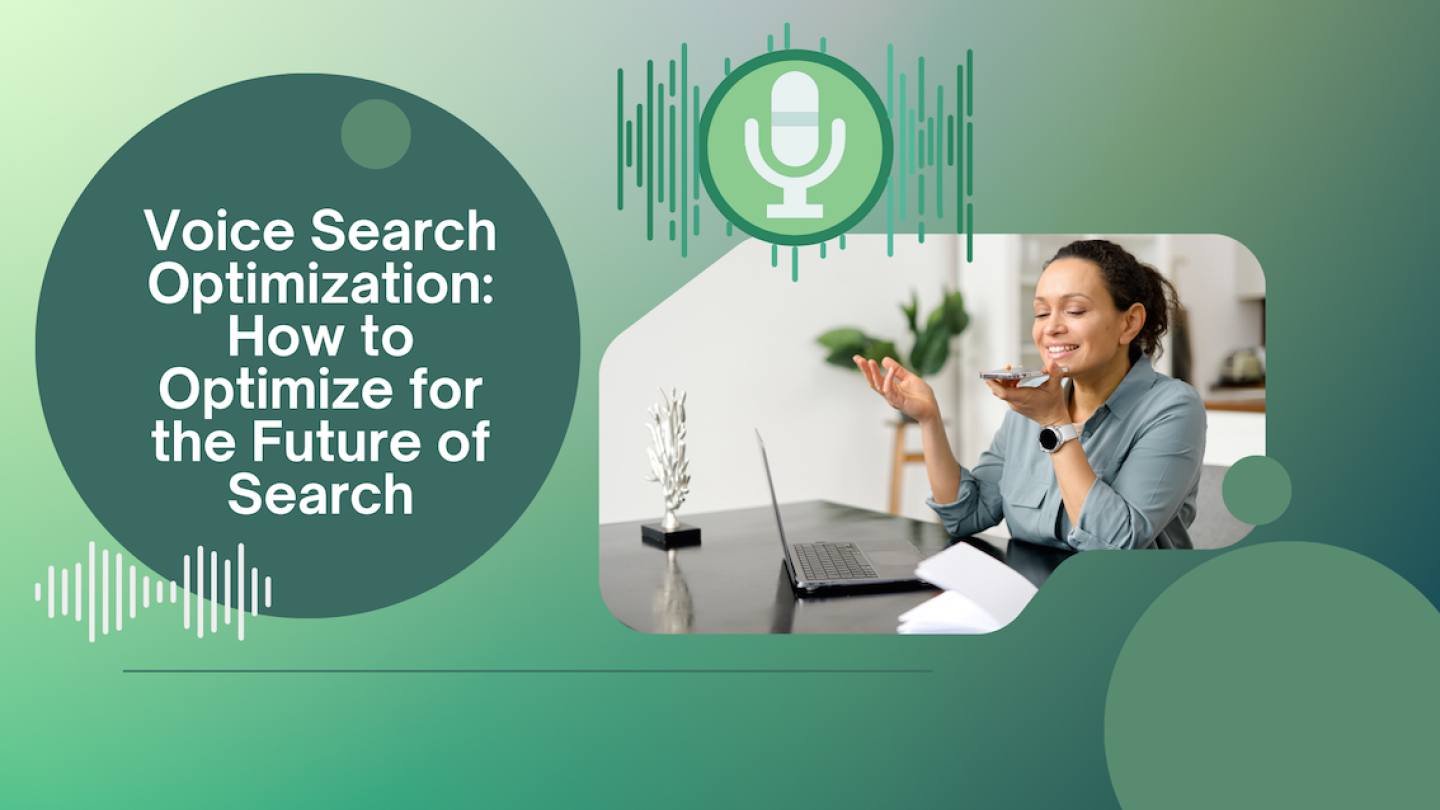
Voice Search Optimization: How to Optimize for the Future of Search

What is Voice Search?

Voice search is a technology that allows users to perform searches by speaking into a device rather than typing. It uses speech recognition to understand spoken queries and deliver relevant results. Voice search is commonly used on smartphones, smart speakers (like Amazon Echo or Google Nest), and virtual assistants (like Siri, Google Assistant, and Alexa).

Voice search is rapidly transforming the way users interact with search engines. With the rise of AI-powered voice assistants like Google Assistant, Alexa, and Siri, optimizing for voice search is essential for businesses aiming to stay ahead in digital marketing. This guide will explore why voice search matters and how you can optimize your website to rank for voice-based queries.

How Voice Search Works

  1. Speech Recognition – The device converts spoken words into text.
  2. Natural Language Processing (NLP) – The system interprets the meaning of the query.
  3. Search Query Processing – The search engine retrieves the most relevant results.
  4. Response Delivery – The results are either displayed on a screen or spoken back to the user.

Key Features of Voice Search

  • Conversational and Natural Language Queries (e.g., "What’s the weather like today?" instead of "weather today")
  • Hands-Free Operation
  • Integration with AI Assistants
  • Local and Personalized Search Results

Why Voice Search Matters

  1. Growing Adoption – By 2025, more than 50% of all online searches are expected to be voice-based.
  2. Mobile & Smart Devices – Voice searches are commonly made on smartphones and smart speakers, increasing accessibility.
  3. Conversational Queries – Unlike text searches, voice queries are longer and more natural in tone.
  4. Local SEO Impact – Voice search is crucial for local businesses, as users frequently search for "near me" services.
  5. Impact on Website Traffic & User Experience - Google favors fast-loading, mobile-friendly websites for voice search. Ensuring page speed, structured data, and clear answers enhances user experience (UX) and increases traffic.

Key Strategies for Voice Search Optimization

1. Optimize for Conversational Keywords

  • Voice search queries tend to be longer and more natural, often phrased as questions.
  • Use long-tail keywords and focus on "who, what, where, when, why, and how" phrases.

For example:

For voice search queries targeting the keyword "best SEO services", it’s essential to focus on natural language, conversational phrases, and intent-based queries. Voice search users typically phrase their queries as complete questions or commands. Here are some of the best voice search queries:

Informational Queries (Top of Funnel - Awareness Stage)

  1. What are the best SEO services for businesses?
  2. How do I find the best SEO service provider?
  3. Which SEO services are most effective in 2025?
  4. What does an SEO service include?
  5. Are SEO services worth it for small businesses?

Comparative Queries (Consideration Stage)

  1. Who offers the best SEO services near me?
  2. What are the top-rated SEO companies in [city or country]?
  3. What’s the difference between local SEO and national SEO services?
  4. How do I compare different SEO service providers?
  5. Which SEO company has the best reviews?

Transactional Queries (Decision Stage - High Intent)

  1. Where can I hire the best SEO expert?
  2. How much do the best SEO services cost?
  3. Can I get a free SEO consultation?
  4. Who provides guaranteed SEO results?
  5. How do I sign up for SEO services today?

Local & Service-Specific Queries

  1. Which SEO services are best for local businesses?
  2. Who provides the best SEO services for e-commerce websites?
  3. Where can I find affordable SEO services?
  4. What are the best SEO agencies for startups?
  5. Who are the best SEO consultants in [location]?

These queries are structured in a way that matches real voice search behavior, making them more conversational and question-based than traditional text-based searches.

2. Improve Website Loading Speed

  • Voice searches favor fast-loading websites.
  • Optimize images, enable caching, and use a CDN (Content Delivery Network) to speed up page load times.
  • Use Google's PageSpeed Insights tool to identify performance issues.

3. Leverage Featured Snippets & Position Zero

  • Many voice search results come from featured snippets (the answer box at the top of Google search results).
  • Structure content in a Q&A format and use bullet points for better chances of being featured.
  • Use schema markup to enhance content visibility.

4. Optimize for Local SEO

  • Voice searches often have local intent (e.g., "best coffee shop near me").
  • Ensure your Google Business Profile is updated with accurate information.
  • Use local keywords and include location-specific content.

5. Ensure Mobile-Friendliness

  • A significant portion of voice searches occur on mobile devices.
  • Use responsive design, fast-loading pages, and easy-to-navigate interfaces.
  • Check your mobile-friendliness using Google's Mobile-Friendly Test tool.

6. Focus on Structured Data Markup

  • Implement schema markup (structured data) to help search engines understand your content.
  • Use JSON-LD markup for FAQs, business information, and product details.

7. Create FAQ Pages

  • FAQ pages cater to common voice search queries.
  • Structure content with clear, concise answers.
  • Use natural language that matches how people ask questions.

8. Enhance Content with Natural Language Processing (NLP)

  • Write in a conversational tone.
  • Avoid complex jargon and focus on direct, simple answers.
  • Align content with how users naturally speak.

In short:

✅ Use natural, conversational language
✅ Optimize for long-tail keywords & FAQs
✅ Improve local SEO (Google Business Profile, reviews, citations)
✅ Create structured data markup (Schema)
✅ Ensure fast-loading, mobile-friendly web pages
✅ Target featured snippets with concise, direct answers

Future of Voice Search

1. Rise in Voice Search Adoption

  • By 2026, it’s estimated that over 8.4 billion voice-enabled devices will be in use globally.
  • The increasing adoption of smart speakers, voice assistants, and IoT devices will make voice search a primary way of accessing information.
  • Businesses must optimize for voice-first experiences to stay competitive.

2. AI & Natural Language Processing (NLP) Enhancements

  • AI models like Google’s Gemini, OpenAI’s ChatGPT, and Amazon’s Alexa LLMs will make voice search more conversational and context-aware.
  • Voice assistants will understand intent better, reducing misinterpretations.
  • Searches will be more personalized, offering tailored results based on user behavior, preferences, and past queries.

3. Dominance of Zero-Click & Featured Snippets

  • 70%+ of voice search results come from featured snippets (Position Zero).
  • Search engines will continue prioritizing concise, structured answers to serve quick results.
  • Brands must optimize for question-based, direct-answer content to appear in voice search results.

4. Voice Search & Local SEO Evolution

  • "Near me" searches will increase, making local SEO more important.
  • Google will focus on hyperlocal voice search, offering results based on real-time location data, business reviews, and local authority.
  • Businesses need Google Business Profile optimization, structured data, and consistent NAP (Name, Address, Phone Number) details for visibility.

5. Voice Commerce (V-Commerce) Growth

  • Voice shopping is projected to be a $40+ billion industry by 2025.
  • Users will increasingly use voice assistants to search, compare, and purchase products hands-free.
  • E-commerce sites must optimize for voice-friendly product descriptions, AI-driven recommendations, and frictionless checkout processes.

6. Conversational & Multimodal Search

  • Multimodal search (voice + visual + text) will become mainstream.
  • Google Lens + Voice Search will allow users to describe something verbally and get image-based results.
  • Websites must optimize for both voice search queries and visual elements like image recognition and AR search.

7. The Role of Smart Devices & IoT

  • More devices—cars, TVs, home appliances, and wearables—will integrate voice search.
  • Brands must optimize content beyond just mobile and desktop, ensuring their information is accessible on smart home devices and automotive voice assistants.

Optimizing for voice search is no longer optional—it's a necessity. By adopting a conversational approach, enhancing site speed, leveraging structured data, and focusing on local SEO, businesses can position themselves for success in the voice-driven search landscape. Start implementing these strategies today to stay ahead in the future of search.

search-queries-AI

Understanding Different Types of Search Queries in Traditional and AI-Powered Search

Search queries are the foundation of how people interact with search engines, helping them find information, products, services, and answers to their questions. With the evolution of search engines—especially the rise of AI-powered search, such as Google's AI Overviews and ChatGPT-powered browsing—the way search queries are processed and results are delivered has significantly changed.

One of our previous posts in 2015 on different types of search queries, emphasized the importance of understanding the different types of search queries to enhance a website's search presence and effectively plan content strategies.

It categorized search queries into various types, such as

  • Brand searches
  • Product-related questions
  • Comparisons between products
  • Regional terminology differences
  • Exact match searches
  • Phonetic spelling errors
  • Need-based searches
  • Descriptive searches
  • Local intent queries
  • Format-specific queries
  • Personal name searches
  • Price-related searches
  • Review and rating searches
  • Profession-related queries

In contrast, the article below provides an in-depth analysis of search queries, categorizing them into

  • Traditional
  • Navigational
  • Informational
  • Transactional
  • Local search
  • Voice search
  • comparative/research-based queries—and explores their significance in traditional search engines.

It also delves into AI-driven search, introducing categories like :

  • Conversational queries
  • Multi-turn queries
  • Summarization queries
  • Generative/exploratory queries
  • Action-oriented queries
  • Personalized/context-aware queries
  • This analysis highlights the evolving nature of search behavior with the advent of AI-powered search tools and offers insights into adapting SEO strategies accordingly.


Let's explore the different types of search queries, their importance, and how they are categorized based on traditional search and AI-driven search.


Types of Search Queries in Traditional Search

In traditional search engines like Google and Bing, queries are generally categorized into three main types:

1. Navigational Queries

  • Users search for a specific website or brand.
  • They already have a destination in mind.
  • Example:
    • "Instagram login"
    • "OpenAI website"
    • "Nike official store"

SEO Importance:

  • Websites should ensure their brand ranks at the top for navigational searches.
  • Paid ads may appear for branded searches, which companies should monitor.

2. Informational Queries

  • Users seek answers, definitions, or knowledge.
  • These are non-commercial and focused on research.
  • Example:
    • "What is Python programming?"
    • "How to bake a cake?"
    • "Symptoms of flu vs. COVID-19"

SEO Importance:

  • Content marketing and blog strategies target these searches.
  • Featured snippets and People Also Ask (PAA) sections are crucial for visibility.
  • Voice search often relies on informational queries.

3. Transactional Queries (Commercial Intent)

  • Users are looking to complete an action, such as making a purchase or signing up.
  • These queries indicate high intent.
  • Example:
    • "Buy iPhone 16 Pro Max online"
    • "Best hosting service for WordPress"
    • "Subscribe to Netflix premium"

SEO Importance:

  • Landing pages and product pages must be optimized for these searches.
  • Google Ads and paid campaigns focus on high-intent keywords.
  • Reviews and social proof help in conversion.

4. Local Search Queries

  • Users look for businesses, services, or locations nearby.
  • Often includes "near me" or location-based terms.
  • Example:
    • "Best pizza place near me"
    • "24/7 pharmacy in India"
    • "Car repair shop in Mumbai"

SEO Importance:

  • Local SEO and Google My Business (GMB) optimization are crucial.
  • Reviews, local citations, and NAP (Name, Address, Phone number) consistency help in ranking.

5. Voice Search Queries

  • Often conversational, long-tail, and phrased as questions.
  • Example:
    • "What's the weather like today in Ahmedabad?"
    • "Where can I buy organic coffee beans?"

SEO Importance:

  • Content should be optimized for natural language and long-tail keywords.
  • FAQ schema markup can help in ranking for voice search.

6. Comparative and Research-Based Queries

  • Users compare two or more products, services, or concepts.
  • Example:
    • "iPhone 15 vs. Samsung S23"
    • "Best budget laptops under $1000"
    • "Is Netflix better than Amazon Prime?"

SEO Importance:

  • Listicles, comparison blogs, and detailed guides perform well.
  • Affiliate marketing and product review sites benefit from these queries.

Types of Search Queries in AI-Driven Search (AI Overviews, ChatGPT, Perplexity AI, etc.)

With AI-powered search, search engines use natural language processing (NLP) and machine learning to generate more conversational, direct, and summarized results. AI-generated responses often reduce the need for users to click on multiple links.

Here’s how search queries are categorized in the AI search landscape:

1. Conversational Queries

  • AI search is designed to interact naturally with users.
  • Instead of keyword-based searches, users phrase queries as complete sentences.
  • Example:
    • "Can you recommend a good laptop for video editing?"
    • "What’s the best way to lose weight naturally?"

SEO Impact:

  • AI-generated responses pull from authoritative sources.
  • Structured data and credibility (E-E-A-T) help content appear in AI overviews.

2. Multi-Turn Queries (Follow-up Context Retention)

  • Users ask follow-up questions related to their previous queries.
  • Example:
    • User: "What is Python?"
    • AI Search Response: Gives an overview of Python
    • User: "How do I use it for web development?"

SEO Impact:

  • Traditional keyword targeting may not be enough.
  • Websites need to provide comprehensive and related content clusters.

3. Summarization Queries

  • Users ask AI search to summarize long articles, books, or topics.
  • Example:
    • "Summarize the book Atomic Habits"
    • "What are the key takeaways from Apple's latest event?"

SEO Impact:

  • AI Overviews may reduce direct clicks to websites.
  • Websites must provide unique insights that AI summaries cannot replicate.

4. Generative and Exploratory Queries

  • Users seek unique AI-generated ideas or content.
  • Example:
    • "Give me 10 creative blog post ideas about AI in marketing."
    • "Can you generate a 5-day keto meal plan?"

SEO Impact:

  • AI may generate answers instead of showing search results.
  • Brands need to create original, high-quality, and AI-resistant content.

5. Action-Oriented Queries

  • Users ask AI search to perform specific tasks.
  • Example:
    • "Create a travel itinerary for a 7-day trip to Japan."
    • "Generate a Python script for web scraping Amazon data."

SEO Impact:

  • AI models may replace traditional informational search pages.
  • Sites offering unique tools, templates, and interactive elements can attract AI-powered traffic.

6. Personalized and Context-Aware Queries

  • AI considers user history, preferences, and real-time context.
  • Example:
    • "What’s the best coffee shop near my location?"
    • "Give me a beginner-friendly guide to learning SEO."

SEO Impact:

  • Hyper-personalized content and recommendation engines will be more valuable.
  • SEO must account for context-driven search behavior.

Comparing Traditional and AI-Powered Search Queries

Category Traditional Search AI-Powered Search
Query Structure Short keywords, structured search Conversational, long-form
Results Display List of ranked links Summarized AI-generated answers
Follow-up Queries Requires new searches Multi-turn conversation allowed
Intent Recognition Based on keywords & intent groups Uses AI and machine learning
User Engagement Click-through-based Direct answers with fewer clicks
SEO Strategy Keyword optimization, backlinks E-E-A-T, structured data, originality

How to Adapt to the Changing Search Landscape

  1. Optimize for AI Overviews – Focus on structured data, trustworthiness, and long-form content.
  2. Create Conversational Content – Write in a way that aligns with natural language processing.
  3. Enhance Personalization – Use first-party data and behavioral insights to tailor content.
  4. Provide Unique Value – AI-generated responses are based on existing content, so offering unique insights, original research, and interactive experiences will differentiate your site.
  5. Leverage AI for SEO – Use Python and AI-powered tools to analyze search trends, optimize content, and automate SEO processes.

While traditional SERPs are evolving, SEO is far from dead. Adapting to AI-driven search behaviors will ensure long-term visibility and success.

python-SEO

How to Use Python for SEO: Automating SEO Tasks and Gaining Insights

Search Engine Optimization (SEO) is a dynamic field that requires constant analysis, optimization, and automation to stay ahead of the competition. Python, with its powerful libraries and flexibility, has become a go-to programming language for SEO professionals looking to automate tasks, analyze data efficiently, and optimize websites effectively. Let's  explore how Python can be leveraged for SEO purposes with more in-depth examples and advanced techniques.


Why Use Python for SEO?

  1. Automation – Python helps automate repetitive SEO tasks, saving time and reducing human error.
  2. Data Analysis – It can process large datasets, analyze search trends, and extract valuable insights.
  3. Web Scraping – Python enables the extraction of useful data from web pages to monitor competition and track changes.
  4. API Integration – It can interact with SEO-related APIs such as Google Search Console, Google Analytics, and SEMrush.
  5. Scalability – Python scripts can handle complex SEO operations, making them suitable for both small projects and large-scale enterprise needs.

Advanced Use Cases of Python in SEO

1. Web Scraping for Keyword Research and Competitor Analysis

Python’s BeautifulSoup and Scrapy libraries allow SEO professionals to extract valuable data from competitor websites, SERPs, and industry blogs. This data can be used to analyze keyword trends, meta tags, and content strategies.

Advanced Example:

import requests
from bs4 import BeautifulSoup
import pandas as pd

urls = ['https://example.com/page1', 'https://example.com/page2']
data = []

for url in urls:
    response = requests.get(url)
    soup = BeautifulSoup(response.text, 'html.parser')
    title = soup.title.string if soup.title else 'No Title'
    meta_description = soup.find('meta', attrs={'name': 'description'})
    meta_content = meta_description['content'] if meta_description else 'No Meta Description'
    data.append({'URL': url, 'Title': title, 'Meta Description': meta_content})

# Convert to DataFrame for analysis
seo_df = pd.DataFrame(data)
print(seo_df)

2. Automating Google Search Console Data Extraction

Python allows for deeper analysis by extracting multiple dimensions like clicks, CTR, and average position over time.

Advanced Example:

from googleapiclient.discovery import build
from oauth2client.service_account import ServiceAccountCredentials
import pandas as pd

SCOPES = ['https://www.googleapis.com/auth/webmasters.readonly']
KEY_FILE = 'path-to-your-key.json'
SITE_URL = 'https://yourwebsite.com'

credentials = ServiceAccountCredentials.from_json_keyfile_name(KEY_FILE, SCOPES)
service = build('searchconsole', 'v1', credentials=credentials)

query = {
    'startDate': '2024-01-01',
    'endDate': '2024-02-01',
    'dimensions': ['query', 'page'],
    'rowLimit': 50
}

response = service.searchanalytics().query(siteUrl=SITE_URL, body=query).execute()
df = pd.DataFrame(response['rows'])
print(df.head())

3. Log File Analysis for Technical SEO

Python can be used to analyze server logs in-depth, identifying user agents and response status codes.

Advanced Example:

import pandas as pd

log_data = pd.read_csv('server_logs.csv')
log_data['Timestamp'] = pd.to_datetime(log_data['Timestamp'])
filtered_logs = log_data[(log_data['User-Agent'].str.contains('Googlebot')) & (log_data['Status Code'] != 200)]

print("Non-200 status codes from Googlebot:")
print(filtered_logs[['URL', 'Status Code']].value_counts())

4. Internal Link Analysis Using Graph Theory

Python can analyze internal links using NetworkX to visualize website structure and identify orphan pages.

Advanced Example:

import networkx as nx
import matplotlib.pyplot as plt
import pandas as pd

data = [('Home', 'Blog'), ('Blog', 'Post1'), ('Blog', 'Post2'), ('Post1', 'Contact'), ('Post2', 'About')]
G = nx.DiGraph()
G.add_edges_from(data)

plt.figure(figsize=(10, 8))
nx.draw(G, with_labels=True, node_color='lightblue', edge_color='gray', node_size=3000, font_size=12)
plt.show()

5. Content Optimization Using NLP and Sentiment Analysis

Python’s spaCy and TextBlob can analyze content sentiment and readability to enhance user engagement.

Advanced Example:

import spacy
from textblob import TextBlob

nlp = spacy.load('en_core_web_sm')
doc = nlp("Python is a great tool for automating SEO tasks and improving efficiency.")

# Extract keywords and named entities
keywords = [token.text for token in doc if token.is_alpha and not token.is_stop]
sentiment = TextBlob(doc.text).sentiment.polarity

print(f"Extracted Keywords: {keywords}")
print(f"Sentiment Score: {sentiment}")

Additional Advanced Python SEO Techniques

  1. Automating Broken Link Checking – Scan websites for broken links and generate reports.
  2. SERP Position Tracking – Automate rank tracking for specific keywords over time.
  3. AI-Based SEO Predictions – Use machine learning to predict search ranking changes.
  4. Schema Markup Analysis – Extract and validate schema data for structured SEO improvements.

Leveraging Python for SEO automation not only enhances efficiency but also empowers professionals to make data-driven decisions with greater accuracy. By automating repetitive tasks such as keyword research, on-page analysis, backlink monitoring, and SERP scraping, SEOs can focus on more strategic aspects of their work. As the digital landscape continues to evolve, incorporating advanced techniques like machine learning and API integration will be essential for staying competitive in the field of SEO.

By adopting these practices and utilizing Python's extensive capabilities, you can significantly improve your website's performance and visibility in search engine results. Embrace the power of automation today and watch your SEO efforts transform!

llmstxt-AISearch

The Importance of llms.txt for Websites in the Era of AI-Driven Search Results

As AI-driven search results and large language models (LLMs) increasingly shape the digital landscape, website owners, SEO professionals, and content creators must adapt to ensure visibility, control, and relevance in this new paradigm. One of the emerging solutions to help webmasters manage how AI models interact with their content is the llms.txt file. Inspired by the well-known robots.txt, this new protocol is poised to play a crucial role in defining the relationship between website content and AI-powered systems.

What Is llms.txt and Why Does It Matter?

What Is llms.txt?

llms.txt is a proposed mechanism for webmasters to communicate with large language models about how their content should be accessed, used, and incorporated into AI-generated results. While AI models have traditionally relied on vast amounts of publicly available data to improve their responses, website owners now have a tool to indicate their preferences explicitly.

Just as robots.txt helps search engines understand crawling preferences, llms.txt aims to provide directives to AI-driven models on whether and how they can scrape, use, or summarize web content.

Why Is llms.txt Important?

AI-driven search results and chatbot responses increasingly replace traditional search experiences. Users may no longer need to click on individual websites if an AI-generated snippet provides a comprehensive answer. This shift creates challenges for content creators, businesses, and publishers who rely on website visits for monetization, branding, and engagement.

By implementing llms.txt, website owners can:

  • Control Content Usage: Specify which parts of their site AI models can or cannot use.
  • Protect Intellectual Property: Prevent unauthorized summarization or repurposing of original content.
  • Ensure Proper Attribution: Set guidelines for citation and credit when AI-generated answers reference website content.
  • Maintain Competitive Edge: Avoid unrestricted AI access to proprietary data or strategic insights.

How AI-Driven Search Changes Content Visibility

The Rise of AI-Powered Search Engines

With tools like Google’s Search Generative Experience (SGE) and AI-driven chatbots (e.g., ChatGPT, Gemini, and Bing AI) offering direct answers instead of displaying a list of links, traditional search traffic patterns are shifting. Websites that previously relied on organic search ranking must now ensure that AI-generated answers fairly represent and credit their content.

Challenges for Website Owners

  1. Loss of Click-Through Traffic: Users may receive direct answers from AI models without visiting the source website.
  2. Misrepresentation of Information: AI models might summarize content inaccurately or out of context.
  3. Monetization Impact: Fewer page visits could reduce ad revenue and conversion opportunities.
  4. Data Scraping Concerns: Unauthorized AI training on proprietary or sensitive data.

The introduction of llms.txt provides website owners with an essential tool to address these concerns and define clear boundaries for AI access.

Implementing llms.txt: Best Practices and Use Cases

How to Set Up an llms.txt File

A typical llms.txt file follows a simple text-based format, similar to robots.txt. Here’s a basic example:

User-agent: OpenAI-GPT
Disallow: /private/
Allow: /public/

User-agent: Google-LLM
Disallow: /proprietary-content/
Allow: /blog/

User-agent: *
Disallow: /

In this example:

  • OpenAI's GPT models are blocked from accessing the /private/ directory but can access /public/.
  • Google's AI models are restricted from scraping /proprietary-content/ but can access /blog/.
  • A wildcard (*) prevents all other AI models from accessing any site content.

Best Practices for Using llms.txt

  1. Be Strategic: Decide which parts of your website you want AI models to access and which should be restricted.
  2. Regular Updates: As AI models evolve, revisit and refine your llms.txt file periodically.
  3. Combine with Robots.txt: Use both files strategically to manage web crawlers and AI models simultaneously.
  4. Monitor AI Attribution: Track how AI-generated responses reference your content and adjust settings accordingly.

Use Cases for Different Website Types

1. News Websites & Publishers

  • Allow AI models to summarize publicly available news articles while ensuring proper attribution.
  • Restrict paywalled or exclusive content to prevent unauthorized summarization.

2. E-Commerce Websites

  • Prevent AI models from accessing dynamic pricing pages or proprietary product descriptions.
  • Allow AI-generated summaries for product guides or FAQs to enhance discovery.

3. SaaS & B2B Websites

  • Restrict AI models from scraping customer testimonials, internal documentation, or pricing models.
  • Permit indexing of blog content to increase visibility in AI-driven search experiences.

4. Educational & Research Websites

  • Ensure that AI models cite sources properly when using research materials.
  • Limit access to premium courses or gated educational content.

The Future of Content Governance in AI Search

Industry Adoption and Compliance

While llms.txt is an emerging standard, its widespread adoption will depend on:

  • AI Companies’ Willingness to Comply: Organizations like OpenAI, Google, and Meta must respect llms.txt directives.
  • Legal and Ethical Considerations: Regulatory frameworks might evolve to enforce AI content governance.
  • Community Involvement: SEO professionals, content creators, and digital marketers need to advocate for responsible AI usage.

Beyond llms.txt: Additional Measures for Website Owners

  1. Watermarking AI-Restricted Content: Implement invisible watermarks to detect unauthorized AI use.
  2. AI-Specific Analytics: Use tools that track AI-generated traffic and content interactions.
  3. Legal Protections: Consider copyrighting high-value content to reinforce legal standing against unauthorized AI training.

Taking Control of AI Content Access

In an era where AI-driven search results dominate user interactions, webmasters and content creators need proactive measures to maintain control over their content. llms.txt offers a practical solution to regulate AI access, ensuring fair attribution, protecting proprietary data, and adapting to the evolving digital ecosystem.

While AI models enhance information accessibility, they should not come at the expense of original content creators’ rights and business interests. By implementing llms.txt and staying informed about AI policies, website owners can navigate this new landscape effectively while safeguarding their online assets.

As AI search evolves, staying ahead of emerging trends and tools like llms.txt will be essential for anyone invested in digital visibility and content strategy. Now is the time for website owners to take action, set their AI interaction preferences, and ensure their content is leveraged ethically in the AI-driven web.

What does llmstxt.org has to say for llms.txt

According to llmstxt.org, the /llms.txt file is a proposed standard designed to provide Large Language Models (LLMs) with structured, concise, and relevant information from websites during inference. This initiative addresses the challenge that LLMs face due to limited context windows, which make it difficult to process entire web pages filled with complex HTML, navigation elements, ads, and JavaScript. By offering a simplified, markdown-based file, websites can facilitate more efficient and accurate information retrieval by LLMs.

The /llms.txt file is structured in a specific format to ensure clarity and utility for LLMs:

  1. Title: An H1 header with the name of the project or site.
  2. Summary: A blockquote providing a brief overview of the project, highlighting key information.
  3. Details: Optional sections containing more in-depth information about the project and guidance on interpreting the provided files.
  4. File Lists: Sections with H2 headers that list URLs to detailed markdown files, each accompanied by a brief description.

This structured approach allows LLMs to access and process essential information efficiently, enhancing their ability to generate accurate and contextually relevant responses.

The proposal also suggests that websites provide clean markdown versions of their pages, accessible by appending .md to the original URLs. This practice ensures that LLMs can retrieve and interpret content without the noise and complexity of standard HTML pages. For example, a page located at https://example.com/page would have its markdown version at https://example.com/page.md.

By implementing the /llms.txt file and providing markdown versions of content, websites can improve how LLMs interact with their information, leading to more accurate and helpful AI-generated responses. This initiative not only aids LLMs in processing web content but also ensures that the information they use is presented in a clear and structured manner, benefiting both the models and end-users seeking information.

Do Google AI Overviews use llms.txt for AI Overview results

As of now, there is no official indication that Google's AI Overviews utilize the llms.txt file for determining how to access or summarize website content. Google's AI Overviews, part of the Search Generative Experience (SGE), generate summaries by analyzing and synthesizing information from various web sources using large language models (LLMs) like Google Gemini. These models process and interpret web content to provide concise answers to user queries.

The llms.txt file is a proposed standard designed to guide LLMs on how to interact with website content, similar to how robots.txt provides directives to web crawlers. However, its adoption and implementation across platforms, including Google's AI systems, remain uncertain.

Given the evolving nature of AI-driven search technologies, it's advisable for website owners to stay informed about developments like llms.txt and consider implementing such protocols to manage how their content is utilized by AI models.

google-search-and-ai-search

Are People Abandoning Google For AI Search ? Some Key Findings Of Search Market Share And Search Behavior

As per Statcounter, Google's market share has been continuously dipping below 90% in the last quarter of 2024– It dipped to 89.34% in October'24; 89.99% in November'24; and 89.73% in December'24.

Are People Abandoning traditional Google search For AI Search?  How is the search behaviour of the people changing?

Let's dive into some stats shared as on https://www.highervisibility.com/seo/learn/how-people-search/

They surveyed 1,500 Americans about their search habits, preferred platforms, and how their behavior has changed over the past year.

Category Findings
Key Findings - 20.2% of Americans changed their primary search platform in the past year (diversification, not abandonment of traditional search).
- 71.5% of Americans use AI tools like ChatGPT for searching, but only 14% use them daily.
- Search behavior varies based on the type of information being sought.
- The generational divide in AI tool adoption is smaller than expected.
- Traditional search engines dominate for some query types.
AI Tool Usage - 14% use AI tools daily, 23.3% weekly, 7.1% monthly, 27.1% rarely, 28.5% never.
- AI tools are used alongside traditional search engines, not as a complete replacement.
Search Behavior by Intent General Information: 79.8% use traditional search engines, AI tools popular for complex queries.
Shopping: Traditional search for research, e-commerce for direct search, AI for comparisons, social media for discovery, specialized platforms for niche.
Local Business: Google Maps, Google Business Profiles dominate, social media for restaurants/entertainment, review sites for service businesses.
AI tools have minimal use in local business searches.
Search Behavior by Generation  Gen Z (18-26): High use of AI tools, social media for shopping, visual search preference.
Millennials (27-42): Balanced search tool use, AI for professional/educational queries, use of voice search.
Gen X (43-58): Preference for traditional search, AI adoption at 65%, comfortable with voice search.
Baby Boomers (59-76): Preference for traditional search, 45% use AI, adoption of voice search.
Platform Usage Patterns Traditional Search Engines: Dominant for fact-finding, navigational searches, local business, news, product research.
AI Tools: Popular for complex queries, educational content, comparisons, creative tasks.
Social Media: Product discovery, trend-based searches, recommendations, visual search.
Implications for Businesses - Maintain a strong traditional search presence, while expanding into AI.
- Focus on search behavior based on intent (general information, local business visibility).
- Create content that is discoverable through both traditional and AI tools.
- Ensure visibility across platforms used by all age groups.
Methodology - Online survey of 1,500 U.S. residents in January 2025.
- Representation across age, geography, income, and education demographics.

The table above summarizes the key insights from the data, focusing on usage patterns, behaviors across different generations, and implications for businesses looking to optimize their digital presence.


seo-company-partner

Outsourcing Website Maintenance to an SEO Company Is A Wise Decision In 2025

In today’s fast-paced digital landscape, a website is more than just a digital storefront; it’s the foundation of your online presence. As businesses and consumers increasingly rely on digital interactions, the importance of maintaining a robust, secure, and optimized website has grown exponentially. Enter 2025, where website maintenance is no longer a luxury but a necessity—and outsourcing this critical task to an SEO company has become a game-changing strategy.

In 2025, outsourcing website maintenance to an SEO company is more than just a smart decision—it’s an essential step toward maintaining a competitive edge in the digital landscape. From enhancing security and user experience to driving organic traffic and conversions, the benefits are undeniable.

The Changing Dynamics of Website Maintenance

Website maintenance in 2025 encompasses more than just fixing bugs or updating plugins. It’s about ensuring that your website delivers an exceptional user experience, aligns with the latest search engine algorithms, and remains secure from evolving cyber threats. Here’s a breakdown of the key components of modern website maintenance:

  • Technical SEO Optimization: From enhancing page speed to optimizing for mobile-first indexing, technical SEO ensures that search engines can crawl and index your site effectively.
  • Content Updates: Fresh, relevant, and engaging content is crucial for maintaining user interest and improving search rankings.
  • Security Enhancements: With cyber threats becoming more sophisticated, regular security updates and monitoring are vital to protect user data and maintain trust.
  • Performance Monitoring: Tracking website metrics such as bounce rate, load time, and conversion rates helps identify areas for improvement.

Managing these aspects in-house can be overwhelming, especially for small and medium-sized businesses.

Why Outsource Website Maintenance?

Outsourcing website maintenance offers a multitude of benefits that go beyond convenience. It provides access to expertise, ensures consistent performance, and allows businesses to focus on their core competencies.

Here are the top reasons why outsourcing website maintenance is a strategic move in 2025:

1. Expertise and Specialized Knowledge

SEO companies specialize in understanding the ever-changing dynamics of search engines, web technologies, and user behavior.

By outsourcing, you gain access to:

  • Cutting-Edge Tools and Techniques: SEO companies invest in advanced tools for analytics, keyword research, and performance monitoring, ensuring your website stays ahead of the curve.
  • Industry Insights: With their finger on the pulse of industry trends, SEO experts can implement best practices that align with your business goals.
  • Comprehensive Audits: Regular website audits identify technical issues, content gaps, and optimization opportunities, keeping your website competitive.

2. Cost Efficiency

Maintaining an in-house team for website maintenance can be costly, requiring investments in training, tools, and salaries.

Outsourcing to an SEO company provides:

  • Scalability: Pay for the services you need, whether it’s a one-time overhaul or ongoing maintenance.
  • Reduced Overheads: Eliminate the need for expensive software and full-time staff.
  • ROI-Driven Results: SEO companies focus on delivering measurable outcomes, ensuring that every dollar spent contributes to your bottom line.

3. Enhanced Security

Cybersecurity is a top priority for businesses in 2025. With increasing threats such as ransomware and phishing attacks, a secure website is non-negotiable.

SEO companies provide:

  • Proactive Monitoring: Regular security checks and real-time threat detection keep your website safe.
  • SSL Certification: Ensuring secure connections builds trust with users and boosts search rankings.
  • Data Backup and Recovery: Reliable backup systems minimize downtime and data loss in case of breaches or server failures.

4. Focus on Core Business Activities

Website maintenance can be time-consuming, diverting attention from your primary business operations.

By outsourcing, you can:

  • Save Time: Let experts handle the technical aspects while you focus on strategy and growth.
  • Ensure Consistency: SEO companies provide regular updates and maintenance, ensuring your website remains optimized and relevant.
  • Gain Peace of Mind: Knowing that your website is in capable hands allows you to concentrate on what you do best.

5. Improved User Experience

User experience (UX) is a critical factor in both SEO and customer satisfaction. A poorly maintained website can lead to slow load times, broken links, and frustrated users.

SEO companies excel in:

  • Mobile Optimization: Ensuring seamless experiences across devices is crucial in a mobile-first world.
  • Speed Optimization: Faster websites not only rank higher on Google but also keep users engaged.
  • Accessibility Compliance: Making your website accessible to all users, including those with disabilities, improves inclusivity and SEO performance.

The WebPro Philosophy: Ethical and Effective SEO

At WebPro, we believe in ethical SEO practices that prioritize long-term success over short-term gains. Our approach to website maintenance reflects this philosophy:

  • Transparency: We provide clear insights into what we’re doing, why it matters, and how it benefits your business.
  • Customization: Recognizing that every business is unique, we tailor our strategies to meet your specific needs.
  • Sustainability: Our focus on ethical practices ensures that your website’s performance is built on a solid foundation.

By partnering with an SEO company that shares your values, you can build a website that not only ranks well but also resonates with your audience.

How Outsourcing Website Maintenance To A SEO Company Helps:

The synergy between website maintenance and SEO is undeniable.

Here’s how outsourcing to an SEO company enhances your overall SEO strategy:

  • Technical SEO Compliance: Regular updates and audits ensure your website adheres to the latest algorithm changes, boosting your rankings.
  • Content Optimization: SEO experts help create and update content that aligns with user intent and keyword trends.
  • Enhanced Crawlability: By fixing technical issues like broken links and duplicate content, SEO companies improve your site’s crawlability and indexability.
  • Local SEO: For businesses targeting local markets, SEO companies optimize for local search terms, map listings, and reviews.


Choosing the Right SEO Partner

When outsourcing website maintenance, it’s crucial to choose a partner that aligns with your goals and values.

Here’s what to look for:

  • Experience: A proven track record in your industry.
  • Reputation: Positive reviews and testimonials from clients.
  • Expertise: Knowledge of the latest tools, trends, and best practices.
  • Communication: Clear, consistent updates and transparency.

By partnering with a trusted SEO company like WebPro Technologies LLP , you can ensure that your website remains a powerful asset for your business, delivering value to both users and search engines. Ready to take the next step? Contact us today to explore how we can support your website maintenance and SEO needs.


GEO-SEO

GEO (Generative Experience Optimization) Is not the new SEO but an evolution to it. SEO In a New Avatar.

Generative tools like ChatGPT, DALL-E, and others represent the new era of information retrieval and user engagement. Generative Experience Optimization (GEO) ties perfectly into the emerging landscape of AI-driven search and content creation.

What Is GEO?

Generative Experience Optimization (GEO) focuses on designing content that serves a dual purpose: captivating human audiences with compelling, relevant, and valuable material while simultaneously optimizing it for seamless integration with AI-driven search engines.

This approach ensures that content is not only engaging for readers but also tailored to meet the evolving demands of generative AI systems, enabling better visibility, contextual relevance, and personalized experiences.

What is the difference between GEO and SEO?

GEO vs. SEO

  • SEO (Search Engine Optimization):

Focuses on optimizing websites, content, and digital assets for search engine visibility.

Relies on keywords, backlinks, technical structure, and user intent as the backbone.

Goals: Improve rankings, drive organic traffic, and answer search queries effectively.

  • GEO (Generative Experience Optimization):

Focuses on creating AI-enhanced, personalized experiences for users.

Leverages generative AI tools to provide dynamic, contextually rich, and interactive content.

Goals: Optimize user engagement, improve content personalization, and adapt in real time to user behaviors or preferences.

Key Features of GEO

  • Dynamic Content Creation:

Using generative AI to create real-time, personalized responses or experiences based on user interactions.

Example: Personalized landing pages generated dynamically for each user based on their preferences or history.

  • Experience-Centric Optimization:

Moves beyond static keywords and metadata to focus on delivering immersive, conversational, or interactive experiences.

Example: Websites where AI chat assistants generate contextual responses that help users navigate or discover content in innovative ways.

  • Context and Intent Over Keywords:

With generative AI, intent and contextual understanding take precedence over exact-match keywords.

Example: Instead of optimizing for “how to bake a cake,” GEO would focus on generating step-by-step guides, interactive videos, or real-time Q&A sessions based on user questions.

How GEO Aligns With SEO

Rather than replacing SEO, GEO enhances it:

  1. Enhanced SERPs (Generative AI in Search):

Search engines like Google and Bing are integrating generative AI to deliver interactive and conversational search results.

GEO ensures that businesses adapt their strategies to appear prominently in AI-driven experiences like Google AI Overviews or Bing Chat.

  1. Content Creation Revolution:

SEO principles (keywords, intent, structure) guide how content is created, but GEO ensures the delivery is personalized, conversational, and dynamic.

Example: AI that generates tailored product descriptions based on user preferences.

  1. Multimodal Optimization:

With tools like DALL-E and ChatGPT, GEO integrates text, image, and video generation into a seamless experience.

Example: An e-commerce store using generative AI to create both textual and visual descriptions of products on the fly.

Challenges and Opportunities

Challenges:

  • Ethical Concerns: Avoiding manipulative personalization.
  • Technical Expertise: Balancing AI with traditional optimization.
  • Search Engine Evolution: Ensuring GEO strategies align with ongoing search algorithm changes.

Opportunities:

  • Better Conversion Rates: Personalized content increases engagement.
  • Immersive User Journeys: Generative tools create unique, memorable interactions.
  • Early Adoption Advantage: GEO pioneers can lead in AI-driven search landscapes.

The Future of GEO and SEO

GEO isn’t just the new SEO—it’s the next evolutionary step. As users demand more personalized, interactive, and human-like experiences, businesses will need to optimize for both traditional search engines and AI-powered ecosystems. GEO will focus not just on what users are looking for but on how they experience the journey.

How businesses can start optimizing for Generative Experience Optimization (GEO) and prepare for the AI-powered landscape!

  1. Understand the Role of Generative AI in User Experience

Action Steps:

  • Leverage AI Tools for Content Creation:

Use tools like ChatGPT or Jasper AI to create contextually relevant content that matches user queries.

Generate FAQs, blog posts, or product descriptions tailored to specific audiences.

  • Incorporate Multimodal AI:

Use tools like DALL-E for custom graphics, diagrams, or creative product images.

Utilize video generators like Synthesia for personalized video content.

  • Invest in AI Chatbots:

Add chatbots that provide real-time, AI-generated solutions to user questions or guide them through purchasing processes.

  1. Prioritize Hyper-Personalization

Action Steps:

  • Dynamic Landing Pages:

Use AI to generate landing pages customized based on user location, behavior, or preferences.

Example: An e-commerce site showing different product recommendations based on browsing history or regional trends.

  • Behavior-Based Content:

Implement systems that analyze user behavior in real time and deliver tailored generative experiences (e.g., dynamic blog recommendations, personalized pricing).

  • Segmented Campaigns:

Use tools like HubSpot or Salesforce with AI add-ons to send targeted email campaigns with generative, unique messages for each segment.

  1. Optimize for AI-Driven Search Engines

Action Steps:

  • Prepare for Generative SERPs:

Create content optimized for Google’s AI Overviews or Bing Chat by focusing on:

      • Comprehensive answers to user queries.
      • Structuring content for natural language processing (NLP) with FAQs, step-by-step guides, and conversational tone.
      • Earning featured snippets and zero-click results.
  • Schema Markup and Rich Data:

Add schema markup for structured data to make it easier for AI tools to extract your content and present it dynamically.

  • Focus on Intent and Context:
    • Write content that mirrors conversational intent, such as how-to guides, long-tail question answers, or user-centric blog posts.
  1. Invest in AI Integration Across Channels

Action Steps:

  • Generative E-commerce Solutions:

Implement AI tools that create personalized product suggestions or content in real-time (e.g., ChatGPT APIs or Shopify AI).

  • AI-Generated Social Media Content:

Use generative AI to create engaging social posts, hashtags, or responses that resonate with specific audiences.

  • Voice Search and AI Assistant Integration:

Optimize for voice-based assistants (Alexa, Siri, Google Assistant), ensuring your content is conversational and direct.

  1. Develop New Metrics to Measure Success

Traditional SEO metrics like rankings and organic traffic remain relevant but need to expand with GEO.

Action Steps:

  • Track Engagement with Generative AI Tools:

Monitor metrics like:

      • AI chatbot completion rates.
      • Time spent interacting with generative experiences.
      • Click-through rates (CTR) from AI-powered recommendations.
  • Measure Personalization Success:

Analyze how well dynamic, personalized experiences lead to:

      • Conversions.
      • Reduced bounce rates.
      • Repeat visits.
  • AI-Specific Reporting Tools:

Use analytics platforms that incorporate AI-driven insights, such as Looker or Tableau integrated with generative content sources.

  1. Stay Ahead of Ethical Challenges

AI-powered content raises ethical concerns regarding transparency, data privacy, and manipulation. GEO strategies should prioritize trustworthiness.

Action Steps:

  • Label AI-Generated Content:

Clearly inform users when content is AI-generated to maintain transparency and trust.

  • Respect Privacy:

Avoid over-personalizing content based on sensitive data. Use ethical AI tools that comply with privacy regulations like GDPR and CCPA.

  • Focus on Value Over Manipulation:

Ensure generative content enhances user experiences instead of coercing or confusing them into specific actions.

  1. Experiment with Emerging AI Technologies

Action Steps:

  • Generative APIs and Plugins:
    • Test OpenAI’s APIs, ChatGPT plugins, or Adobe Firefly to integrate generative experiences into your website or apps.
  • Voice and Visual AI:
    • Experiment with tools like ElevenLabs (AI-generated voices) or Runway (AI video editing) to diversify user experiences.
  • Real-Time Adaptation:
    • Explore adaptive experiences where content, layout, or design shifts in real-time based on user interaction patterns.

Examples of Businesses Thriving with GEO

  • E-commerce (Amazon):

Personalized recommendations and AI-powered product descriptions.

  • Hospitality (Airbnb):

Dynamic suggestions for travel experiences based on user search behavior.

  • Healthcare:

AI chatbots answering medical queries and generating tailored wellness advice.

Why Act Now?

  • Early adoption of GEO principles ensures you stay competitive as generative AI reshapes search and user interaction paradigms.
  • As search engines like Google and Bing evolve with generative AI, GEO becomes critical to visibility and engagement.


The Future of Google Search Compared To ChatGPT

The future of Google Search compared to ChatGPT lies in their evolving roles as complementary tools rather than outright competitors. Here’s an analysis of their trajectories:

Future of Google Search

Google Search is poised to maintain its dominance as the primary gateway to the vast web of information. However, it will likely adapt in significant ways to stay competitive and relevant:

1. AI-Driven Enhancements

Google has already incorporated AI into its search algorithms, such as with BERT and MUM. The future will likely see:

  • Natural Language Processing (NLP) Integration: Improved understanding of conversational queries, similar to ChatGPT.
  • AI Summaries: Direct answers and summaries will increasingly accompany traditional links, offering a hybrid approach.
  • Contextual Awareness: Google Search may adapt to multi-turn queries, responding conversationally to clarify or refine results.

2. Real-Time and Verified Information

Google’s strength lies in its ability to aggregate real-time and credible information. Future updates may focus on:

  • Verified sources and fact-checking tools to combat misinformation.
  • Enhanced integration of live data, such as news updates, weather, and market trends.

3. Specialized Search Experiences

Google might lean heavily into domain-specific search capabilities. For example:

  • Enhanced tools for research in academic, medical, or technical fields.
  • Industry-focused platforms offering tailored content for professionals.

4. Visual and Multimodal Search

Google Lens and advancements in image and video search will continue to grow. Users will rely on:

  • Searching via images, videos, or even AR/VR environments.
  • Interactive results like 3D models and augmented reality experiences.

5. Personalized Ecosystems

Google will leverage its data to offer hyper-personalized search experiences:

  • Predictive queries based on user habits.
  • Integrated tools with Google Workspace, Gmail, and Maps for contextual results.

Future of ChatGPT

ChatGPT, as a conversational AI, represents a different paradigm of information retrieval. Its future is likely to evolve around personalized and task-specific use cases:

1. Enhanced Accuracy and Real-Time Updates

ChatGPT’s reliance on pre-trained data limits its current utility for real-time information. In the future:

  • Integration with live data sources and APIs could enable real-time responses.
  • Improved training methods will enhance its accuracy and reliability.

2. Specialized Applications

ChatGPT may become an indispensable tool in specific domains:

  • Education: Offering tutoring, explanations, and real-time Q&A for students.
  • Creative Industries: Assisting with ideation, content creation, and design.
  • Customer Support: Replacing or augmenting traditional chatbot systems with more nuanced responses.

3. Personalized AI Assistants

With ongoing improvements, ChatGPT could evolve into a fully personalized assistant:

  • Learning user preferences over time to provide tailored advice or recommendations.
  • Acting as a productivity tool for scheduling, reminders, and task management.

4. Ethical and Transparent AI

To build user trust, ChatGPT will focus on:

  • Transparency in responses, offering references or links to original sources.
  • Guardrails against misinformation, bias, and inappropriate content.

5. Integration with Other Platforms

ChatGPT will likely integrate deeply into existing ecosystems:

  • Embedded in tools like Microsoft Office, Slack, or CRM systems.
  • Functioning as a plugin for web browsers, enhancing search with conversational interactions.

Comparative Roles in the Future

The future will likely see synergy rather than rivalry between Google Search and ChatGPT. Here’s how they might coexist:

  1. Google Search for Depth, ChatGPT for Convenience
    • Google Search will remain the go-to platform for comprehensive research and verified information.
    • ChatGPT will serve as a conversational tool for quick answers, brainstorming, and explanations.
  1. Integration of ChatGPT-Like Features in Search
    • Google may incorporate conversational AI models to offer a ChatGPT-like experience directly in its search engine.
    • Users could engage in multi-turn conversations for better clarity and context.
  1. ChatGPT as a Complementary Tool
    • For creative and task-specific needs, ChatGPT will complement Google Search rather than replace it.
    • Users might rely on Google for data and ChatGPT for synthesizing and personalizing information.

Challenges for Both Platforms

  1. Accuracy and Misinformation
    • ChatGPT must overcome its tendency to generate plausible but incorrect answers.
    • Google must continue fighting misinformation while balancing user-generated content.
  1. Privacy and Ethics
    • Both platforms will face scrutiny over data collection and ethical AI use.
    • Transparency in algorithms and data handling will be critical to user trust.
  1. User Experience
    • Google must refine its search experience to reduce information overload.
    • ChatGPT must ensure that its conversational interface remains intuitive and reliable.

Conclusion

The future of Google Search and ChatGPT will be defined by their ability to innovate and address user needs. While Google Search will continue to dominate in breadth, depth, and real-time accuracy, ChatGPT will carve out its niche in personalized, creative, and conversational interactions. Together, they represent the next frontier of information retrieval and user engagement, potentially merging their strengths into unified, hybrid platforms.


chatgpt-vs-google-search

ChatGPT vs Google Search in 2025: A Comprehensive Comparison

The year 2025 marks a significant point in the evolution of technology, particularly in the fields of artificial intelligence (AI) and information retrieval. ChatGPT and Google Search, two titans in their respective domains, have become indispensable tools for millions of users worldwide. While both serve the purpose of providing information, they do so in fundamentally different ways. This blog delves deep into the strengths, weaknesses, and unique roles of ChatGPT and Google Search in 2025, highlighting how they cater to diverse user needs.

Understanding the Basics

Google Search: Google Search has been the go-to platform for finding information on the web for decades. By indexing billions of web pages and using sophisticated algorithms, it provides users with links, snippets, and resources ranked by relevance. It excels in breadth and precision, offering everything from academic papers to product reviews, news, and more.

ChatGPT: ChatGPT, on the other hand, is an AI-powered conversational agent designed to simulate human-like interaction. It generates responses based on large-scale language models trained on diverse datasets. Unlike traditional search engines, it focuses on delivering direct answers, explanations, or creative content without requiring users to sift through multiple links.

Key Differences

Nature of Interaction:

  • Google Search operates as a query-based platform, where users input keywords and receive ranked lists of web pages.
  • ChatGPT engages users in a conversational format, providing answers, suggestions, and explanations in a human-like tone.

Content Delivery:

  • Google Search thrives on offering a wide array of sources, allowing users to cross-check and verify information.
  • ChatGPT synthesizes information into a cohesive response, saving users the effort of navigating multiple links but with limited verifiability.

Real-Time Information:

  • Google Search is adept at fetching real-time updates, such as live news, stock prices, and weather forecasts.
  • ChatGPT, while capable of generating responses on a vast range of topics, relies on either periodic updates or integration with real-time data sources for dynamic information.

Strengths of Google Search

  1. Comprehensive Indexing: Google’s ability to crawl and index virtually the entire internet ensures users can find even the most obscure information.
  2. Reliability and Source Diversity: By displaying results from reputable sources, Google allows users to verify information through multiple perspectives.
  3. Real-Time Updates: Features like Google News, live sports scores, and event trackers keep users informed about ongoing developments.
  4. Customizability: Google Search provides tools like filters, advanced search options, and personalized recommendations tailored to individual preferences.

Strengths of ChatGPT

  1. Conversational Engagement: ChatGPT’s natural language processing (NLP) capabilities make it an excellent tool for engaging users in dialogue, answering follow-up questions, and refining responses based on context.
  2. Efficiency: By delivering concise and synthesized answers, ChatGPT reduces the need for users to browse through multiple web pages.
  3. Creativity and Personalization: ChatGPT excels in creative tasks such as writing poetry, generating ideas, or assisting with personal projects. Its ability to adapt to user preferences enhances the personalization of responses.
  4. Accessibility: The conversational format lowers barriers for users who may not know the precise keywords or technical terms to input in a traditional search engine.

Limitations of Each Platform

Google Search:

  • Information Overload: The abundance of links can overwhelm users, especially when sifting through irrelevant or redundant results.
  • Learning Curve: Users need to master search operators and techniques to extract the best results.

ChatGPT:

  • Accuracy Concerns: While ChatGPT is adept at generating plausible responses, it may occasionally produce incorrect or outdated information.
  • Lack of Source Transparency: Users cannot easily verify the origin of the information presented.
  • Dependency on Training Data: Without real-time data integration, it may lag behind on current events or niche topics.

Use Cases in 2025

  1. Research and Learning:
    • Google Search remains the preferred choice for academic and professional research, where source credibility and depth of information are paramount.
    • ChatGPT serves as a quick reference tool, helping users understand concepts or brainstorm ideas.
  2. Decision Making:
    • For tasks like comparing products, reading reviews, or planning travel, Google’s ability to aggregate user-generated content and reviews is unmatched.
    • ChatGPT shines in providing personalized recommendations based on user inputs and preferences.
  3. Creative Projects:
    • ChatGPT’s capability to generate creative content, such as stories, marketing copy, or design ideas, surpasses Google Search’s functionality.
  4. Real-Time Needs:
    • Google’s real-time updates make it the go-to platform for live news, traffic updates, and event tracking.
    • ChatGPT’s real-time integration, if present, could complement these features by providing summarized updates or explanations.

Synergy Between ChatGPT and Google Search

The debate between ChatGPT and Google Search isn’t about one replacing the other but rather how they can complement each other. By integrating conversational AI like ChatGPT with search engines, users could benefit from:

  1. Enhanced Search Experience: AI-driven summaries and clarifications alongside traditional search results can help users quickly grasp complex topics.
  2. Improved Personalization: Combining Google’s user data insights with ChatGPT’s conversational abilities can create more tailored experiences.
  3. Unified Platforms: Future developments may see a seamless blend of search and chat functionalities, where users can ask follow-up questions and dive deeper into specific results.

Ethical and Privacy Considerations

Both platforms raise important questions about data privacy and ethical use:

Google Search:

  • Collects vast amounts of user data to enhance personalization, raising concerns about surveillance and data misuse.

ChatGPT:

  • May inadvertently store sensitive information shared during conversations, necessitating robust privacy safeguards.

As users become more aware of these issues, transparency and ethical AI practices will play a critical role in determining the success of both platforms.

Future Prospects

In 2025, the lines between traditional search engines and AI-powered conversational tools are increasingly blurred. Here’s what the future might hold:

  1. Improved Integration: Hybrid models combining the strengths of both platforms could dominate, offering conversational search engines that provide direct answers alongside detailed source links.
  2. Advanced AI Models: With advancements in AI, ChatGPT-like models could achieve greater accuracy and context-awareness, rivaling traditional search engines in reliability.
  3. Specialized Applications: While Google may continue to excel in broad-based searches, ChatGPT could expand its role in niche domains such as education, healthcare, and creative industries.
  4. User-Centric Design: Both platforms are likely to invest heavily in enhancing user experience, focusing on speed, accuracy, and personalization.

Conclusion

ChatGPT and Google Search serve distinct yet overlapping purposes in 2025. While Google Search remains the cornerstone of web-based information retrieval, ChatGPT offers a conversational, efficient, and personalized alternative. The choice between the two depends on the user’s needs—whether it’s depth and verification or convenience and engagement. Ultimately, the future lies in leveraging the strengths of both to create a unified, intelligent, and user-friendly information ecosystem.


AI-search

Why Web Presence Matters More in the Era of AI-Powered Search

In today's digital-first world, having a strong web presence is not just a luxury—it's a necessity. The advent of AI-powered search engines, virtual assistants, and conversational AI platforms like ChatGPT has transformed how information is consumed and businesses are discovered. If you're not optimizing your online presence for this evolving landscape, you're risking irrelevance.

In the era of AI-driven overviews, if you believe that SEO is no longer relevant, you might be falling victim to misinformation or misguided advice aimed at short-term gains. This misconception often stems from a lack of understanding of how AI integrates with search engines and online discovery. In reality, SEO has evolved to become even more critical, serving as the backbone of visibility in a world increasingly shaped by AI technologies and conversational search tools.

  1. The Changing Landscape of Search

The traditional search engine experience is evolving rapidly. Search engines like Google, Bing, and AI-driven platforms no longer just provide links—they deliver direct answers, suggestions, and even actionable solutions. Virtual assistants such as Alexa, Siri, and Google Assistant have made voice search commonplace, while conversational AI tools like ChatGPT provide nuanced, context-aware responses.

This evolution has changed how businesses and brands are discovered:

  • AI systems prioritize high-quality, relevant, and structured data.
  • Natural language processing (NLP) allows users to ask more conversational and specific queries.
  • Voice searches now often bypass websites entirely, pulling directly from the web's most authoritative sources.

A strong web presence ensures that your business is part of the AI's ecosystem of knowledge, making you discoverable in this new digital frontier.

  1. The Role of AI in Content Discovery

AI models like ChatGPT are trained on massive datasets that include publicly available web content. These models rely on existing online data to provide answers. Here’s why this matters for your web presence:

AI-Driven Search Results Favor Authority

AI prioritizes content that demonstrates experience, expertise, authority, and trustworthiness (E-E-A-T). Websites and businesses that consistently produce high-quality, well-structured, and factually accurate content are more likely to be cited or recommended.

Conversational AI and Direct Answers

Tools like ChatGPT aim to deliver concise, conversational answers. If your website or content isn’t designed to answer common questions in a structured way, AI models might overlook your brand.

The Power of Context

AI tools are designed to understand context better than traditional search engines. This means that keyword stuffing is no longer effective; instead, contextually rich, well-written content is essential.

Key Takeaway: A strong, optimized web presence ensures that your brand's data, FAQs, and expertise are accessible to AI models and appear in search results.

  1. Why Web Presence is the Foundation of Visibility
  2. Your Website is Your Digital HQ

Your website is the cornerstone of your web presence. It’s where users go to learn about your services, read your blogs, and contact you. A well-designed, fast, and mobile-responsive website is critical for:

  • Search engine optimization (SEO).
  • User engagement and retention.
  • Authority building.

Without a website, your ability to influence AI-driven search results is significantly diminished.

  1. Content is Still King

In the AI era, content serves as both the fuel for search engines and the building blocks for conversational AI. Blogs, videos, infographics, and case studies help establish your brand as an industry leader. AI pulls from publicly available content to form its responses, so the more authoritative your content, the better your chances of being cited.

     2. Social Media Amplifies Reach

A strong web presence extends beyond your website. Social media platforms such as LinkedIn, Twitter, and Instagram offer opportunities to engage with your audience, share valuable insights, and drive traffic back to your site.

  • Social signals can indirectly impact search rankings.
  • Consistent engagement on social platforms builds trust and credibility.

    3. The Importance of Local SEO in AI-Powered Search

For businesses serving specific regions or cities, local SEO is a game-changer. AI tools and search engines like Google prioritize local results for location-based queries. If you run a business in, say, Ahmedabad or Bangalore, optimizing your web presence for local searches ensures your brand is discoverable.

Strategies for Local SEO Success:

  • Google My Business Optimization: Keep your business profile accurate and updated with hours, photos, and customer reviews.
  • Local Keywords: Use phrases like "best digital marketing agency in Ahmedabad" or "SEO services near me" to capture local intent.
  • Customer Reviews: Positive reviews enhance your credibility and improve local rankings.

AI tools often use localized data to tailor their responses, making local SEO a critical component of your web presence.

   4. Adapting to AI Search: Practical Steps

To thrive in the era of AI-powered search, businesses must adapt their web presence strategies.

Here’s how:

Optimize for Voice and Conversational Search

  • Use natural, conversational language in your content.
  • Focus on answering "who," "what," "where," "when," and "how" questions.
  • Structure your content to include FAQ sections.

Leverage Structured Data

  • Add schema markup to your website to help AI and search engines understand your content better.
  • Structured data allows your business to appear in rich snippets, enhancing visibility.

Create E-A-T Content

  • Publish authoritative, fact-checked content regularly.
  • Include references, links to credible sources, and expert authorship.
  • Build backlinks from reputable websites.

Monitor Analytics

  • Use tools like Google Analytics and Search Console to track traffic and identify content that resonates with your audience.
  • Refine your strategy based on these insights.

Stay Active on Multiple Platforms

  • Maintain an updated profile on social media and review platforms.
  • Use platforms like LinkedIn for B2B networking and Instagram for visual storytelling.

Benefits of a Strong Web Presence in AI Search

Investing in your web presence isn’t just about visibility—it’s about staying competitive. Here are some tangible benefits:

  • Increased Traffic: Optimized content drives organic traffic from AI tools and traditional search engines.
  • Stronger Brand Authority: High-quality content and an active web presence position you as a thought leader.
  • Improved Customer Trust: Positive reviews, active social engagement, and professional website design build trust.
  • Higher Conversion Rates: Engaged audiences are more likely to convert into customers or clients.

Real-World Examples

Example 1: Local Bakery Thrives with AI Search Optimization

A small bakery in Mumbai optimized its website for voice search by including phrases like "best vegan cakes near me." Combined with regular updates on Google My Business and active Instagram engagement, the bakery saw a 40% increase in local orders.

Example 2: IT Firm Leverages Content Marketing

An IT firm in Bengaluru started publishing weekly blog posts on "AI-friendly SEO strategies." These posts were picked up by AI tools like ChatGPT, resulting in a surge of traffic and new business inquiries.

The Future of Web Presence

As AI becomes more sophisticated, your web presence will need to evolve. Future-proof your strategy by staying updated on trends such as:

  • Real-Time AI Optimization: Algorithms that adjust content based on real-time user interactions.
  • Voice Commerce: Optimizing for transactions conducted through voice assistants.
  • AI-Generated Content: Using AI tools to create supplementary content while maintaining a human touch.

Final Thoughts

In the AI-driven world of search and discovery, your web presence is your gateway to success. It’s not enough to simply exist online—you need to stand out with optimized, authoritative, and engaging content. By understanding the role AI plays in shaping search results and adapting your strategy accordingly, you can ensure your business thrives in this new era.

Invest in your web presence today. Because in the digital landscape, if you’re not visible, you don’t exist.

As we always say, SEO is a necessity, Content Creation is the strategy and  Social Media is the channel


editorial-policy-WebPro-Technologies-LLP-Ahmedabad

Editorial Policy: Human Expertise, Enhanced by AI

At WebPro Technologies, our content reflects over two decades of experience in SEO and digital strategy. We believe that valuable content is built on accuracy, clarity, and insight—and that requires human judgment at every step.

From 2024 onwards, we have been using AI tools selectively to brainstorm ideas, explore perspectives, and refine language, but AI is never the final author. Every article is researched, fact-checked, and edited by our team, ensuring relevance, accuracy, and originality. AI supports our workflow, but the responsibility for quality and credibility remains entirely human.

This hybrid approach allows us to combine the efficiency of technology with the depth of human expertise, so our readers get content that is both informative and trustworthy.

At WebPro, we see AI not as a replacement for human creativity, but as a tool that helps us raise the standard of excellence in the content we share.

SEO Ahmedabad

Contact Info

802, Astron Tech Park, Satellite Road, Opp. Gulmohar Park Mall, Ahmedabad 380015, India

+91 9825025904
info@webpro.in

Daily: 9:00 am - 6:00 pm
Sunday: Closed

Copyright 2025 WebPro Technologies LLP ©  All Rights Reserved