Online-Presence-For-Next-five-years

How to Prepare Your Business’ Website and Online Presence for the Next 5 Years

A practical guide for SMEs, startups, and business owners serious about their online presence

The next five years will redefine what it means to “have a website.”

For a long time, a website was a digital brochure. Then it became a lead-generation engine. Today, it is evolving into something far more powerful — a multi-platform visibility hub that interacts with search engines, AI systems, social platforms, and users simultaneously.

If you are an SME owner or a startup founder, this shift is not optional. The businesses that prepare today will dominate tomorrow’s visibility. Those that don’t may find themselves invisible — even with great products or services.

This guide breaks down exactly how to prepare your website for the next five years — with one important principle in mind:

Build for the web, not for algorithms.

  1. Shift Your Mindset: From Website to “Digital Presence Ecosystem”

Your website is no longer the center of everything — it’s part of a larger ecosystem.

Today, your brand exists across:

  • Search engines
  • AI tools
  • Social media
  • Review platforms
  • Marketplaces

Your website should act as the foundation and source of truth for all these platforms.

What this means:

  • Your content must be structured and reusable
  • Your messaging must be consistent
  • Your website should support discovery beyond just search

For startups: Build this ecosystem mindset from day one.

  1. Build for AI Discovery, Not Just Search Engines

AI tools are increasingly answering user queries directly — often without sending users to websites.

This means your content must be:

  • Clear
  • Structured
  • Accurate
  • Context-rich

How to prepare:

  • Use meaningful headings
  • Answer questions directly
  • Include FAQs
  • Avoid fluff and keyword stuffing

Your goal is no longer just ranking — it’s being referenced and trusted.

  1. Follow Web Standards, Not Algorithms (The Most Underrated Strategy)

Here’s a critical mindset shift that many businesses miss:

Algorithms change. Web standards don’t.

Search algorithms — whether from Google or AI systems — will continue to evolve. What works today may not work tomorrow.

But the core principles of the web remain stable:

  • Clean, semantic HTML
  • Accessible design
  • Fast-loading pages
  • Structured, meaningful content
  • User-first experiences

These are guided by globally accepted practices such as those from the World Wide Web Consortium (W3C).

Why this matters:

  • Standards ensure your website is understandable by any system — search engines, AI tools, browsers, assistive technologies
  • They future-proof your website
  • They reduce dependency on short-term “SEO hacks”

In simple terms:
Don’t chase algorithms.
Build a website that deserves to be discovered.

For SMEs: This reduces long-term risk and rework.
For startups: This builds a strong, scalable foundation from day one.

  1. Focus on Topical Authority, Not Random Content

Publishing random blog posts will not help in the future.

Search engines and AI systems prefer depth and authority.

Instead:

  • Identify 3–5 core topics
  • Create detailed content around them
  • Interlink related pages

Example:
A financial services SME could focus on:

  • Tax planning
  • Investment basics
  • Compliance
  • Business finance

Depth builds trust. Volume does not.

  1. Make Your Website Technically Future-Ready

A strong technical foundation is non-negotiable.

Key areas:

Speed

  • Faster websites improve both user experience and visibility

Mobile-first design

  • Most users will access via mobile

Clean structure

  • Logical navigation
  • Clear URLs

Structured data

  • Helps machines understand your content better

Again, these align with web standards, not temporary algorithm tricks.

  1. Create Content That Builds Trust (E-E-A-T)

Trust will be the defining factor in the coming years.

Your website should demonstrate:

  • Experience
  • Expertise
  • Authority
  • Trustworthiness

How:

  • Add author bios
  • Share real case studies
  • Display testimonials
  • Highlight credentials

For SMEs: Your real-world experience is your strength.
For startups: Build credibility intentionally.

  1. Optimize for User Intent, Not Just Keywords

Keywords are evolving. Intent is constant.

Instead of asking:

  • “What keyword should I target?”

Ask:

  • “What problem is the user trying to solve?”

Your content should:

  • Answer
  • Guide
  • Simplify decisions

This aligns naturally with both user expectations and web standards of usability.

  1. Build a Strong Brand, Not Just Traffic

Traffic without brand recall is fragile.

In an AI-driven world, users may:

  • Hear about your brand without visiting your site
  • See your brand referenced in answers

Focus on:

  • Clear positioning
  • Consistent voice
  • Memorable messaging

For startups: Your story is your differentiator.
For SMEs: Your trust and legacy matter.

  1. Integrate Conversion Thinking Into Every Page

Visibility without action is wasted effort.

Every page should guide users toward:

  • Contact
  • Inquiry
  • Purchase
  • Subscription

Add:

  • Clear CTAs
  • Simple forms
  • Chat/WhatsApp options

Good UX is not just design — it’s a web standard principle.

  1. Leverage First-Party Data

As privacy norms evolve, owning your data becomes critical.

Your website should help you build:

  • Email lists
  • Customer insights
  • Direct relationships

How:

  • Offer valuable resources
  • Use newsletters
  • Create meaningful engagement
  1. Prepare for Multi-Platform Visibility

Your content should not live only on your website.

Repurpose it across:

  • Social media
  • Video platforms
  • AI tools
  • Email

Your website becomes the central content hub.

  1. Invest in Continuous Improvement

Your website is not a one-time project.

The next five years will bring:

  • New technologies
  • Changing user behavior
  • Evolving discovery platforms

You need:

  • Regular updates
  • Content refreshes
  • Technical audits

For SMEs: Plan consistent investment.
For startups: Stay agile and adaptive.

Special Note for Startups

Start simple, but start right.

  • Don’t overcomplicate
  • Focus on clarity
  • Build authority gradually

Most importantly:
Follow web standards from day one — it saves you from rebuilding later.

Special Note for SMEs

You already have:

  • Experience
  • Customers
  • Market understanding

Now align your website with:

  • Structure
  • Consistency
  • Optimization

This is your opportunity to:

  • Compete with larger brands
  • Build long-term visibility
  • Reduce dependence on ads

The Big Shift: From Rankings to Presence

Success in the next five years will not be about:

  • “Where do I rank?”

But:

  • “Where do I appear?”
  • “Am I trusted?”
  • “Am I referenced?”

And this cannot be achieved by chasing algorithms.

Points To Ponder On...

Preparing your website for the next five years is not about shortcuts or trends.

It’s about building something solid, reliable, and future-ready.

👉 Algorithms will change.
👉 Platforms will evolve.
👉 AI will transform discovery.

But if your website is built on:

…it will continue to perform, adapt, and grow.

In the long run, the web rewards those who build for users — not for algorithms.
 

SEO-Reporting-2026

The Ideal SEO Reporting Frequency for Meaningful Insights & Better Decision Making

A practical guide for SMEs, startups, and business owners in the age of AI-driven search

The SEO Reporting Trap Most Businesses Fall Into

“How are we doing this month?”

This is one of the most common questions business owners ask — and understandably so. But in SEO, this question is often misleading.

Monthly SEO reports, traffic spikes, keyword movements — they create a sense of activity. But do they create clarity?

Not always.

In fact, in today’s AI-driven search landscape, frequent reporting without context can lead to poor decisions.

Why?

Because:

  • Traffic is no longer a stable metric
  • Click patterns are changing
  • User journeys are becoming non-linear
  • AI tools are answering queries without clicks

As highlighted in our previous post on Why “More Traffic” Is a Misleading Goal in the Age of AI Search,  the focus is shifting from “how much traffic” to “how meaningful is the engagement.”

This naturally raises a critical question:

What is the ideal SEO reporting frequency for real insights — not noise?

Let’s break it down.

The Big Shift: Why Traditional SEO Reporting No Longer Works

For years, SEO reporting revolved around:

  • Monthly traffic
  • Keyword rankings
  • Bounce rates
  • Page views

But the search ecosystem has fundamentally changed.

  1. Traffic is Becoming Less Predictable

AI-generated answers and zero-click searches mean users often get what they need without visiting your website.

In some cases, businesses are already seeing noticeable drops in organic traffic due to AI summaries and direct answers.

  1. Fewer Clicks, But Better Intent

Interestingly, while traffic patterns are shifting, the quality of clicks is improving — users who do click are often more engaged and closer to decision-making.

  1. Decision-Making Happens Before the Click

AI tools now assist users across the entire decision journey — from research to comparison.

This means:

  • Your visibility matters even without a click
  • Your brand may influence decisions without website visits

The Core Problem: Too Frequent Reporting Leads to Wrong Decisions

When businesses review SEO performance too frequently (weekly or even monthly), they often:

  • React to short-term fluctuations
  • Panic over traffic dips
  • Change strategies too quickly
  • Focus on vanity metrics

This creates a cycle of:
Overreaction → Strategy shifts → Inconsistency → Poor results

SEO is not paid ads. It doesn’t behave in straight lines.

So, What is the Ideal SEO Reporting Frequency?

Short Answer:

  • Monthly: Tactical monitoring
  • Quarterly: Strategic evaluation (ideal for decision-making)
  • Half-yearly: True performance assessment
  1. Monthly Reporting: For Monitoring, Not Decision-Making

Monthly reports are useful — but only for tracking, not for judging success.

What to track monthly:

  • Technical issues
  • Indexing status
  • Basic traffic trends
  • Content publishing consistency

What NOT to do monthly:

  • Change strategy
  • Redefine goals
  • Panic over drops

Think of monthly reporting as a “health check,” not a “performance verdict.”

  1. Quarterly Reporting: The Sweet Spot for Meaningful Insights

This is where real SEO insights begin to emerge.

Over 3 months, you can:

  • Identify patterns
  • Evaluate content performance
  • Understand user behavior shifts
  • Measure visibility growth

Why quarterly works:

SEO changes are gradual. A 90-day window:

  • Smooths out fluctuations
  • Reflects real trends
  • Aligns with business cycles

What to analyze quarterly:

  • Which content is gaining traction
  • Which pages are driving conversions
  • Brand visibility across platforms
  • Engagement quality (not just traffic)

This is the ideal frequency for decision-making.

  1. Half-Yearly Reporting: The True Performance Lens

SEO is a long-term game.

A 6-month view helps you:

  • Evaluate authority building
  • Measure trust signals
  • Assess brand growth
  • Understand market positioning

This is where you answer:

  • Are we becoming more visible?
  • Are we being trusted?
  • Are we influencing decisions?

This aligns perfectly with the idea that SEO success is about progress over time, not monthly spikes.

Moving Beyond Traffic: What Should You Measure Instead?

Inspired by the WebPro philosophy, here are the metrics that truly matter:

  1. Visibility Across Platforms
  • Are you appearing in search results, AI answers, social platforms?
  1. Engagement Quality
  • Time spent
  • Repeat visits
  • Inquiry rates
  1. Conversion Metrics
  • Leads generated
  • Sales influenced
  • Revenue contribution
  1. Brand Mentions & Authority
  • Are people referencing your brand?
  • Are you being cited?

As AI reshapes search, visibility and trust are becoming more important than raw traffic.

The Role of AI in Changing Reporting Frequency

AI is not just changing search — it’s changing measurement.

  1. Visibility Without Clicks

Your brand may:

  • Appear in AI answers
  • Influence decisions
  • Never get a click
  1. Longer Decision Cycles

Users:

  • Research via AI
  • Validate via search
  • Convert later
  1. Multi-Touch Journeys

A single user may:

  • See your content on Google
  • Hear about you via AI
  • Visit later via direct search

This makes short-term reporting unreliable.

Why SMEs and Startups Must Be Extra Careful

For SMEs:

You may have:

  • Limited budgets
  • High expectations from SEO

Frequent reporting can:

  • Create unnecessary pressure
  • Lead to wrong conclusions

For Startups:

You may:

  • Expect fast growth
  • Experiment aggressively

But SEO needs:

  • Consistency
  • Patience
  • Strategic evaluation

Quarterly thinking prevents impulsive decisions.

The Right Way to Structure SEO Reporting

Here’s a simple framework:

Monthly Dashboard (Operational)

  • Technical health
  • Content updates
  • Basic trends

Quarterly Review (Strategic)

  • What’s working
  • What’s not
  • What to improve

Half-Yearly Review (Business Impact)

  • ROI
  • Brand growth
  • Market position

A Practical Example

Let’s say:

Month 1:

  • Traffic drops by 15%

Month 2:

  • Traffic stabilizes

Month 3:

  • Leads increase by 20%

If you only looked at Month 1:
You might panic

If you looked at the quarter:
You’d see improvement

This is why frequency affects perception.

The Hidden Danger of “Reporting for Clients”

Many agencies over-report because:

  • Clients expect frequent updates
  • It creates perceived activity

But this often leads to:

  • Data overload
  • Misinterpretation
  • Reactive decisions

Instead, businesses should demand:
Insight, not just reports

Align Reporting With Business Goals

Ask yourself:

  • Are we generating leads?
  • Are we improving conversions?
  • Are we building trust?

If your reports don’t answer these questions, they are incomplete.

The Future of SEO Reporting

Over the next few years, SEO reporting will evolve toward:

  • Visibility tracking (not just rankings)
  • Brand influence measurement
  • AI citation monitoring
  • Engagement quality analysis

Because the real question is no longer:

“How many people visited?”

But:

“How many people trusted and chose you?”

Points To Ponder On...

The ideal SEO reporting frequency is not about convenience — it’s about clarity.

  • Monthly reports create visibility
  • Quarterly reports create insight
  • Half-yearly reviews create understanding

In an AI-driven world where:

  • Traffic is fluctuating
  • Clicks are reducing
  • Decisions are happening before visits

The only way to make better decisions is to zoom out.

As your earlier perspective rightly emphasizes:

SEO success is not about chasing traffic — it’s about building visibility, trust, and meaningful engagement over time.

One Line to Remember

“If you measure SEO too frequently, you measure noise. If you measure it over time, you measure progress.”

SEO-Traffic-Zero-Clicks

Why “More Traffic” Is a Misleading Goal in the Age of AI Search

For almost two decades, the most common question business owners asked their SEO teams was simple:

“How much traffic did we get this month?”

Traffic graphs determined SEO success. Increasing traffic signified SEO success. A decline in the traffic was always a major concern and signified that something has gone wrong.

But today, the search landscape has changed dramatically.

Today, people discover information through:

  • Large Language Models (LLMs) such as ChatGPT, Perplexity, and Gemini
  • AI-generated search results like Google AI Overviews
  • Social search platforms like TikTok, Instagram, Reddit, and YouTube
  • Traditional search engines

In this environment, “more traffic” is no longer the best indicator of SEO success.

In fact, focusing only on traffic may mislead the SEO journey entirely in the wrong direction.

This article explains:

  • Why traffic is a misleading SEO goal in 2026
  • The single most important metric businesses should track instead
  • What modern SEO reporting should look like
  • A clear reporting template for businesses investing in SEO

The Changing Nature of Search

Search behavior has fragmented.

In the past, discovery typically followed a simple path:

User → Google → Website

Now the journey often looks like this:

User → ChatGPT answer
User → Instagram search
User → Reddit thread
User → Google AI Overview
User → Brand search → Website

Many users never click a website at all.

AI search engines frequently answer the question directly in the interface, reducing the need for a click. Traditional metrics like CTR, rankings, and traffic were designed for a world where a click always happened. That assumption no longer holds.

As AI answers become more common, visibility and influence matter more than raw traffic numbers.

The “Traffic Obsession” Problem in SEO

In the era of traditional search engines, SEO success was strongly tied to website traffic, because the entire discovery model of search was designed around driving users from search results to websites. This explains why traffic became the dominant SEO metric for almost two decades.

In 2026 and the era of LLMs and Social Media search we not only see a decline in traffic, in fact we see that there are zero clicks for the major search queries or prompts related to them. And this should not be considered as a negative or adverse development for an ongoing SEO project, Let us understand why?

The Rise of “Zero-Click Discovery”

Another reason traffic is declining as a metric is the growth of zero-click search.

Users increasingly:

  • Read answers directly in AI tools
  • Watch short videos for explanations
  • Ask LLMs for recommendations
  • See summaries in search results

This means a brand may influence a purchase without receiving a click.

For example:

  1. User asks ChatGPT for “best institute for NEET coaching in India”
  2. ChatGPT mentions a brand
  3. User later searches for that brand name
  4. User visits the website and converts

In analytics tools, the conversion appears as direct or branded search traffic.

But the true discovery channel was the AI answer.

Traffic Is Declining — But Value Is Increasing

Interestingly, many studies show that AI-driven visitors may actually be more valuable.

Some analysts suggest AI search visitors can be significantly more valuable per visit due to higher intent.

Other research shows similar conversion rates between AI traffic and traditional organic traffic depending on industry.

The important takeaway:

The number of visitors matters less than the quality of those visitors.

The Most Important SEO Metric in 2026

If traffic is not the right metric, what is?

The most important SEO metric today is:

Organic Conversions

Organic conversions represent:

  • Leads generated
  • Sales completed
  • Demo requests
  • Downloads
  • Signups
  • Inquiries

In simple terms:

Did organic visibility create real business outcomes?

This metric ties SEO directly to business growth.

Experts increasingly emphasize that conversions and revenue impact should replace raw traffic as the primary success metric for SEO campaigns.

Secondary Metrics That Matter More Than Traffic

Traffic still has value, but it should be treated as a supporting metric, not the main KPI.

The most useful metrics today fall into three categories.

  1. Business Impact Metrics

These show the real ROI of SEO.

Track:

  • Organic conversions
  • Organic revenue
  • Sales-qualified leads from organic search
  • Pipeline value from organic

If SEO does not contribute to revenue, traffic numbers are irrelevant.

  1. Visibility Metrics

In AI search, being cited matters as much as being clicked.

Important metrics include:

  • Brand mentions in AI answers
  • Share of search
  • Topic visibility
  • Topical authority

As AI answers replace traditional result pages, brands must measure how often they appear in those answers, not just their ranking positions.

  1. Engagement Metrics

Engagement helps determine whether traffic is qualified or irrelevant.

Key signals include:

  • Time on page
  • Scroll depth
  • Pages per session
  • Assisted conversions

High engagement often indicates that the content matches user intent and helps move the user closer to conversion.

A New Mindset for SEO

The future of SEO is not about maximizing traffic.

It is about maximizing influence.

Brands must aim to:

  • Appear in AI answers
  • Build topical authority
  • Generate brand demand
  • Convert high-intent visitors

This is a major shift from “ranking for keywords” to “being the trusted source for answers.”

A Practical SEO Reporting Template for Businesses

Many businesses spend significant monthly budgets on SEO but receive reports filled with:

  • Keyword rankings
  • Traffic graphs
  • Impressions
  • Technical metrics

These metrics rarely answer the most important question:

“Is our SEO investment generating business growth?”

Below is a simple reporting template business owners can use to evaluate SEO performance clearly.

Monthly SEO Performance Report Template

  1. Executive Summary

Month:
SEO Investment:

Key highlights:

  • Organic revenue change
  • Lead generation trend
  • Major visibility improvements
  • AI visibility changes
  1. Business Impact Metrics (Primary KPIs)
Metric Last Month Current Month Change
Organic Leads
Organic Sales
Organic Conversion Rate
Revenue from Organic
Pipeline Value

This section answers:

Is SEO producing customers?

  1. Traffic Quality Metrics
Metric Last Month Current Month Change
Organic Sessions
Engaged Sessions
Avg Engagement Time
Pages per Visit

These metrics reveal visitor quality, not just volume.

  1. Visibility Metrics
Metric Last Month Current Month Change
Share of Search
Topical Authority Score
Brand Search Volume
AI Citations

This section shows market visibility and brand influence.

  1. Content Performance

Top performing pages:

Page Visits Leads Conversion Rate

This helps identify which content actually generates business results.

  1. AI Search Visibility

Track appearances in:

  • ChatGPT responses
  • Google AI Overviews
  • Perplexity answers
  • Gemini summaries

Example reporting table:

Query Platform Brand Mentioned Competitors Mentioned

This measures AI discoverability.

  1. Competitive Benchmark
Competitor Share of Search Brand Mentions Top Keywords

SEO is always relative.

Businesses should know whether their visibility is growing faster than competitors.

  1. SEO Actions Completed

Examples:

  • Technical fixes
  • Content published
  • Pages optimized
  • Backlinks earned
  • Digital PR campaigns

This section shows the work done to create growth.

  1. Strategic Recommendations

Examples:

  • New content topics
  • Conversion optimization
  • Internal linking improvements
  • AI search optimization
  • Brand authority building

The Future of SEO Measurement

The SEO industry is transitioning from traffic-focused measurement to influence-focused measurement.

Successful SEO teams will measure:

  • Conversions
  • Revenue impact
  • AI visibility
  • Brand demand

Traffic will still matter.

But it will no longer be the headline metric.

 In the SEO industry, it is very easy to become obsessed with numbers.

For years, the most common obsession was traffic. Today, the conversation has shifted and many businesses are becoming equally obsessed with revenue metrics or conversions reported every month.

In my personal opinion, both extremes can be misleading.

SEO is not a channel that behaves in a straight line month after month. It is a long-term compounding growth system. Judging its success purely based on short-term numbers—whether traffic or revenue—often leads to incorrect conclusions and unnecessary strategic changes.

What matters more is overall progress over time.

Stay tuned for our next post which focuses on :

The Ideal SEO Reporting Frequency for Meaningful Insights For Better Decision Making

SEO-In-AI-Search-Era

Why Businesses Still Get SEO Wrong in the AI Search Era

TL;DR – Why Businesses Still Get SEO Wrong

Many businesses misunderstand SEO because they treat it as a quick ranking tactic instead of a long-term visibility strategy.

Common mistakes include:

  • Expecting instant results from SEO
  • Thinking SEO is only about keywords and backlinks
  • Ignoring technical SEO and website structure
  • Publishing large volumes of low-value content
  • Focusing on rankings instead of search intent
  • Ignoring brand credibility and authority signals
  • Not adapting to AI search and Google AI Overviews

The reality: Genuine SEO is about building a trustworthy web presence, creating valuable information, and structuring content so both users and AI search systems can understand and recommend it.

Businesses that succeed treat SEO as a long-term strategy built on expertise, consistency, and credibility.

Why understanding search the right way matters more than ever

Search has changed dramatically over the last two decades. What began as a list of blue links has evolved into an intelligent ecosystem that interprets intent, synthesizes information, and increasingly delivers answers directly.

Yet despite all these changes, one surprising reality remains: many businesses still misunderstand SEO.

Some think SEO is a one-time activity. Others treat it as a checklist of technical tweaks. Many still measure it only through rankings for a handful of keywords.

These misunderstandings do not just lead to poor marketing decisions. They also diminish the perceived value of SEO as a profession.

For business owners, this means missed opportunities.
For Gen Z professionals entering the industry, it creates confusion about what real SEO work actually looks like.

In reality, SEO today sits at the intersection of technology, content strategy, user experience, and brand authority. It is no longer just about making websites visible to search engines. It is about helping search engines understand which businesses deserve to be trusted.

If we were to think like the head of search at Google, the objective would be simple:
show the most helpful, reliable, and relevant information for every query.

Businesses that align with this principle win.
Those that don’t often struggle, regardless of how much they spend on SEO.

Let us examine what businesses still get wrong about SEO — and what they need to understand instead.

  1. Thinking SEO Is About Rankings, Not Visibility

For years, SEO success was judged by keyword rankings.

But modern search is far more complex.

Today, visibility includes:

  • Featured snippets
  • AI summaries
  • Knowledge panels
  • Local packs
  • Image and video results
  • People Also Ask boxes

A website ranking second or third might still capture massive visibility if it appears across multiple search features.

Businesses that obsess over ranking positions miss the bigger picture.

SEO is not about ranking #1. It is about owning as much meaningful visibility as possible across the search ecosystem.

  1. Treating SEO as a One-Time Project

Many businesses approach SEO the way they approach website development.

They ask:

"How long will SEO take?"
"Can we finish it in three months?"

This reflects a fundamental misunderstanding.

Search ecosystems evolve constantly:

  • Algorithms update
  • Competitors improve
  • User behavior changes
  • New technologies emerge

SEO is not a project.
It is an ongoing strategic discipline.

Organizations that treat SEO as a continuous effort build long-term search equity. Those that stop after a few months often see their visibility decline.

  1. Believing SEO Is Only About Keywords

Keywords were once the backbone of SEO strategy.

Today, search engines focus more on intent and context than individual keywords.

A single page can rank for hundreds or even thousands of related queries if it satisfies a broader topic.

Modern SEO focuses on:

  • Topic authority
  • Semantic relevance
  • Intent alignment
  • Comprehensive coverage

Businesses that still build pages around isolated keywords often create thin or repetitive content.

Search engines, however, reward depth and clarity, not keyword repetition.

  1. Ignoring the Role of Brand Authority

Search engines increasingly evaluate brand signals.

A well-known, trusted brand is more likely to be referenced, cited, and clicked.

These signals include:

  • Mentions across reputable websites
  • Media coverage
  • Author expertise
  • Reviews and reputation
  • Consistent presence across platforms

Businesses that treat SEO purely as a technical activity overlook one crucial truth:

Strong brands naturally earn stronger search visibility.

SEO and brand building are no longer separate disciplines.

  1. Expecting Instant Results

One of the most common misconceptions about SEO is the expectation of rapid results.

Businesses accustomed to paid advertising sometimes assume SEO works the same way.

But search engines must first:

  • Discover new content
  • Crawl the pages
  • Evaluate quality signals
  • Compare them against competitors
  • Build trust over time

This process takes patience.

The businesses that succeed with SEO are those willing to invest in long-term credibility rather than short-term tricks.

  1. Underestimating the Importance of Technical Foundations

While SEO is not only technical, technical foundations still matter deeply.

Search engines must be able to:

  • Crawl your site efficiently
  • Understand its structure
  • Access its content
  • Interpret its context

Poor technical implementation can prevent even the best content from performing well.

Key technical factors include:

  • Page speed
  • Mobile usability
  • Structured data
  • Clean site architecture
  • Proper indexing signals

Ignoring these basics often limits search visibility before content even gets a chance to compete.

  1. Producing Content Without Real Expertise

Search engines increasingly prioritize experience, expertise, authority, and trustworthiness (E-E-A-T).

This means content must demonstrate real understanding of a topic.

Businesses that publish generic or superficial articles often struggle to gain visibility.

What works instead:

  • Expert-written insights
  • Original perspectives
  • Data-backed analysis
  • Practical guidance

The goal is not to produce more content.

The goal is to produce content that deserves to rank.

  1. Assuming AI Can Replace SEO Strategy

AI tools have made content creation faster than ever.

However, speed alone does not guarantee quality.

Many businesses are now generating large volumes of AI-written articles, hoping to dominate search results.

This approach rarely succeeds.

Search engines evaluate:

  • originality
  • usefulness
  • credibility
  • trust signals

AI can assist SEO, but strategy, expertise, and editorial oversight remain essential.

The businesses that win will use AI as a tool — not as a substitute for thoughtful content creation.

  1. Ignoring User Experience

Search engines measure how users interact with content.

If visitors quickly leave a page or fail to find what they need, it signals that the page may not satisfy the query.

User experience signals include:

  • page load speed
  • readability
  • content structure
  • navigation clarity
  • mobile usability

SEO is no longer separate from UX.

A page that ranks well but delivers a poor user experience will struggle to maintain visibility over time.

  1. Overlooking the Power of Structured Data

Structured data helps search engines better understand website content.

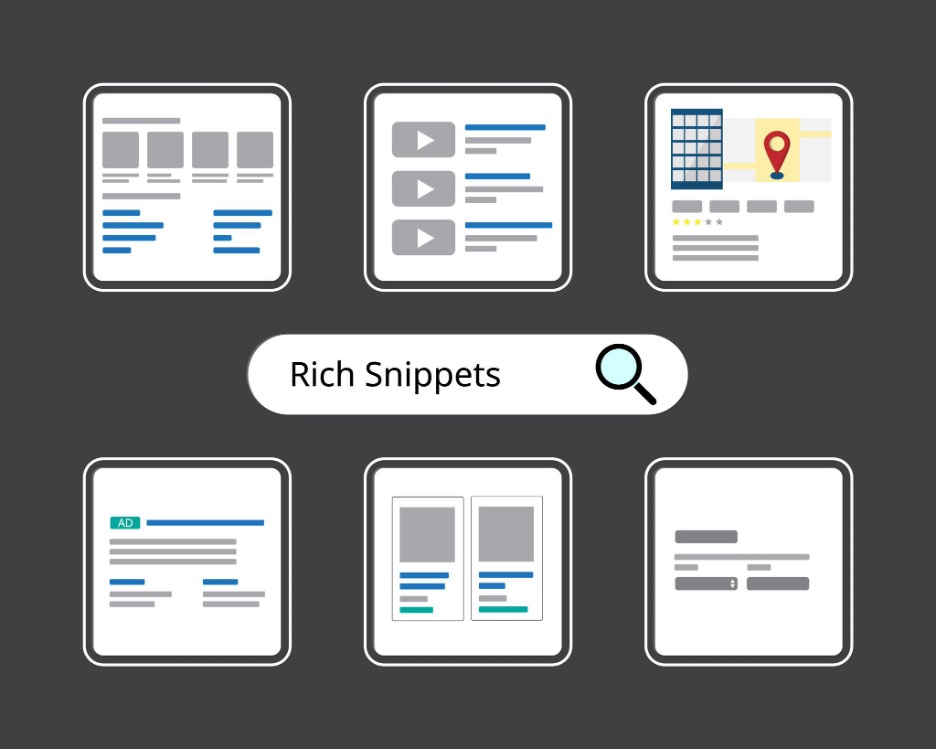
It enables rich results such as:

  • review stars
  • FAQs
  • product information
  • event listings
  • recipe details

Businesses that ignore structured data miss opportunities to enhance their search appearance.

In an increasingly competitive results page, clear signals matter.

Structured data acts as a communication layer between websites and search engines.

  1. Forgetting That SEO Is Competitive

SEO does not exist in isolation.

Every search query represents a competition between multiple sources of information.

Businesses often ask why their website is not ranking despite having “good content.”

The real question should be:

Is it better than what already exists?

SEO success requires continuous improvement and differentiation.

Simply matching competitors is rarely enough.

  1. Neglecting Search Beyond Google

While Google remains dominant, the search landscape is expanding.

People now search across:

  • YouTube
  • social platforms
  • e-commerce marketplaces
  • AI assistants
  • voice interfaces

SEO strategy must adapt to this broader environment.

Businesses that optimize only for traditional search results risk missing audiences who discover information through alternative platforms.

  1. Treating SEO as an Isolated Department

In many organizations, SEO operates separately from other teams.

This often limits its effectiveness.

Successful SEO requires collaboration with:

  • content teams
  • developers
  • marketing teams
  • PR teams
  • product teams

Search visibility reflects the overall quality of a business’s digital presence.

When SEO insights influence broader strategy, the results become far more powerful.

  1. Measuring the Wrong Metrics

Some businesses still measure SEO success using vanity metrics such as:

  • keyword rankings
  • raw traffic numbers

These indicators provide only partial insight.

What truly matters is:

  • qualified traffic
  • engagement
  • conversions
  • brand visibility
  • long-term search equity

SEO should ultimately support business growth.

Metrics must therefore align with real business outcomes.

  1. Underestimating the Strategic Value of SEO

Perhaps the biggest misunderstanding about SEO is its perceived importance.

Some organizations treat SEO as a minor marketing tactic rather than a strategic asset.

In reality, search sits at the center of digital discovery.

Before making decisions, people search for:

  • products
  • services
  • solutions
  • advice

Businesses that dominate search visibility shape these decisions.

Those that ignore SEO often depend heavily on paid channels or struggle to build sustained visibility.

SEO is not merely a marketing activity.

It is a long-term digital asset that compounds over time.

The Future of SEO: Strategy, Trust, and Intelligence

As search engines incorporate AI and advanced language models, the nature of search results is evolving.

Instead of simply listing pages, search systems increasingly synthesize information from multiple sources.

This makes credibility even more important.

Search engines must decide:

  • Which sources can be trusted
  • Which insights deserve to be cited
  • Which businesses demonstrate real expertise

The websites that succeed will be those that combine:

  • technical excellence
  • authoritative content
  • strong brand signals
  • positive user experiences

SEO in the AI era is not about manipulating algorithms.

It is about earning recognition as a reliable source of knowledge.

A Message to Business Owners

If you are a business owner evaluating SEO, consider this perspective.

SEO is not simply a service that delivers rankings.

It is a strategic process that helps search engines understand:

  • who you are
  • what you offer
  • why your business deserves attention

Organizations that invest in SEO thoughtfully build a powerful advantage: sustained visibility at the moment customers are searching for solutions.

Few marketing channels offer this level of long-term impact.

A Message to the New Generation of SEOs

For Gen Z professionals entering the SEO industry, this is an exciting time.

Search is evolving rapidly, and the role of SEO is expanding.

The future SEO professional must understand:

  • information architecture
  • content strategy
  • AI search systems
  • user behavior
  • digital reputation

Most importantly, they must think beyond tactics.

True SEO expertise lies in understanding how information is discovered, evaluated, and trusted online.

Those who develop this perspective will play a crucial role in shaping the future of digital visibility.

Point To Ponder On...

SEO has matured significantly since its early days.

What was once viewed as a technical trick has become a sophisticated discipline that blends marketing, technology, and information science.

Businesses that continue to misunderstand SEO risk falling behind in an increasingly competitive digital environment.

But those that embrace its true strategic value gain something far more powerful than rankings.

They gain discoverability, credibility, and long-term digital authority.

In a world where search increasingly shapes decisions, SEO is no longer optional.

It is indispensable.


w3c-aligned-SEO

Why W3C-Aligned Websites Are More AI-Friendly

TL;DR:  How AI is Redefining Technical SEO (Click to expand)

In the age of AI Overviews and Copilot, search engines no longer just rank links—they synthesize answers. This shift demands a new level of technical clarity:

  • From Keywords to Clarity: AI rewards structured, parseable data over keyword density.
  • W3C Compliance as Strategy: Clean code is now a visibility strategy, not just a developer's checklist.
  • The Competitive Edge: Website structure is the primary bridge between your content and AI-driven synthesis.

In this new environment, W3C compliance is no longer a developer checkbox. It is an AI visibility strategy.

Let’s unpack why.

From Crawling Pages to Generating Answers

Traditional search engines crawled, indexed, and ranked documents. AI systems now:

  • Parse content structure
  • Extract entities and relationships
  • Chunk content semantically
  • Generate synthesized answers
  • Attribute sources (selectively)

This shift changes what “optimization” means.

When AI systems interpret your content, they rely heavily on structural cues. If your HTML is messy, semantically weak, or structurally ambiguous, you’re forcing the system to guess.

AI does not reward guesswork.

That’s where the standards defined by the World Wide Web Consortium (W3C) come in.

What W3C Alignment Really Means

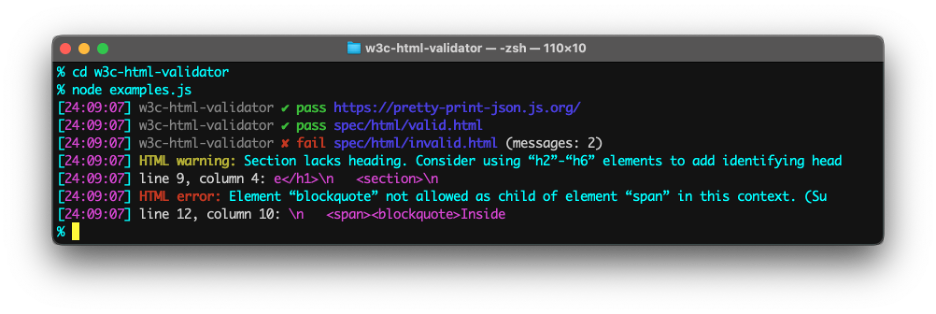
W3c-HTML-validator

W3C standards govern how web technologies are structured, interpreted, and rendered. Alignment typically includes:

  • Valid HTML
  • Semantic markup
  • Logical heading hierarchy
  • Accessibility compliance (WCAG)
  • Proper use of ARIA attributes
  • Structured data integration

While browsers tolerate imperfect code, AI extraction systems are less forgiving.

The cleaner the structure, the lower the ambiguity.

  1. Semantic HTML: Teaching AI What Matters

AI systems prioritize structure before text.

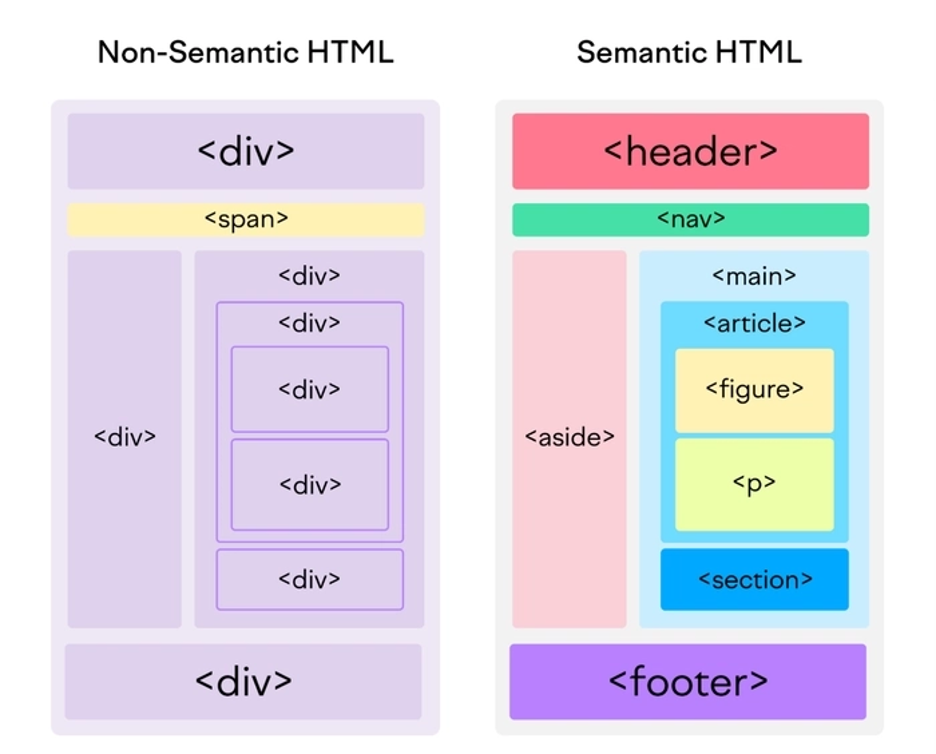
semantic HTML v/s Non-Semantic HTML

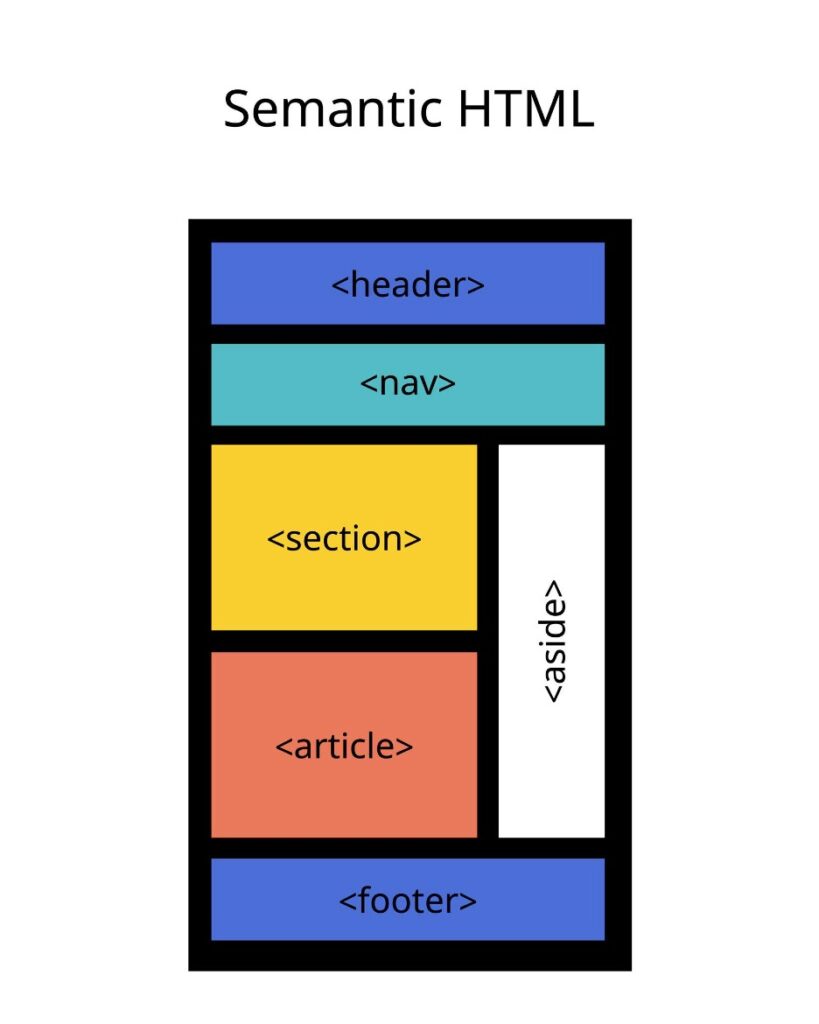
Using semantic elements such as:

  • <header>
  • <nav>
  • <main>
  • <article>
  • <section>
  • <aside>
  • <footer>

helps machines differentiate core content from navigation, boilerplate, and promotional material.

A page built entirely with nested <div> elements forces AI to infer meaning based on heuristics. A semantically structured page explicitly signals:

  • This is the primary topic.
  • This is supporting context.
  • This is navigational.
  • This is supplementary.

For AI systems building embeddings and chunking documents for retrieval-augmented generation (RAG), clean segmentation improves contextual accuracy.

In short: semantic HTML reduces hallucination risk.

Semantic HTML

rich Snippets

  1. Structured Data: Reducing Inference, Increasing Certainty

While structured data is not technically a W3C standard, it operates within W3C-compliant frameworks and dramatically enhances machine readability.

When you implement Schema.org via JSON-LD, you explicitly define:

  • Organization
  • Author
  • Article
  • Product
  • FAQ
  • Review
  • Event

Instead of AI inferring authorship, it receives a machine-readable declaration.

Instead of guessing whether a page is a product or editorial content, it knows.

For AI systems synthesizing responses, structured data:

  • Improves entity disambiguation
  • Enhances knowledge graph connections
  • Strengthens attribution probability
  • Reduces factual distortion

In the AI era, structured data is not just about rich results. It is about semantic certainty.

  1. Accessibility Standards Mirror AI Parsing Logic

What is Alt Text

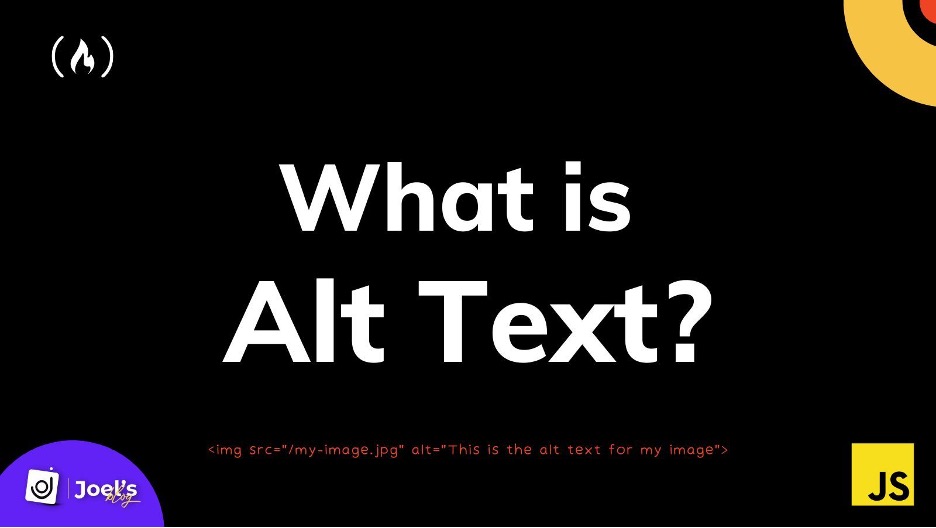
W3C’s Web Content Accessibility Guidelines (WCAG) were designed for assistive technologies. Interestingly, AI systems often parse content similarly to screen readers.

When you implement:

  • Descriptive alt text
  • Proper ARIA roles
  • Logical heading hierarchies
  • Clear anchor text
  • Form labeling

you create a structure optimized for machine interpretation.

Accessible content:

  • Avoids hidden or misleading elements
  • Preserves logical reading order
  • Enhances clarity in content segmentation
  • Reduces extraction noise

Accessibility compliance indirectly improves AI readability.

In many ways, accessibility and AI optimization are converging disciplines.

WCAG-Accessability

  1. Validation Improves Extraction Efficiency

Invalid HTML can cause:

  • Broken DOM trees
  • Misplaced headings
  • Truncated content blocks
  • Duplicate parsing of elements

While browsers repair errors visually, AI extraction systems often work directly with the DOM structure.

W3C validation ensures:

  • Proper nesting
  • Closed tags
  • Valid attributes
  • Clean markup hierarchy

At scale, AI systems prioritize efficiency. Pages that are easier to parse reduce processing friction.

Cleaner structure increases your likelihood of accurate representation in AI-generated answers.

  1. Clear Hierarchy Enables Better Content Chunking

AI systems do not “read” pages the way humans do. They:

  • Break content into chunks
  • Embed those chunks into vector space
  • Retrieve relevant sections for generation

A clear heading hierarchy (<h1> to <h6>) helps define chunk boundaries.

For example:

  • <h1> defines the core topic
  • <h2> defines subtopics
  • <h3> defines supporting arguments

When headings are misused or purely stylistic, chunk boundaries become ambiguous.

Proper hierarchy improves:

  • Contextual retrieval
  • Topical clustering
  • Subtopic authority
  • Answer accuracy

For AI retrieval, structure is relevance.

  1. Entity Clarity and Knowledge Graph Integration

AI search increasingly operates at the entity level rather than the keyword level.

W3C-aligned markup supports:

  • Clear entity references
  • Proper canonical signals
  • Consistent naming
  • Structured organization details

When your brand, author, and organizational details are consistently marked up, you strengthen knowledge graph association.

This increases the probability of:

  • Citation in AI summaries
  • Inclusion in AI answer panels
  • Recognition as a trusted source

Ambiguous entities rarely get cited.

  1. Reduced Hallucination Risk

One emerging challenge in AI search is hallucination — when models fabricate or distort information.

While hallucinations are model-level phenomena, ambiguous web content contributes to them.

Poor structure leads to:

  • Misattributed quotes
  • Context leakage
  • Topic blending
  • Incorrect summarization

W3C-aligned websites provide clearer boundaries between:

  • Opinion and fact
  • Navigation and content
  • Primary and supplementary material

Clarity reduces distortion.

  1. Preparing for AI-First Indexing

AI systems are evolving beyond traditional indexing. We’re seeing movement toward:

  • Conversational retrieval
  • Contextual summarization
  • Real-time synthesis
  • Multi-source blending

In such systems, documents compete not just for rankings, but for inclusion within generated responses.

To qualify, content must be:

  • Machine-readable
  • Structurally sound
  • Entity-defined
  • Contextually clear

W3C alignment is foundational to all four.

The Strategic Implication for SEO Leaders

For SEO professionals, especially those navigating AI search transformation, this is a mindset shift.

Technical SEO is no longer about crawl budget and canonical tags alone.

It now includes:

  1. Semantic HTML enforcement
  2. Structured data precision
  3. Accessibility alignment
  4. Validation discipline
  5. Clear information architecture

These are not compliance tasks. They are AI visibility multipliers.

If content is king, structure is its translator.

Practical Checklist for AI-Friendly W3C Alignment

Here’s a practical implementation roadmap:

Step 1: Validate HTML

Run pages through W3C validation tools. Fix structural errors systematically.

Step 2: Audit Heading Hierarchy

Ensure one <h1> per page. Maintain logical order.

Step 3: Replace Div-Based Layouts

Refactor major sections using semantic HTML5 elements.

Step 4: Implement Structured Data

Use JSON-LD to define organization, authors, and content types clearly.

Step 5: Review Accessibility

Audit for WCAG compliance — alt text, ARIA roles, keyboard navigation.

Step 6: Strengthen Entity Signals

Standardize author bios, company descriptions, and canonical naming.

The Bigger Picture: Structure as Trust Signal

AI systems operate probabilistically. They assign confidence scores to retrieved content.

When your website:

  • Is valid
  • Is structured
  • Is accessible
  • Is semantically rich

you reduce uncertainty.

Reduced uncertainty increases the probability of selection.

In AI search, probability is visibility.

Point To Ponder On...

The W3C was created to ensure that the web functions consistently across browsers.

In 2026, its standards serve another purpose:

They make your website interpretable by systems that generate answers instead of ranking pages.

As AI search matures, websites that are structurally clear will outperform those that are merely content-rich.

Because in the age of AI, clarity is competitive advantage.

Some previous related posts :-

  1. Google Also Needs SEO Because It Is The World Wide Web Consortium Which Is A Standard
  2. How Good SEO Contributes To The Larger Objectives Of The Web Eco System
AI-Search-India-SME

AI Search Explained — A Practical Guide for Indian SMEs

TL;DR: AI search now summarizes instead of listing — and Indian SMEs will win not by ranking #1, but by being included in the answer.

To increase AI visibility:

  • Replace vague messaging with explicit service descriptions.

  • Structure pages with clean headings and FAQs.

  • Implement structured data (Schema / JSON-LD).

  • Strengthen trust signals (reviews, case studies, verified contact info).

  • Add local and regional-language relevance.

In India’s next wave of search, clarity, structure, and trust — not just rankings — will decide discoverability.

Why clarity, structure, and trust will decide who gets discovered in India’s next wave of search

Search used to be a highway that led people to your website. Today, search increasingly acts like a concierge that answers questions for the user — sometimes without sending them anywhere. That change is driven by AI-augmented search systems that synthesize information from many sources and return a single concise answer.

For India’s millions of small and medium enterprises, the question is simple: how do you make sure your business is the one the concierge quotes?

This article explains how AI search works in plain language, why it matters to Indian SMEs, what the immediate risks and opportunities are, and a practical roadmap to make your business AI-visible — all grounded in data and expert signals.

The big picture: from “10 blue links” to one synthesized answer

Search used to follow a predictable flow: a user queries, a search engine returns a ranked list of web pages, and the user clicks through to compare. Now, many platforms use generative AI to read multiple pages, extract the most relevant parts, and synthesize a single answer — sometimes showing it at the top of the results or in a single “AI overview” box.

That means visibility is no longer only about ranking at #1 — it’s about being included in the answer. In short: inclusion matters as much as rank.

This shift is real and deployed at scale. Google’s rollout of “AI Overviews” (its generative answer feature) began in 2024 and has been expanded worldwide; Google said it expected to reach over a billion users monthly as it rolled out AI Overviews more broadly.

What these systems do (simply)

  1. Crawl and index web content (as before).
  2. Break pages into smaller chunks (sections, Q&As, product specs).
  3. Convert those chunks into vectors (numerical representations).
  4. Retrieve the most relevant chunks for a query.
  5. Use a language model to synthesize an answer from those chunks.

This approach is often called Retrieval-Augmented Generation (RAG). It lets the system generate human-like, concise responses while grounded in retrieved sources — when the sources are clear and machine-readable.

Why Indian SMEs should care — five data points that matter

  1. India’s economy depends on MSMEs: India houses tens of millions of micro, small and medium enterprises that power jobs and exports. (Various government and industry reports place the number of MSMEs in the tens of millions — use your business register data to confirm exact counts for specific planning.)
  2. AI Overviews and generative answers are now a mainstream search feature (Google’s global rollout and adoption has been fast). If your potential customers ask “best CA firm in Pune” and the AI mentions your competitor first, that initial impression is set before a click.
  3. Indic languages and voice usage are growing fast: a majority of India’s internet users now access content in Indic languages and voice/search interactions are rising — both trends favor clear, localized, and structured content.
  4. Structured data adoption is widespread and useful: Schema.org vocabularies and JSON-LD structured data are used across millions of sites and are leveraged by major platforms to interpret business, product, and review information. Using structured data gives machines a straightforward way to understand what your pages are about.
  5. There are real risks: generative summaries can amplify misleading or low-quality data (there have been reports of incorrect or malicious contact information appearing in AI summaries), so clarity and authoritative signals matter both to placement and to preventing misrepresentation.

(I’ve cited primary, high-quality sources for those five claims above — scroll to the references at the end.)

How AI picks which businesses to mention — the signals that matter

AI selection for inclusion tends to weight signals that reduce the model’s uncertainty about your content. For SMEs, that boils down to five practical signals:

  1. Clarity of messaging — explicit, unambiguous statements of what you do and who you serve (“GST filing for textile exporters in Surat” beats “we offer innovative solutions”).
  2. Structure on the page — clean heading hierarchy, FAQs, explicit service pages with H1/H2/H3 structure, and clear bullet lists for features/benefits.
  3. Machine-readable metadata — structured data (Organization, LocalBusiness, Product, Service, FAQ, Review markup).
  4. Trust and authority — verifiable contact details, founder bios, certifications, client case studies, credible reviews.
  5. Local signals — consistent NAP (name/address/phone) across business directories, an optimized Google Business Profile, and local language pages where appropriate.

Put simply: clear human copy + clear machine signals = higher probability of inclusion.

Expert context: what industry leaders are saying

Google framed AI Overviews as a product change to make search more helpful by generating concise overviews drawn from many sources; Google’s product teams have discussed expansion of these features publicly.

At the same time, leaders inside the search ecosystem have warned teams about a rapidly changing operating reality where AI will reshape how people discover information — a reminder that product and ranking mechanics are evolving and that businesses should adapt. (See public remarks from senior search leaders emphasizing that search is entering a new phase of AI-driven answers.)

SEO practitioners and search-engine liaisons interviewed in industry forums have similarly advised that “good SEO” now pairs traditional best practices (useful content, technical hygiene) with clear metadata and structured content that reduces ambiguity for machine readers. (Industry interviews and commentaries from search experts reflect this practical advice.)

Practical playbook for Indian SMEs — a 6-month action plan

This is a prioritized, low-friction sequence you can apply without becoming an engineer. I’ve grouped items into quick wins, developer tasks, and strategic content moves.

Quick wins (0–6 weeks)

  • Audit your homepage headline and services: Replace marketing vagueness with explicit, user-centric descriptions. Example: change “We deliver digital growth” to “We provide SEO and Google Business Profile management for dental clinics in Pune.”
  • Update Google Business Profile: Ensure category accuracy, up-to-date hours, service area, high-quality photos, and ask satisfied customers for reviews.
  • Consistent NAP: Make sure your business name, address, phone and operating hours are identical across your website, directory listings, and GST/registration profiles.

Developer tasks (4–12 weeks)

  • Add structured data (JSON-LD): Implement Organization and LocalBusiness schema on the homepage; add Service, Product, FAQ, and Review schema on relevant pages. If you use a CMS, many plugins can add JSON-LD without custom code. (Schema.org documentation is a good starting point.)
  • Fix heading hierarchy and semantic HTML: Ensure one <h1> per page, logical <h2>/<h3> subsections, and use semantic tags (<main>, <article>, <nav>). Clean markup helps both accessibility and machine parsing.
  • Create an FAQ section: Turn common customer questions into an FAQ block and mark it up with FAQ schema so machines can extract and surface crisp Q&A.

Content & authority (6–24 weeks)

  • Build question-led pages: Write pages that directly answer customer questions common in your market (“How much does X cost in India?”, “How long does Y take?”, “What documents are needed?”). Keep answers short, structured, and factual.
  • Create a local case study: Detailed (problem → action → results) case studies with client names/locations and measurable outcomes are extremely valuable signals.
  • Regional language pages: If you serve a state or city where a significant portion of users speak a local language, create at least one service page in that language (Hindi, Marathi, Gujarati, Tamil, etc.). This captures growing regional search demand. IAMAI data shows strong Indic language adoption.

E-commerce and product businesses: special considerations

If you sell products online, AI shopping assistants will increasingly surface product summaries and comparisons. For product pages:

  • Use full Product schema with price, availability, SKU, brand, GTIN where available.
  • Include structured review data and ensure review content is real and transparent.
  • Provide clear specs and comparison tables (machine-readable tables are useful).
  • Keep return policy, shipping, and warranty information obvious — AI looks for crisp facts.

Local and voice search: don’t ignore the phone user

India’s mobile, voice, and local searches are growing rapidly. Voice queries are often phrased as questions — they reward succinct answers and structured content. For local businesses:

  • Build short, natural Q&A (FAQ) pages that answer likely voice questions.
  • Ensure your Google Business Profile is optimized and regularly updated.
  • Encourage reviews (respond to them) and include local landmarks in your address fields to help disambiguate.

The Internet and Mobile Association of India (IAMAI) data points to strong Indic language usage and growing voice/search interactions — a signal that localized, question-focused content will pay dividends.

Risk mitigation: prevent misrepresentation in AI summaries

Generative systems can sometimes surface incorrect or malicious contact details or misleading snippets drawn from low-quality pages. To reduce the risk of being misquoted or misrepresented:

  • Keep your official contact info and staff bios on your site up to date.
  • Place critical contact info in clear, crawlable HTML (not images).
  • Monitor mentions for incorrect data and correct the source (e.g., directory sites).
  • Register and maintain authoritative profiles (government registrations, business directories) to provide verified references. Reports have shown that AI summaries can be manipulated by bad sources, so trustworthy signals matter.

Measuring success: metrics that matter now

Traditional rank tracking is still useful, but add these KPIs to your dashboard:

  • Answer inclusion rate: where your brand/domain is cited in AI overview boxes (track manually for key queries).
  • Qualified lead rate: share of leads coming from pages optimized for direct answers.
  • Local visibility: Google Business Profile impressions and actions.
  • Structured data coverage: percentage of pages with valid JSON-LD and successful Rich Result testing.
  • Bounce vs engagement: AI may reduce casual clicks; measure time on page, form fills, and phone calls to understand quality of traffic.

The competitive opportunity for Indian SMEs

AI search changes the nature of the advantage. Where backlinks and huge content budgets once dominated, AI now rewards clarity, structure, and local authority — areas where nimble SMEs can outcompete larger but fuzzier brands.

A small plumbing company that clearly lists “EMI options, service area: South Delhi, common fixes & prices, and a 2-minute FAQ in Hindi” is more likely to be included in an AI-generated answer for “affordable water heater repair near me” than a national aggregator site with generic wording.

A final checklist (quick reference)

  • Replace vague headlines with specific service statements.
  • One H1 per page. Use H2/H3 to define logical sections.
  • Add Organization/LocalBusiness/Service/Product/FAQ JSON-LD where applicable.
  • Publish at least 3 client case studies with measurable outcomes.
  • Keep contact info in plain HTML and consistent across the web.
  • Add one regional language landing page for your largest local market.
  • Regularly monitor AI overview results for key queries, and correct bad third-party listings if they surface incorrect data.

AI search is not an existential threat to SMEs — it’s a rewiring of how discoverability works. The businesses best positioned to win are the ones that make themselves easy to understand for both humans and machines: explicit positioning, clean structure, local credibility, and machine-readable metadata.

In 2026, clarity is the competitive moat. For Indian SMEs, clarity is also an equalizer.

Sources & Further Reading (selected)

  • Google: “Generative AI in Search” (AI Overviews rollout).
  • Google: AI Overviews expansion (Oct 2024 announcement).
  • Schema.org — developer docs and vocabulary (structured data guidance).
  • IAMAI / Kantar report — Indic language & voice usage in India (Internet in India report).
  • Reporting on AI Overviews risks and incorrect contact details (analysis on AI summary vulnerabilities).
  • NITI / industry briefs on MSME scale and role in India’s economy.
SEO-PPC

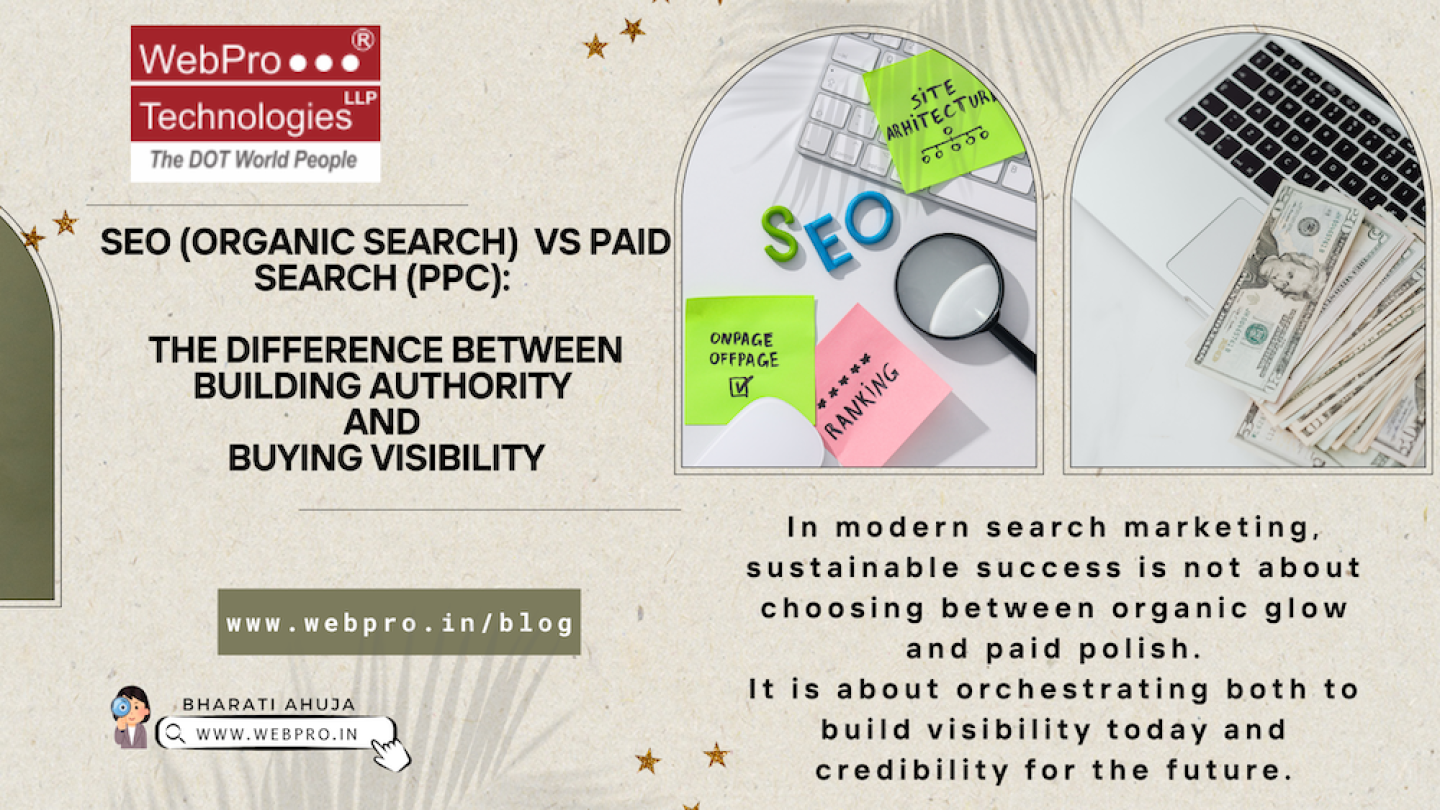
SEO (Organic Search) vs Paid Search (PPC): The Difference Between Building Authority and Buying Visibility

Why Organic Search Is Like Long-Term Fitness, While Paid Search Is Instant Cosmetic Enhancement — and Why Modern Brands Need Both

When WebPro recently added Paid Search (Google Ads) to its service portfolio, it prompted an interesting reflection on something every digital marketer intuitively knows but rarely articulates clearly:
SEO and Paid Search may appear side-by-side on the same SERP, but they operate on fundamentally different growth principles.

The simplest way to describe it is this:

  • SEO is internal fitness. It builds strength, endurance, and long-term visibility.
  • Paid Search is professional makeup. It delivers instant glow, visibility, and impact — but only as long as the application continues.

Both have value. Both are strategic. And both must be deployed based on business goals, timelines, and competitive pressure.

But confusing one for the other leads to flawed expectations, wasted budgets, and poor long-term growth decisions.

The Core Difference: Earned Authority vs Rented Attention

From a technical standpoint, the SEO–PPC divide comes down to one fundamental distinction:

SEO Paid Search
You earn rankings through relevance, authority, and trust You rent visibility through bidding and budget
Visibility compounds over time Visibility stops the moment spend stops
Algorithm rewards quality signals Auction rewards bid + quality score
Equity builds in the domain No lasting SERP equity is created

SEO is an asset-building model.
Paid Search is a media-buying model.

SEO: The Physiology of Organic Strength

Search engines treat organic rankings as a reflection of site-level and page-level credibility built through:

  1. Technical Health (Your Core Fitness)
  • Crawlability and indexation
  • Core Web Vitals
  • Site architecture
  • Schema and semantic clarity
  • Log file optimization

This is your metabolic foundation. Without it, no amount of content or links deliver sustainable results.

  1. Content Relevance (Muscle Development)
  • Search intent matching
  • Topical authority clusters
  • E-E-A-T alignment
  • Information gain and freshness
  • Entity coverage

Over time, Google learns:
“This domain consistently answers questions better than others.”

  1. Authority Signals (Stamina & Endurance)
  • High-quality backlinks
  • Brand mentions
  • User engagement metrics
  • Historical trust

These signals compound. Rankings stabilize. Traffic becomes less volatile. Cost per acquisition trends downward.

This is why SEO behaves like long-term fitness:
Once built, it continues delivering strength even if active training pauses.

Paid Search: The Physics of Auction-Driven Visibility

Paid Search operates on an entirely different system:

  1. Bid + Quality Score = Visibility

Your position is a function of:

  • Max CPC
  • Expected CTR
  • Landing page relevance
  • Ad relevance
  • Historical performance

There is no memory of effort once spend stops.
No compounding authority.
No residual ranking.

  1. Conversion Engineering, Not Authority Building

PPC excellence is about:

  • Query segmentation
  • Match type control
  • Smart bidding strategies
  • Audience layering
  • Creative testing
  • Landing page CRO

You are not “building presence.”
You are buying attention at scale.

Just like professional makeup:

  • It can create instant impact.
  • It can outperform natural glow in the short term.
  • But it has no permanence.

The Strategic Mistake: Expecting PPC to Behave Like SEO (or Vice Versa)

Common business misconceptions:

“We’ll run Google Ads until SEO starts working, then stop ads.”

This ignores:

  • Brand search lift
  • Assisted conversion paths
  • Query discovery for SEO
  • SERP real estate domination
  • Defensive bidding against competitors

“SEO will reduce our dependency on paid completely.”

This ignores:

  • Competitive commercial keywords dominated by ads
  • Seasonal demand spikes
  • New product launches
  • High-intent bottom-funnel queries

Modern SERPs are hybrid ecosystems, not either-or channels.

When to Prioritize Each (Time, Goal, and Market Maturity)

SEO is optimal when:

  • You want sustainable CAC (Customer Acquisition Cost) reduction
  • You are building category authority
  • You have informational and mid-funnel depth
  • You are investing in long-term brand equity
  • You compete in trust-driven markets (health, finance, education, B2B)

Paid Search is optimal when:

  • You need immediate demand capture
  • You are entering new markets
  • You are launching new offerings
  • You are testing messaging and positioning
  • You are in high-commercial-intent verticals

The Real Power: Search Synergy, Not Search Silos

The most advanced growth teams no longer run SEO and PPC as separate verticals.

They integrate:

  • Search query mining from Google Ads → Content strategy
  • High-CTR organic titles → Ad copy optimization
  • PPC landing page CRO → SEO UX improvements
  • Organic ranking gaps → Smart bidding coverage
  • Brand SERP control → Dual presence (Ad + Organic)

This creates:

  • Lower blended CPA
  • Higher SERP dominance
  • Better intent mapping
  • Faster algorithm learning loops

From Visibility to Credibility

Paid Search buys visibility.
SEO earns credibility.

Visibility can be purchased.
Trust must be built.

And in the era of AI-driven search, entity authority, and user trust signals, this distinction becomes even more critical. Search engines are increasingly weighting:

  • Brand familiarity
  • Topical depth
  • Historical satisfaction
  • Cross-channel consistency

No ad budget can replace that.

The WebPro Perspective

At WebPro, the addition of Paid Search to our service portfolio was not about replacing SEO with ads. It was about completing the search growth stack.

Personally, as a staunch advocate of organic search, my entire professional journey has evolved alongside the evolution of search itself. As my understanding of algorithms, ranking systems, and user behavior matured, my natural focus always remained on building long-term visibility through SEO — creating assets that compound in value, authority, and trust over time.

However, one critical realization became impossible to ignore, especially while working with ecommerce brands:

For a new or growing ecommerce business, sales, visibility, and brand recall cannot wait for organic authority to mature. Revenue targets, investor expectations, inventory cycles, and competitive pressure demand traction from day one.

This is where Paid Search becomes not just an option, but a strategic necessity in the marketing mix at the very outset.

PPC provides:

  • Immediate presence on high-intent commercial queries
  • Instant data on converting keywords and user behavior
  • Rapid brand exposure in competitive SERPs
  • A controllable, scalable demand engine while organic authority is still being built

In such environments, relying only on SEO is like starting a marathon with no warm-up period allowed. You may build endurance, but the race has already begun.

At WebPro, we therefore view:

  • SEO as the long-term authority engine
  • Paid Search as the short-term acceleration and validation layer

Some goals require instant spotlight.
Some require compounding strength.
The strongest growth comes when both operate in alignment — not in isolation.

Just as in human performance:

  • Internal fitness builds lasting resilience.
  • External enhancement delivers immediate confidence and presence.
  • True excellence comes from knowing when to train, when to amplify, and how to balance both under a unified strategy.

In modern search marketing, sustainable success is not about choosing between organic glow and paid polish.
It is about orchestrating both to build visibility today and credibility for the future.


Your-Website-is -an-AI-Knowledge-Source

Your Website Is Not a Brochure Anymore—It’s an AI Knowledge Source

For years, we treated websites like digital brochures.

·      A homepage.

·      A few service pages.

·      An “About Us” story.

·      A contact form.

If it looked decent, loaded fast, and ranked for a few keywords, we considered the job done.

That model worked—when search engines behaved like directories and users behaved like readers.

But that era is over.

Today, your website is no longer being read only by humans.
It is being parsed, interpreted, summarized, and re-used by AI systems—often before a user ever clicks a link.

In the age of AI-driven search, your website has become a knowledge source.

And that single shift changes everything about how websites must be planned, written, structured, and optimized.

The Invisible Audience Has Arrived

When we talk about “AI search,” we usually think of interfaces like Google AI Overviews, ChatGPT, Perplexity, or other conversational engines.

But the real change is not the interface.

It’s how content is consumed.

AI systems don’t browse websites the way humans do. They:

  • Break content into semantic chunks
  • Identify intent, expertise, and topical depth
  • Cross-reference your content with other sources
  • Decide whether your site is worth trusting as a knowledge input

In many cases, the AI may read your content without sending you traffic—yet still influence what users believe, buy, or decide.

That means your website now plays two roles simultaneously:

  1. A conversion platform for humans
  2. A knowledge repository for machines

Most websites are still designed only for the first role.

Why the “Brochure Website” Model Is Failing

A brochure website is built on assumptions that no longer hold true:

 Assumption 1: Users will read everything themselves

AI now summarizes for them.

 Assumption 2: Ranking equals visibility

AI answers can bypass rankings altogether.

 Assumption 3: Keywords define relevance

AI prioritizes meaning, relationships, and authority, not keyword density.

 Assumption 4: Design matters more than depth

For AI, clarity beats creativity.

This doesn’t mean design is irrelevant. It means design alone is insufficient.

A beautifully designed site with shallow content is nearly invisible to AI systems.

What Does “AI Knowledge Source” Actually Mean?

Calling your website an “AI knowledge source” doesn’t mean stuffing it with technical jargon or AI buzzwords.

It means your site consistently answers:

  • What is this business truly expert in?
  • What problems does it understand deeply?
  • Can its content be trusted, quoted, and reused?

From an AI’s perspective, a strong knowledge source has:

  • Clear topical boundaries
  • Explicit explanations
  • Contextual depth
  • Logical content relationships
  • Consistent expertise signals

In other words, your website must think like a teacher, not a salesman.

Content Is No Longer Just Marketing—It’s Training Data

This is an uncomfortable truth for many businesses:

Every article you publish is no longer just content.
It is training material for AI systems that decide:

  • Whether to cite you
  • Whether to summarize you
  • Whether to ignore you

Thin, generic, SEO-only content does more harm than good in this environment.

AI systems are increasingly capable of detecting:

  • Rewritten content
  • Shallow explanations
  • Lack of original insight
  • Content written only to rank

What they reward instead is:

  • First-hand experience
  • Clear reasoning
  • Structured explanations
  • Opinion backed by evidence

This is why content quality is no longer subjective.
It is algorithmically evaluated at a much deeper level.

Structure Matters More Than Ever

Humans skim.
AI dissects.

A website optimized for AI understanding has:

1. Clear Information Architecture

Pages are logically grouped by topic, not just navigation convenience.

2. Explicit Headings With Meaning

Not clever headings—descriptive ones.

3. Question-Answer Patterns

Content that directly responds to real user questions.

4. Context Before Conclusions

AI needs to understand why before it accepts what.

5. Internal Linking With Purpose

Links that show topical relationships, not just SEO manipulation.

Think less like a designer.
Think more like a librarian.

SEO Is Evolving Into Knowledge Optimization

Traditional SEO focused on:

  • Keywords
  • Backlinks
  • Rankings
  • Traffic

AI-era SEO focuses on:

  • Topical authority
  • Entity understanding
  • Semantic clarity
  • Content usefulness

This doesn’t mean SEO is dead.
It means SEO is growing up.

Search engines are no longer matching words—they are evaluating understanding.

And understanding comes from how well your website explains its world.

The Role of Expertise Has Changed

Earlier, “expertise” was inferred from backlinks and domain age.

Now, expertise is increasingly inferred from:

  • Depth of explanation
  • Consistency of viewpoint
  • Ability to handle nuance
  • Coverage of edge cases
  • Clarity of definitions

A true AI-ready website doesn’t avoid complexity—it organizes it.

This is especially critical for industries like:

  • SEO and digital marketing
  • Healthcare and wellness
  • Finance and legal services
  • Technology and SaaS
  • Education and training

In these spaces, AI systems are extra cautious about misinformation.

Your website must prove that it knows what it’s talking about.

Why “Short Content” Alone Won’t Work Anymore

There’s a growing misconception that AI prefers short answers.

AI prefers clear answers, not necessarily short ones.

Clarity often requires:

  • Context
  • Examples
  • Definitions
  • Comparisons
  • Explanations of limitations

A 300-word article that barely scratches the surface is less useful than a 2000-word article that explains a concept properly—even if the AI ultimately summarizes it into three lines.

Long-form content is not for users alone anymore.
It’s for machines that need depth to extract meaning.

Your Website Is Being Read Before It Is Ranked

One of the most overlooked changes in AI-driven search is timing.

AI systems can process content:

  • Before traditional indexing
  • Before ranking stabilizes
  • Before traffic arrives

This means visibility is no longer sequential:

Publish → Index → Rank → Get seen

It is now parallel:

Publish → AI reads → AI interprets → AI may reference

Your first impression is no longer your homepage design.

It’s how clearly your content communicates knowledge.

What Businesses Must Rethink Immediately

If your website strategy still revolves around:

  • “We just need a new design”
  • “We need more keywords”
  • “We need more blogs, faster”

You are solving yesterday’s problems.

What you actually need is:

A clear content philosophy

What does your business stand for intellectually?

Defined knowledge areas

What topics do you truly own?

Fewer but better pages

Depth beats volume.

Content written for understanding

Not just for ranking.

Alignment between humans and AI

Readable for people. Structured for machines.

The Website as a Living Knowledge System

The future-ready website is not static.

It evolves as:

  • Industry knowledge changes
  • User questions evolve
  • AI interpretation improves

This means websites must be:

  • Regularly updated for accuracy
  • Expanded thoughtfully, not randomly
  • Reviewed for clarity, not just performance

In this model, a website is closer to a knowledge base than a brochure.

And that is exactly how AI treats it.

What This Means for the WebPro Audience

At WebPro, we’ve always believed that SEO is not a trick—it’s an understanding.

The shift toward AI-driven search only reinforces that belief.

Websites that will succeed in 2026 and beyond are those that:

  • Respect intelligence—human and machine
  • Invest in content that explains, not just promotes
  • Treat SEO as a long-term knowledge strategy

If your website can teach, it will be trusted.
If it can be trusted, it will be visible.
If it is visible, business will follow.

Final Thought: The Question to Ask in 2026

The most important question is no longer:

“Does my website look good?”

It is:

“If an AI reads my website today, what will it learn about my expertise?”

Because whether you realize it or not—
AI is already reading it.

And it’s forming opinions.

If you are serious about SEO, AI visibility, and the future of web presence, the WebPro blog is not optional reading—it’s essential.

Bharati-Webpro-SEO-Ahmedabad

2025 in Review: Articles by Bharati Ahuja on SEO, AI Search, and the Web

In 2025, I tried to publish well-researched and insight-driven articles that reflect how SEO is evolving in the age of AI. These include 25+ original posts on WebPro.in/blog (focused on AI Search, prompt engineering, indexing, and modern SEO strategy) and multiple contributions to industry publications such as Search Engine Land, where I shared strategic perspectives on visibility, skills, and the future of SEO. Across platforms, my goal is always to see that my writing emphasizes clarity, practical vision, and preparation for the AI-driven future of search.

2025 has been a pivotal year for digital search and SEO. The rapid rise of AI-driven discovery, generative models influencing how information is presented, and search experiences beyond classic blue links have made it essential for marketers and technologists to rethink long-held assumptions.

In this context, my articles—both on the WebPro blog and on external authoritative platforms—have consistently addressed the changing landscape. In 2025 my articles deep dive into AI search mechanics, indexing considerations, prompt engineering, as well as broader reflections on skills and strategies that SEOs must develop to stay relevant.

Below is a comprehensive table summarizing her published work in 2025 across platforms, with dates, categories, links, and topics for easy reference.


Date Platform Category Title Link
2025-05-16 Search Engine

Land

SEO 12 Skills Every SEO Specialist Must Master by 2026 https://searchengineland.com/seo-specialist-skills-master-455490 (Search Engine Land)
2025-03-12 Search Engine

Land

SEO Why SEO Is Still Key to Visibility on Search, Social, and AI Platforms https://searchengineland.com/seo-visibility-search-social-ai-platforms-453165 (Search Engine Land)
2025-11-27 WebPro.in/blog AI Search / SEO AIADI (AI-Accessible Data Interface) The Next Evolution After HTML & Schema — 20 Q&A Guide for SEOs https://www.webpro.in/aiadi-ai-accessible-data-interface/
2025-11-24 WebPro.in/blog AI Search / SEO Is Google AI Mode Reading Your Content Before It’s Indexed? https://www.webpro.in/google-ai-mode-reading-content/
2025-11-21 WebPro.in/blog AI Search / SEO Why 2026 Is a Turning Point for Web Presence — SEO in Particular https://www.webpro.in/why-2026-is-a-turning-point/
2025-10-03 WebPro.in/blog SEO Why W3C Standards Outweigh Search Engine Algorithms https://www.webpro.in/why-w3c-standards-outweigh-search-engine-algorithms/
2025-09-27 WebPro.in/blog AI Search / SEO RAG (Retrieval-Augmented Generation) vs. Traditional Indexing: What SEOs Need to Know https://www.webpro.in/rag-vs-traditional-indexing/
2025-09-22 WebPro.in/blog AI Search / SEO How to Prepare an Ideal Audit Report for a Website Redesign and SEO https://www.webpro.in/prepare-audit-report/
2025-09-17 WebPro.in/blog AI Search / SEO The Power of Storytelling in the Professional World https://www.webpro.in/power-of-storytelling/
2025-09-09 WebPro.in/blog AI Search What If LLMs Like ChatGPT Start Showing Sponsored/Paid Results? https://www.webpro.in/llms-sponsored-search-results/
2025-09-08 WebPro.in/blog SEO Why Internal Linking is Crucial for SEO https://www.webpro.in/internal-linking-seo/
2025-09-01 WebPro.in/blog AI Search / SEO What Happens When AI Search Reduces Clicks and Traffic to Websites? https://www.webpro.in/ai-search-traffic-impact/
2025-08-28 WebPro.in/blog AI Search / SEO If Your SEO Is Done Right, You Need Not Worry About AEO (AI Search) https://www.webpro.in/seo-ai-search-aeo/
2025-08-20 WebPro.in/blog AI Search / SEO From Keywords to Prompts: The Communication Shift Shaping the Future of Search https://www.webpro.in/from-keywords-to-prompts-the-communication-shift-shaping-the-future-of-search/ (WebPro Technologies LLP Ahmedabad)
2025-06-30 WebPro.in/blog SEO From Ask Jeeves to AI Search: Have We Come Full Circle? https://www.webpro.in/ask-jeeves-to-ai-search/
2025-06-04 WebPro.in/blog AI Search / SEO Are the AI Prompts the New Search Queries? https://www.webpro.in/are-the-ai-prompts-the-new-search-queries/
2025-05-05 WebPro.in/blog SEO SEO in the Era of Short-Form Video: Are Blogs Still Relevant in 2025? https://www.webpro.in/seo-short-form-video-relevance/
2025-04-29 WebPro.in/blog AI Search / SEO The Changing Role of SEO Professionals https://www.webpro.in/changing-role-of-seo-professionals/
2025-04-07 WebPro.in/blog Digital Marketing The Importance of Email Marketing in 2025 https://www.webpro.in/importance-of-email-marketing-2025/
2025-03-07 WebPro.in/blog Social Media The Evolution of Influencer Marketing https://www.webpro.in/evolution-of-influencer-marketing/
2025-02-26 WebPro.in/blog SEO User Experience as a Ranking Factor for Search Engines https://www.webpro.in/user-experience-ranking-factor/
2025-02-25 WebPro.in/blog SEO Voice Search Optimization: How to Optimize for the Future of Search https://www.webpro.in/voice-search-optimization/
2025-02-19 WebPro.in/blog SEO Understanding Different Types of Search Queries https://www.webpro.in/types-of-search-queries/
2025-02-17 WebPro.in/blog AI Search / SEO How to Use Python for SEO https://www.webpro.in/python-for-seo/
2025-02-10 WebPro.in/blog AI Search / SEO The Importance of llms.txt for Websites in the Era of AI-Driven Search Results https://www.webpro.in/llms-txt-importance/
2025-02-08 WebPro.in/blog AI Search / SEO Are People Abandoning Google for AI Search? https://www.webpro.in/abandoning-google-ai-search/

2025 has been a high-impact year and I have tried to share my views about the evolving nature of SEO. I hope I have been successful in bursting the myth that SEO is no longer needed because of AI search and LLMs.

The mix includes comprehensive posts on WebPro.in/blog, which leaned into the future of search technology, and industry platform contributions, which brought Indian digital strategy insights to a global audience. Taken together, the articles reflect not just a consistent publishing rhythm but a thoughtful evolution of themes—where SEO is understood not as a set of tactics, but as a discipline that must adapt to AI-powered interpretations and multi-platform visibility.

The purpose of this annual review presentation is to demonstrate a clear intention to educate, bridge thinking gaps, and prepare peers and clients for what’s next in search. It’s a body of work that aligns with the challenges and opportunities of 2025—and sets the tone for continued thought leadership into 2026.

SEO Is Not a Tactic. It’s a Discipline.

SEO sits at the intersection of:

  • Technology
  • Content
  • User experience
  • Accessibility
  • Trust
  • And now, AI comprehension

We treat it as a strategic discipline, not a checklist.

Our role is not just to optimize websites—but to interpret how the web is changing and help businesses adapt responsibly.

The Web Will Keep Evolving. So Will We.

From helping businesses get online,
to helping them get found,
to helping them be trusted,
to helping them be understood—

WebPro’s journey reflects the evolution of the web itself.

And as the web moves into an AI-driven future, our role remains the same:

To interpret change.
To prepare responsibly.
To build digital presence that lasts.

Our Commitment

We commit to:

  • Ethical, standards-aligned practices
  • Thoughtful, experience-led strategy
  • Clarity over complexity
  • Sustainability over shortcuts
  • Preparing clients for what comes next—not just what works now

With this commitment and continued curiosity, we step into 2026 with optimism and quiet confidence. The past year has reaffirmed our belief that SEO is not disappearing—it is maturing. As search evolves, as AI reshapes discovery, and as new platforms emerge, the need for clarity, structure, and meaningful digital presence only grows stronger.

Despite recurring declarations that “SEO is dead,” our experience tells a different story: SEO is evolving, expanding, and becoming more integral than ever to how information is understood and trusted. We look ahead to 2026 with a sense of purpose, ready to contribute thoughtfully to an industry that continues to move forward.

AIADI-Q&A

AIADI (AI-Accessible Data Interface) The Next Evolution After HTML & Schema — 20 Q&A Guide for SEOs

While HTML provides layout and Schema.org provides structured metadata, neither was originally created for AI comprehension. Today’s AI-first search ecosystem relies heavily on entity extraction, topic segmentation, summarization, intent recognition, and factual interpretation. AIADI fills this gap by explicitly marking semantic roles such as insights, summaries, expert advice, definitions, and factual statements.

For SEOs, AIADI introduces a shift from optimizing for keywords to optimizing for meaning. Early adoption provides advantages in AI visibility, content clarity, and future-proofing. While risks exist—such as markup bloat or mislabeling—AIADI can be adopted gradually by starting with summaries, insights, and key takeaways. As the Web transitions toward AI-first indexing, AIADI becomes a crucial tool for ensuring that search engines and LLMs interpret content accurately and represent brands faithfully.

This Q&A guide answers the most important questions SEOs have about AIADI, its purpose, benefits, risks, and its role in the future of Web search.

1. What Exactly Is AIADI?

AIADI stands for “AI-Accessible Data Interface” (or “AI-Aware Data Interface”). It is a proposed semantic markup layer designed specifically for Large Language Models (LLMs) and AI-driven search engines. Unlike HTML, which provides structure, and Schema.org, which provides structured metadata, AIADI focuses on meaning, intent, semantic roles, and contextual understanding.

AIADI helps AI systems understand:

  • Why a block of content exists
  • Whether text is a fact, opinion, insight, or expert advice
  • The purpose, tone, and intent behind content
  • Clear sections for chunking and semantic segmentation

Example: 

<aidi-insight>Intermittent fasting may show inch loss even if the scale doesn’t change because...</aidi-insight> 

<details>
  <summary>Epcot Center</summary>
 <p>Epcot is a theme park at Walt Disney World Resort featuring exciting attractions, international pavilions, award-winning fireworks and seasonal special events.</p>
</details>

AIADI is the next evolution of the semantic web for the AI-first world.

2. Why Do We Even Need AIADI?

HTML was built for layout. Schema was built for structured data extraction. Neither was built for AI semantic understanding.

Today’s AI systems depend on:

  • Entity extraction
  • Topic segmentation
  • Contextual summarization
  • Intent detection
  • Fact classification

HTML cannot express:

  • “This paragraph is expert medical advice.”
  • “This section is a summary.”
  • “This sentence is a neutral fact.”

AIADI provides explicit meaning signals that help AI interpret content with greater accuracy and reduce hallucinations.

3. How AIADI Helps LLMs and AI Search Engines

AIADI improves AI performance across four major dimensions:

1️⃣ Better Chunking

AIADI gives clear content boundaries so LLMs can extract and summarize more accurately.

2️⃣ Enhanced Entity Understanding

AIADI can label people, organizations, products, data tables, examples, and FAQs.

3️⃣ Improved Retrieval

AIADI allows explicit markup for takeaways, definitions, steps, authoritative content, and expert statements.

4️⃣ Future-Proofing

Since Google AI Mode already reads and summarizes content before indexing, AIADI prepares content for this new pre-index AI layer.

4. Will AIADI Replace HTML or W3C?

No.

AIADI is not a replacement for HTML or W3C technologies.

The future Web will likely follow this stack:

  • HTML = Structure and presentation
  • Schema.org = Metadata
  • AIADI = Meaning and semantic intent

All three layers will coexist. AIADI simply adds the missing "meaning" layer for AI systems.

5. The Future of AIADI (What SEOs Should Expect)

  • Standardisation is inevitable
  • Whether it comes through W3C, Schema.org, or a new consortium.
  • Google will support intent-level markup
  • Signals suggest AI-first semantics will become essential.
  • LLM-optimized content will become standard
  • Writers will need to optimize meaning, not keywords.
  • New SEO services will emerge
  • “AIADI-driven content architecture” and “LLM-ready websites.”
  • CMS will integrate AIADI

Platforms like WordPress, Shopify, and Wix will add semantic tagging tools and blocks.

6. Benefits of Implementing AIADI Today

  • Strong future-proofing for SEO
  • Improved AI understanding of your content
  • Better visibility in AI-generated responses
  • Enhanced search within internal AI systems (RAG, chatbots)
  • Cleaner UX through structured content segments
  • Reduces misinformation and hallucinations by AIs reading your pages

7. Downsides and Risks (What SEOs Should Know)

  • Markup bloat — too many AIADI tags may slow rendering
  • No official support yet — no immediate ranking boost
  • Mislabeling risks — incorrect tagging can confuse AI
  • Developer friction — must learn a new semantic layer
  • Implementation issues — can break layout if misused
  • AIADI spam danger — overuse may lead to future penalties

8. How SEOs and Developers Should Approach AIADI Today

Step 1: Start small — summaries, insights, definitions

Step 2: Wrap AIADI around HTML — don’t replace it

Step 3: Test with LLMs — ensure clean chunking and understanding

Step 4: Train writers on semantic intent

Step 5: Offer “LLM-Ready Website Optimization” as a new SEO service

9. Will AIADI Become a Ranking Factor?

Direct ranking factor: No.

Indirect ranking factor: Absolutely.

Search engines reward clarity and meaning. AIADI provides both.

If AIADI helps Google:

  • Understand
  • Chunk
  • Classify
  • Summarize

…your content, then you benefit across all AI-driven search experiences (AI Overviews, SGE, ChatGPT Search, Perplexity, DeepSeek).

10. Why AIADI Matters Now?

  • HTML helped browsers.
  • Schema helped search engines.
  • AIADI will help AI.

We are entering an era where:

  • Google reads your content before indexing
  • AI Overviews summarize your pages in real time
  • Chat-based search reduces clicks drastically
  • LLMs depend on structured meaning
  • Optimizing for keywords is optimizing for the past.
  • Optimizing for meaning is optimizing for the future.
  • AIADI is the bridge to that future.

11. What Is W3C?

W3C, or the World Wide Web Consortium, is the global organization responsible for defining Web standards like HTML, CSS, XML, and accessibility guidelines (WCAG).

Founded by Tim Berners-Lee, W3C ensures the Web remains open, secure, interoperable, and future-proof.

12. Why Is W3C the Standard Authority for the Web?

Because W3C produces open, consensus-based standards followed by all major browsers and platforms.

Its standards:

  • Ensure global interoperability
  • Provide long-term stability
  • Enable universal consistency
  • Protect the open nature of the Web

This makes W3C the ultimate reference point for web technologies.

13. Are Google and Search Engines Reactive to W3C Standards?

Yes.

Google does NOT create Web standards.  They incorporate the web standards in their algorithms.

Google’s systems — including crawling, rendering, and indexing — follow the structure defined by W3C specifications.

This is because:

  • GoogleBot renders HTML using W3C-defined specifications
  • Browsers follow W3C rules
  • The entire Web is built around W3C compliance


So search engines adapt to W3C, not the reverse.

14. Do Search Engines Create Web Standards?

No.

Search engines can propose ideas (e.g., AMP, schema types), but W3C determines what becomes official Web standards.

Search engines:

  • Contribute
  • Influence
  • Implement

But they do not own or define the Web’s architecture.

15. Does AIADI Align With W3C Principles?

Yes.

AIADI aligns with W3C’s pillars:

  • Accessibility
  • Semantic clarity
  • Machine-readability
  • Interoperability
  • Open standards

AIADI extends the Web’s meaning layer and could eventually become part of future W3C recommendations (possibly HTML 6+).

16. How Is AIADI Different from Schema.org?

Schema.org is structured metadata for specific use cases like events, recipes, products, and reviews.

AIADI is broader, more semantic, and optimized for AI comprehension.

Schema tells search engines: “This is a product.”

AIADI tells AI systems:

  • “This is expert advice about the product.”
  • “This is the key insight.”
  • “This is the summary.”
  • “This is the factual claim.”

17. What Problems Does AIADI Solve for SEOs?

AIADI addresses:

  • Incorrect AI summaries
  • Misinterpretation in AI Overviews
  • LLM hallucinations
  • Poor entity recognition
  • Loss of nuance in AI-generated answers

It gives SEOs a way to control how AI interprets content before presenting answers to users.

18. How Will AIADI Affect Content Strategy?

Writers will need to think about:

  • Meaning
  • Intent
  • Semantic roles
  • Purpose of each paragraph

Content strategy shifts from keyword density to meaning density.

19. How Will AIADI Affect AI Indexing?

AI indexing relies heavily on comprehension, not crawling frequency.

AIADI gives AI engines:

  • Ready-made summaries
  • Clean content boundaries
  • Context and tone
  • Fact labels
  • Intent markers

This speeds up interpretation and increases accuracy of AI answers.

20. AIDI vs AIADI — Are They the Same?

Yes.

AIDI is a simpler, SEO-friendly abbreviation of AIADI.

Both terms describe the same emerging concept — an AI semantic markup layer.

AIDI = short 

AIADI = formal 

The industry may settle on one naming convention, but the underlying concept remains identical.

Think of how:

  • "AMP HTML" → "AMP"
  • "Rich Snippets" → "Rich Results"
  • "Structured Data Markup" → "Schema"

Same concept, evolving terminology.

To start off....if you want to generate AI-Summaries for all your WordPress posts, you can add the following code to the functions.php file.

function add_ai_summary_meta_tag() {
if ( is_single() ) {
global $post;

// Step 1: Use AI summary if available
$summary = get_post_meta($post->ID, 'ai_summary', true);

// Step 2: If no AI summary, generate a synopsis from post content
if ( ! $summary ) {
$content = wp_strip_all_tags($post->post_content); // remove HTML
$content = str_replace(array("\n", "\r", "\t"), ' ', $content); // normalize whitespace
$content = preg_replace('/\s+/', ' ', $content);

// Take first 3 sentences as a simple synopsis
preg_match('/^.*?[.!?](?:\s|$)/', $content, $matches);
$summary = $matches[0] ?? $content;

// If first sentence is too short, take two sentences
if ( strlen($summary) < 80 ) {
preg_match('/^.*?[.!?]\s.*?[.!?]/', $content, $matches);
if ( isset($matches[0]) ) {
$summary = $matches[0];
}
}
}

// Step 3: Remove WordPress ellipsis
$summary = str_replace(array('[&hellip;]', '&hellip;', '…'), '', $summary);

// Step 4: Truncate to ~155 characters without cutting words
if ( strlen($summary) > 155 ) {
$summary = substr($summary, 0, 155);
$summary = substr($summary, 0, strrpos($summary, ' '));
$summary .= '...';
}

// Step 5: Output meta tag with correct name
echo '<meta name="ai-summary" content="' . esc_attr($summary) . '" />' . "\n";
}
}
add_action('wp_head', 'add_ai_summary_meta_tag');


Disclaimer:
The code above, is an early, experimental example of how AI-style summary metadata might be added to a WordPress site. AIADI is not yet an official standard, and search engines or AI systems may not recognize or use this markup at all. This implementation is meant for learning, prototyping, and internal testing. Behavior may change as AI indexing evolves, so please use with caution and do not rely on it for production SEO decisions until AIADI becomes more formally defined or supported.

editorial-policy-WebPro-Technologies-LLP-Ahmedabad

Editorial Policy: Human Expertise, Enhanced by AI

At WebPro Technologies, our content reflects over two decades of experience in SEO and digital strategy. We believe that valuable content is built on accuracy, clarity, and insight—and that requires human judgment at every step.

From 2024 onwards, we have been using AI tools selectively to brainstorm ideas, explore perspectives, and refine language, but AI is never the final author. Every article is researched, fact-checked, and edited by our team, ensuring relevance, accuracy, and originality. AI supports our workflow, but the responsibility for quality and credibility remains entirely human.

This hybrid approach allows us to combine the efficiency of technology with the depth of human expertise, so our readers get content that is both informative and trustworthy.

At WebPro, we see AI not as a replacement for human creativity, but as a tool that helps us raise the standard of excellence in the content we share.

SEO Ahmedabad

Contact Info

912, Anam 2, Ambli T Junction, BRTS Road, opp. McDonald’s, Ambli, Ahmedabad, Gujarat 380058 India

+91 9825025904
info@webpro.in

Daily: 9:00 am - 6:00 pm
Sunday: Closed

Copyright 2025 WebPro Technologies LLP ©  All Rights Reserved