Google to Roll Out an update to Mobile Search Results In May 2016

Last year two important major announcements made by Google in February 2015 blog post were:

  • Starting April 21 2015, we will be expanding our use of mobile-friendliness as a ranking signal, meaning more mobile-friendly sites in search results.
  • We will begin to use information from indexed apps as a factor in ranking for signed-in users who have the app installed

Google’s Mobilegeddon , Mobile Rankings And Mobile Friendliness

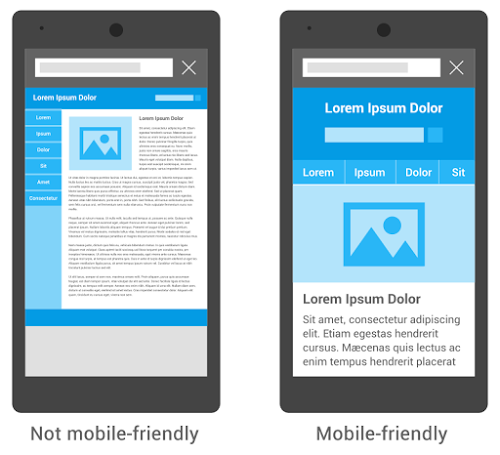
Focusing on the point that Getting good, relevant answers when you search shouldn’t depend on what device you’re using, Google has announced that,  “Beginning of May 2016, we’ll start rolling out an update to mobile search results that increases the effect of the ranking signal to help our users find even more pages that are relevant and mobile-friendly.”

Google recommends checking out the Mobile-Friendly Test and the Webmaster Mobile Guide, both of which provide guidance on how to improve your mobile site.

If you've already made your site mobile-friendly, you will not be impacted by this update. The blog post also mentions that the intent of the search query is still a very strong signal and if the content of the page is very superior and in-depth related to the search query then a page which is not mobile-friendly, may rank in the search results.

Google Guidelines : How To Review Free Products On Your Blog

With online marketing becoming the norm for all businesses today, Google on the webmasters blog has published a few guidelines on how the businesses can safeguard their websites when reviewing free products they receive from companies.

Google-Best-Practices

Google says, Whether you are the company supplying the product or the blogger writing the post, below are a few best practices to ensure that this content is both useful to users and compliant with Google Webmaster Guidelines.

3 points Google mentions on the blog are:

  1.  Use the nofollow tag where appropriate.
  2.  Disclose the relationship.
  3.  Create compelling, unique content.

The nofollow tag should be used because the link that is given in such a review is not an organic one. This review is written because the free product was received. Hence it does not fall in the category of the earned links or genuine links.

Secondly, Users want to know when they’re viewing sponsored content. Also, there are laws in some countries that make disclosure of sponsorship mandatory.

Lastly, Google says, Creating compelling and informative content is something which will add value to the whole post/review. As the write-up should give a lot of information about the product, but should also weigh its pros and cons.

The review should help the user to get a correct idea about the product and help him/her to take a decision. This will also offer a compelling reason for the users to come back for more such reviews.

This kind of an approach will in the long run benefit the user, the blogger and also the company who has offered the free product.

Beware: Google Can Take Manual Action Against Any Unwanted Sneaky Redirects For Mobile Users

Google yesterday posted on its official blog that website owners should get rid of unwanted sneaky redirects.

Google says:

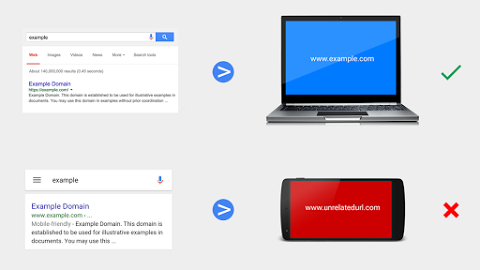
Redirecting mobile users to improve their mobile experience (like redirecting mobile users from example.com/url1 to m.example.com/url1) is often beneficial to them. But redirecting mobile users sneakily to a different content is bad for user experience and is against Google’s webmaster guidelines.

Google has always been focusing and rewarding good user experience. If a URL opens normally on a desktop but an unrelated URL opens when clicking a search result using a smartphone then it is a frustrating experience for the user .

Sneaky Redirects For Mobile Users

Google's advice and tips on how to detect and handle these redirects:

  • Sometimes webmasters intentionally redirect URLS when accessed via a mobile. These kind of redirects are a violation of rules and Google can take manual action to against it if harms the user experience.
  • Sometimes website owners are not aware about it but the URLs have a sneaky redirect due to some advertising schemes and scripts which redirect the user to a completely irrelevant URL. This can happen even when the website has been hacked and scripts have been maliciously added to redirect users to other sites.

 How do I detect if my site is doing sneaky mobile redirects?

Google recommends the following:

  • Check if you are redirected when you navigate to your site on your smartphone
  • Listen to your users
  •  Monitor your users in your site’s analytics data
  • To be aware of wide changes in mobile user activity as soon as they happen, you can for example set up Google Analytics alerts.

Google says if you have detected sneaky redirects on your site then:

Some Preventive Measures Recommended By Google:

  • To ensure quality search results for our users, the Google Search Quality team can take action on such sites, including removal of URLs from our index.  When we take manual action, we send a message to the site owner via Search Console. Therefore, make sure you’ve set up a Search Console account.
  • Be sure to choose advertisers who are transparent on how they handle user traffic, to avoid unknowingly redirecting your own users. If you are interested in trust-building in the online advertising space, you may check out industry-wide best practices when participating in ad networks. For example, the Trustworthy Accountability Group’s (Interactive Advertising Bureau) Inventory Quality Guidelines are a good place to start. There are many ways to monetize your content with mobile solutions that provide a high quality user experience, be sure to use them.
  • Read more information on sneaky redirects on https://support.google.com/webmasters/answer/2721217?hl=en

Artificial Intelligence And RankBrain  & Why The Semantic Web Is The Future

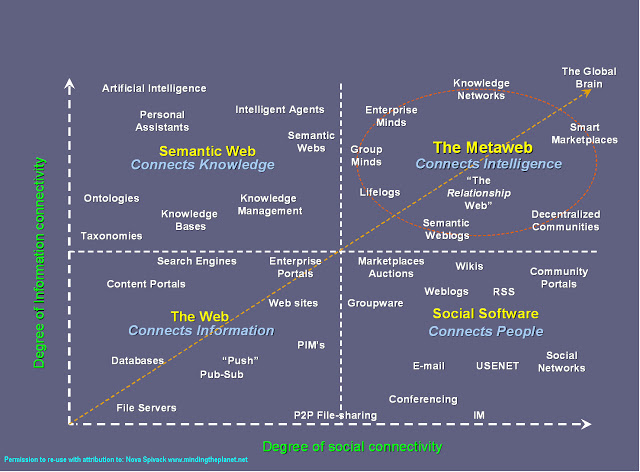
Google announced recently that RankBrain is Google’s name for a machine-learning artificial intelligence system that’s used to help process its search results. They also added that RankBrain is one of the “hundreds” of signals that go into an algorithm that determines what results appear on a Google search page and where they are ranked. In the few months it has been deployed, RankBrain has become the third-most important signal contributing to the result of a search query. We have been also recently been talking about the semantic web .In one of our previous blog posts http://www.webpro.in/how-the-semantic-web-html5-microformats-and-seo-are-inter-linked/  the 4 quadrants which  explain the information and social connectivity very effectively have the semantic web and artificial intelligence in the same quadrant. The semantic web connects knowledge.

Semantic Web And AI

Semantics is about "real objects and imaginary concepts and the particular relations between them!" (cf. Berners-Lee 94) And the field that knows how to do this is AI (Artificial Intelligence)! (We call it "knowledge representation"!) According to James Hendler in one of his presentation about the semantic web he says: knowledge representation … is currently in a state comparable to that of hypertext before the advent of the web: it is clearly a good idea, and some very nice demonstrations exist, but it has not yet changed the world. It contains the seeds of important applications, but to unleash its full power it must be linked into a single global system. -- Berners-Lee, Hendler, Lassila, 2001. RankBrain the machine-learning artificial intelligence system is a software which is integrated into the algorithm to mathematically connect words and phrases. An interesting paper on Distributed Representations of Words and Phrases and their Compositionality  explains the way words and phrases can be mathematically connected. In this paper Google has mentioned :

  • Distributed representations of words in a vector space help learning algorithms to achieve better performance in natural language processing tasks by grouping similar words
  • Word representations are limited by their inability to represent idiomatic phrases that are not compositions of the individual words. For example, “Boston Globe” is a newspaper, and so it is not a natural combination of the meanings of “Boston” and “Globe”
  • Other techniques that aim to represent meaning of sentences by composing the word vectors, such as the recursive autoencoders , would also benefit from using phrase vectors instead of the word vectors.
  • The extension from word based to phrase based models is relatively simple. First we identify a large number of phrases using a data-driven approach, and then we treat the phrases as individual tokens during the training. To evaluate the quality of the phrase vectors, we developed a test set of analogical reasoning tasks that contains both words and phrases. A typical analogy pair from our test set is “Montreal”:“Montreal Canadiens”::“Toronto”:“Toronto Maple Leafs”. It is considered to have been answered correctly if the nearest representation to vec(“Montreal Canadiens”) - vec(“Montreal”) + vec(“Toronto”) is vec(“Toronto Maple Leafs”).  We found that simple vector addition can often produce meaningful results. For example, vec(“Russia”) + vec(“river”) is close to vec(“Volga River”), and vec(“Germany”) + vec(“capital”) is close to vec(“Berlin”). This compositionality suggests that a non-obvious degree of language understanding can be obtained by using basic mathematical operations on the word vector representations.
  • A very interesting result of this work is that the word vectors can be somewhat meaningfully combined using just simple vector addition. Another approach for learning representations of phrases presented in this paper is to simply represent the phrases with a single token. Combination of these two approaches gives a powerful yet simple way how to represent longer pieces of text, while having minimal computational complexity. Our work can thus be seen as complementary to the existing approach that attempts to represent phrases using recursive matrix-vector operations .

According to Google's senior research scientist Greg Corrado Once RankBrain analyzes the text through vectors, it can isolate words or phrases it doesn't understand. It can then guess the meaning based on similar words and phrases and filter the results accordingly. When a search takes place on Google, the search query now will be accessed by the RankBrain program/software to deliver more relevant search results. Especially if the query is a rare one. By making the query accessible to software (RankBrain), the software will essentially become able to understand knowledge, think about knowledge via mathematical computations using word and phrase vectors, and create new knowledge. In other words, software will be able to be more intelligent – not as intelligent as humans perhaps, but more intelligent than say, the word to word mapping is today. Especially for rare queries which need to be understood to deliver results. As Semantics adds extra information to help you with the meaning of the information. Websites using Schemas will be able to get more correlated to the contextual content.

Why schemas will become increasingly important from the SEO perspective?

The Semantic Web does not only exist on Web pages.Web 3.0 works inside of applications and databases, not just on Web pages. Calling it a “Web” is a misnomer of sorts — it’s not just about the Web, it’s about all information, data and applications. More information on http://www.w3.org/DesignIssues/LinkedData.html As the data on the web goes on expanding and the snowball of data gradually becoming an avalanche , as James Hendler says, a little semantic will go a long way.

The Semantic Web isn't just about putting data on the web. It is about making links, so that a person or machine can explore the web of data.  With linked data, when you have some of it, you can find other, related, data.

In the video below James Hendler mentions that  Mr. Guha who started Schema.org said that Google uses the RDF/Microformats and he mentioned at the WWW conference that 20%  (5 million domains) have schemas on it (Video 41:48).  He says in 2001 Google had said that they would not be using schemas in a big way but now they have integrated it in the search algorithm. The knowledge graph is one such example.  Google Turning Its Lucrative Web Search Over to AI Machines (Bloomberg Video) // In this new quality era of search we have to move our focus away from keywords and focus more on the keyness factor of the content which has the potential to correlate to searches made on the search engines as the semantic web adds more meaning to the query for a search rather than just mapping words during the search process. (Note: I know there is no such word as "keyness" but by the "keyness factor" I mean the the correlation, relevance, and the essence of the content rather than the actual word to word keyword mapping.)

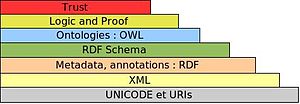
Semantic Layer

As you can see in the image above, we have URI and Unicode as the basis of the web. This can be called the first step which adds the keyness to the webpage and the content of that page that you want to promote organically on search engines or on the web. The keyness factor can be derived from the context of the terms, terminolgy and text used in the content of URl, title, headings, anchor text of the inbound links, alt text used on images, schema codes, meta tags, microformats and body text. If we focus on the keyness factor and try to cater to correlate to a wide range of keyword data rather than focusing on the keywords alone in the URLs, titles and descriptions it gets passed on to the next layer of the emerging web, making the pages pass on more correlation and relevance and also syncs the on page signals with the off-page signals which get directly indexed in the search engines in the form of feeds and sitemaps. More about keyness, Semantic Web and correlation  on http://searchenginewatch.com/sew/opinion/2214849/googles-knowledge-graph-implications-for-search-seo Of course the web today is also about mobility, security and interaction (Social Media) but as an SEO I think representing content in the form of structured data as much as possible will surely be one of the ways to future proof the search presence of any website as  datasets of any schema surely add meaning to the content for any crawler in the form of the meaningful records and fields.

What Is RankBrain ? - The Machine Learning Technology By Google For Search

The Bloomberg article a few days back reported that  Greg Corrado, a senior research scientist at Google outlined for the first time the emerging role of AI in search.

Greg Corrado said:

RankBrain uses artificial intelligence to embed vast amounts of written language into mathematical entities -- called vectors -- that the computer can understand. If RankBrain sees a word or phrase it isn’t familiar with, the machine can make a guess as to what words or phrases might have a similar meaning and filter the result accordingly, making it more effective at handling never-before-seen search queries.

“Search is the cornerstone of Google,” Corrado said. “Machine learning isn’t just a magic syrup that you pour onto a problem and it makes it better. It took a lot of thought and care in order to build something that we really thought was worth doing.”

RankBrain is Google’s name for a machine-learning artificial intelligence system that’s used to help process its search results, as was reported by Bloomberg and also confirmed to Search Engine Land by Google.

RankBrain- Artificial Intelligence Google


 What Is Artificial Intelligence (AI)?

AI is the science and engineering of making intelligent machines, especially intelligent computer programs. It is related to the similar task of using computers to understand human intelligence. Intelligence involves mechanisms, and AI research has discovered how to make computers carry out some of them.

What Is RankBrain?

Corrado said, RankBrain is one of the “hundreds” of signals that go into an algorithm that determines what results appear on a Google search page and where they are ranked. In the few months it has been deployed, RankBrain has become the third-most important signal contributing to the result of a search query.

Danny Sullivan in his article on SEL wrote:

it seems much more likely that RankBrain is somehow helping Google better classify pages based on the content they contain. RankBrain might be able to better summarize what a page is about than Google’s existing systems have done. (But Google isn’t saying anything other than there’s a ranking component involved.)

As Google told SEL, it can see patterns between seemingly unconnected complex searches to understand how they’re actually similar to each other. This learning, in turn, allows it to better understand future complex searches and whether they’re related to particular topics. Most important, from what Google told us, it can then associate these groups of searches with results that it thinks searchers will like the most.

Google didn’t provide examples of groups of searches or give details on how RankBrain guesses at what are the best pages. But the latter is probably because if it can translate an ambiguous search into something more specific, it can then bring back better answers.

People around the world make more than 3.5 billion Google searches every day and 15% of these queries have never been made before. RankBrain helps Google deal with these 15% f queries. During tests Google engineers who design the algorithms correctly ranked 70% of sites from a range of search terms while, RankBrain achieved a score of 80%.

An interesting paper on Distributed Representations of Words and Phrases and their Compositionality  explains the way words and phrases can be mathematically connected.

SMX East 2015 - The Main Takeaways

SMX East is the conference which I look forward to, for meeting people from the search industry.  SMX East is usually in September or October which makes the attendees get an idea about the happenings and developments in the current year and also enriches them with the knowledge which helps them to be more prepared for the coming year.

SMX East 2015 focused on Search, Social, PPC, Youtube Video optimization,  Link Building , Content Marketing, Analytics and SEO Audits.  Of course the Evening Forum with Danny Sullivan and  the keynote conversation are the added attraction.

This time the keynote conversation was with Brad Bender, Vice President of Product Management for the Google Display Network.

At SMX it is very difficult to choose which sessions to attend. When you decide on one you think you are missing out on the other sessions. As a search marketer SEO, Social, PPC, Analytics, Youtube Video optimization,  Link Building , Content Marketing, Analytics, etc.  are all very relevant. But you have to make a choice though it is very tough to make one. (As you can check out from the 3 day SMX  Agenda)

The main highlights for me this year were the sessions on  SEO Audit, Technical SEO,  App Indexation and the keynote conversation.

The Main Takeaways of the sessions  where the Google representatives voiced their views:

The Keynote Conversation with Brad Bender, Vice President of Product Management for the Google Display Network :

The Keynote Conversation with Brad Bender - SMX East 2015


  • We used to go online but now we live online.
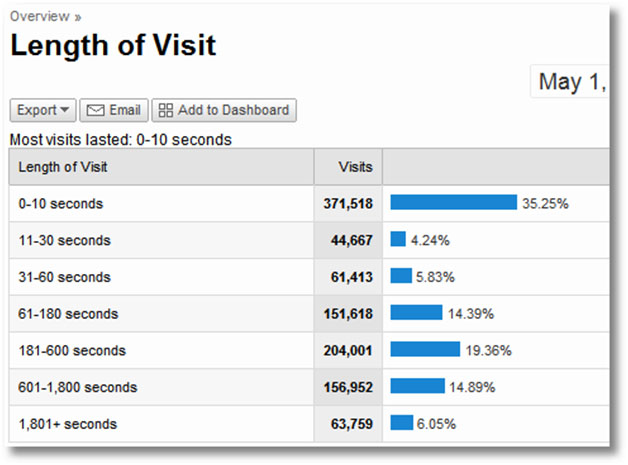
  • The attention span of the online user is less than 8 seconds now which is less than a gold fish attention span.
  • Consumers go up to 6 times to a website before they decide.
  • There are two types of audience, the affinity audience and the In Market audience.
  • The Affinity audience is the broad category which may or may not purchase.
  • The In Market audience is the people who actually want to purchase.
  • Programmatic technology reaches the targeted audience, drives relevancy and helps convert.
  • The customer journey is no longer linear.
  • There are cross device views and the main challenge is to stitch all these cross device paths to achieve conversions.
  • Users keep shifting from the webbed App world to the Apped web world.
  • Many times the clicks from the mobile are not intended or real . Google calls it the fat finger problem. This can be a serious issue for PPC campaigns.
  • Ad blockers are not only blocking bad ads. But good ads. Too get blocked.
  • Ad blocking deprives you of content which comes to you for free and which is usually targeted to your search intent.
  • By a recent study by Google, due to Ad. Blockers 56% display Ads, 46% Video ads and 65% of mobile Ads. Go unseen.
  • Last year 70 billion add impressions were blocked by ad. blockers.

Beyond The Web: Why App Deep Linking Is The Next Big Thing

Many users prefer downloading  Apps rather than going to the website on their smart phones especially if they are regularly and frequently using a certain website. Moreover people are also searching for apps online for their specific requirements. Hence how can you make your App more visible in search engines?

Mariya Moeva Webmaster Trends Analyst at  Google. - SMX Eat 2015

Here are some tips as shared by Mariya Moeva Webmaster Trends Analyst at  Google.

  • Use HTTP schemes when developing Apps.
  • Site and App association is the key.
  • Publish deep links.
  • Add the App to search console. g.co/searchconsole
  • Test it by using   g.co/searchconsoletester
  • Update the Apps robots.txt and check if any screens are blocked from crawling.
  • Deep linking and App indexing is not the same.

How Types Of Search Queries Can Help You Determine The Content For The Company Blog Or Website

A lot is written about keyword research and there are many websites which give a list of probable search queries related to a particular service / product / industry.  But, to determine the perfect list of search queries which the targeted segment is actually using and which will maximize the inbound traffic  is a challenging task for the  website owners and SEOs .

The next daunting task is to keep the blog active with regular, topical, relevant  and fresh content which  calls for preparing a list of blog post ideas to fill the editorial calendar.

I am not a type of SEO who spends a lot of time on keyword research as I think if the content on the website is written keeping the user in mind, then half the battle is won. The other half which is the search engines is taken care of if the content is informative, unique and the technical SEO is up to the mark.

As the competition on the web goes on increasing and the search engine index goes on widening multi-fold on a daily or rather hourly basis, achieving an extensive search presence for a business and at the same time  getting that presence correlated to increasing number of search queries on a regular basis is becoming more and more important.

Hence, instead of focusing on coming up with a list of probable keywords  you want to rank for, let us divert our attention to the categories in which the search queries can be divided. Each category will have a list of key phrases you want the website to rank for.

Every industry more or less has the following categories for the search queries:

type of search queries


  • Brand Searches
  • Questions about the product / service / brand
  • Differentiation between two or more products of the same company or different companies
  • Same product referred to by different names across the globe
  • Exact Match Searches
  • Phonetic Spelling Mistakes
  • Need Based Search Queries
  • Descriptive / adjective based searches
  • Local intent search queries or queries with a mention of  a country name.
  • Queries which have a mention of a specific format of content.
  • People’s names searches ( team members and their profiles)
  • Price Related Searches
  • Review & Ratings Searches
  • Profession Search Queries 

Brand Searches:

Brand searches are the most common type of searches from people who already know about your brand  or from those people who have heard about your brand via some friends or social media. As the number of brand searches increase, it positively impacts SEO.  Hence if you are not having a prominent search presence for your brand search query then you need to work on that first. If people who have heard about your brand , search your brand name and cannot find your presence on the first page of the search engine then they will stop looking further and if they find your website URL , social media URLs , blog post URLs, etc. On the first page then they will look no further .


Questions about the product / service / brand

These type of searches have shown an increasing trend recently. Search has become more conversational and people consider a search engine as an assistant and what it to answer the questions they have. Right from a primary school kid who has questions about the project that he has to submit to his teacher to the high end professional who needs to take decisions on critical matters , all turn to Google for answers.

Hence, if people have questions about  the product you deal then having  a search presence for questions related to it is highly important. As it is always better that the people seeking answers to their queries related to your product get their answers from your company website only. This increases the trust factor and you are also assured that the information gathered by the searcher about your product is correct.

We have written a detailed blog post on :

How Brand + Product/Category Search Queries Have An Impact On Search Results. 

Queries regarding differentiation between two or more products of the same company or different companies

It is very common for people to search how one product is different from another.

For example:

  • Samsung Galaxy s6 v/s iphone 6
  • Samsung Galaxy s6 v/s Samsung Galaxy s6 Edge

Hence when a company launches a new product it is important to have content regarding how the new product compares as to the previous product the company has. If you have a search presence for  this type of a query then again the people get the information from your website rather than from some other general website which curates content regarding these topics and ranks better on search engines.

Same product referred to by different names across the globe :

Many times a single product is referred to by different names across different countries. For e.g:

Edible oil is referred as cooking oil or vegetable oil in many countries. So if you want to target the global market and your site is about edible oil refineries then care should be taken to see that the website has a good search presence for edible oil refineries , cooking oil refineries and vegetable oil refineries.

Exact Match Searches:

These are very common type of searches for products which are very famous or are in vogue. For example a teenager searching for Air Max 2015 Black Running Shoes will search for the exact term. Having a good search presence for these type of queries again helps the website owner to target this segment and get inbound traffic to the site. With the number of eCommerce sites mushrooming these days. This kind of segment will  get diverted to the third party eCommerce sites which are ranking well for this product.

Phonetic Spelling Mistakes:

There are many terms which are spelt in different ways . For e.g  jewelry or jewellery.  Trying  to have a presence for both the terms helps in reaching out to  a wider inbound  audience .

Need Based Search Queries:

Every product caters to a certain need of the potential buyer . But, sometimes the searches can be specific as per the immediate requirement. For e.g : green lace bridesmaid dresses, red woollen jacket with black leather sleeves, etc.

These type of search queries cannot be focused on but the content on the site can be specific and in details so that the particular page having this kind of a product can have a chance of  catering to these kind of queries on the search engines.

Descriptive / adjective Based Searches:

This is similar to the previous type but here the searcher is not very specific of his need. He may/may not be specific about the color but may just need a dark  colored jacket with leather sleeves. Or may just add one adjective to look for a product like – glossy paper , long dresses, beautiful designer sarees, etc.

Local intent search queries or queries with a mention of  a country name

Local search   of course is different than organic search and the factors too vary but if you want to target the local market then one cannot rely only by having a good presence in the local search results but also focus on organic search for search queries which have a local intent.

For e.g: if you have a page 1 presence in the local search results for SEO Ahmedabad then it is good but as the local search results are volatile in nature,ranking  for such a query in the organic search results also is a wise decision. Many people ignore this in favour of  targeting the global market which is not a wise decision.

Queries which have a mention of a specific format of content:

Many people search for something and they want it in PDF format or some other specific format. For e.g  leave application form pdf format , what is a blog – ppt, etc.

Having content in various formats like text, videos, podcasts, PDFs, PPTs, etc. And having a good search presence for all these formats also helps in reaching out to a wider audience. It is not necessary to have the same content in different formats on one website but these formats should by published  on relevant platforms like the videos on the Youtube channel of the company, PPTs on slideShare, PDFs in the downloads section of the website, etc. This way the digital assets of the company also increase and the company has a wider presence across the web.

People’s names/Proper Noun  Searches:

We all know that people do Google names to find out more about  them. Hence , if your website has a page for team members or their names are mentioned on the contact page then the relevant page have a potential for search presence when those names are searched. Hence, updating the pages as and when people are appointed or when they leave the organization is advisable. Else, people searching for those names can get a right/wrong impression about the company .

Price Related Searches:

People do search for products specifying the price or the range of the price that they want to buy the product for. Hence, if microformats are used for specifying pricing the potential for ranking for such search queries increases.

Review & Ratings Searches:

With social media becoming the rage on the web, people want to rely more on what others have to say about the product/service  rather than what the company has to say about their product/service. Hence , having a ratings and reviews section where people can login and publish their opinion is always beneficial and having microformats on the page for ratings and reviews helps search engines index them in the right format and correlate it for a better search presence.

Profession Search Queries:

There are many searches made related to professions . For e.g -  Eye Surgeons in India, doctors in New York,  Neurologists, etc. getting backlinks If you run a hospital and perform LASIK surgeries the most common search term targeted would be LASIK eye surgery , Laser eye surgery, etc. But if the website page which has the detailed biodata of the doctor also ranks for the queries like eye surgeons, ophthalmologists, eye doctor, etc.   it helps in reaching out to a wider inbound audience.


How to determine the topics for the next editorial calendar after the search query analysis:

Once the type of search queries you think you want your  online presence to cater to is decided, the next step is to determine the landing pages which can be selected for the search queries category-wise .

  • Check which pages are already having a good search presence for which search query.
  • List out the search queries which are not having a search presence.
  • Try to improvise on the content of the existing pages shortlisted thus or add new pages to target them.
  • If you think that adding more content on the website is not possible then write blog posts focusing those search queries which are not yet having the desired search presence.
  • Select a topic related to that search query, write in-depth content on it and publish the blog post.

This exercise not only gives us clarity about the targeted search presence which has yet to be achieved but also gives us an idea to  plan the  topics for the content calendar.

The blog is a platform where you can write fresh content on a regular basis. If the content is fresh, unique, in-depth and informative then the search presence surely gets a boost by targeting additional search queries. This also helps in establishing the identity of the company as a thought leader for that relevant industry.

Google Also Needs SEO Because It Is The World Wide Web Consortium Which Is A Standard

Recently everyone had their eyes wide open when they read  that Google wants to hire a SEO Manager.

I think it is a very logical thing as Google  also needs to be as per the World Wide Web Consortium (W3C) norms. The World Wide Web Consortium (W3C) is an international community where Member organizations, a full-time staff, and the public work together to develop Web standards. Led by Web inventor Tim Berners-Lee and CEO Jeffrey Jaffe, W3C's mission is to lead the Web to its full potential.

Search engines are not the WWW. They are a subset of the WWW superset. http://www.webpro.in/google-also-needs-seo-because-it-is-the-world-wide-web-consortium-w3c-org-which-is-a-standard-and-not-google/ http://www.webpro.in/google-also-needs-seo-because-it-is-the-world-wide-web-consortium-w3c-org-which-is-a-standard-and-not-google/ http://www.webpro.in/google-also-needs-seo-because-it-is-the-world-wide-web-consortium-w3c-org-which-is-a-standard-and-not-google/ http://www.webpro.in/google-also-needs-seo-because-it-is-the-world-wide-web-consortium-w3c-org-which-is-a-standard-and-not-google/ http://www.webpro.in/google-also-needs-seo-because-it-is-the-world-wide-web-consortium-w3c-org-which-is-a-standard-and-not-google/Search engine algorithms try to get quality signals from the web and constantly endeavour to improve the search results so that they can cater quality search results to the user.

Google And w3c.org

Search engines either integrate web standards like XML sitemaps, Schemas, Meta tags,etc. or they create their own standards like the Google created the Authorship Markup.

W3C laid the foundations of today’s Web with standards such as HTML (in 1997) and XML (in 1998).

For example Microformats is not a new concept www.microformats.org domain was registered on 26th January 2005 and since then the site is adding content on how microdata can be added to the websites.

But, it is in 2012 when Google launched the Knowledge Graph that the SEOs started focusing their attention on microdata and made it a well known norm.

From the time the term SEO has been coined, SEOs have been executing repair functions on the websites to make them search engine friendly but its high time we move on from thinking about search engines and start thinking about the quality standards which are friendly to the web eco system and build and structure our online presence (earned and owned) as per the web standards before they get accepted by the search engines.

By giving importance only to the Google algorithms we are paving the way for Google algorithms to become the standard and helping it to monopolize the web.

Hence, Google also needs to futureproof its web presence and websites as per the w3c standards and be prepared to face any kind of competition in future.

Looking For A New Job? Google Is Looking For Program Manager, Search Engine Optimization

Looking for a new job?

Google wants to hire a SEO Manager to improve its organic search presence.

Google published the vacancy on the Google careers Portal :

https://www.google.com/about/careers/search#!t=jo&jid=120105001 .

It says:

As a Program Manager for Technical SEO, you will work with cross-functional teams across Marketing, Sales, Product Development, Engineering and more to help drive organic traffic and business growth. You will take part in website development and optimization, help shape blog and social strategy, improve website code hygiene and define web architecture for international websites.

Google-Headquarters

The Google Cloud Platform (GCP) is driving the next wave of cloud computing. From lightning fast IaaS to innovate container technology to massive data analysis, GCP is pushing the envelope.http://www.webpro.in/looking-for-a-new-job-google-is-looking-for-program-manager-search-engine-optimization/ As the Cloud SEO program manager, you will be a member of both the Google Cloud Platform Marketing team and the Cloud Web Development team responsible for optimizing the customer journey through search. You will work on projects that require broad cross-functional coordination coupled with a deep knowledge of the cloud computing space.

Responsibilities

  • Architect, design, develop and maintain innovative, engaging and informative sites for a worldwide audience.
  • Maintain and develop the web code to ensure quality, content and readability by search engines.
  • Keep pace with SEO, search engine and internet marketing industry trends and developments and report changes as needed.
  • Advise, collaborate with, and synthesize feedback from Marketing, Product and Engineering partners to push for technical SEO best practices.

Minimum qualifications

  • BA/BS degree in Computer Science, Engineering or equivalent practical experience.
  • 4 years of experience developing websites and applications with SQL, HTML5, and XML.
  • 2 years of SEO experience.
  • Experience with Google App Engine, Google Custom Search, Webmaster Tools and Google Analytics and experience creating and maintaining project schedules using project management systems.

Preferred qualifications

  • Experience working with back-end SEO elements such as .htaccess, robots.txt, metadata and site speed optimization to optimize website performance.
  • Experience in quantifying marketing impact and SEO performance and strong understanding of technical SEO (sitemaps, crawl budget, canonicalization, etc.).
  • Knowledge of one or more of the following: Java, C/C++, or Python.
  • Excellent problem solving and analytical skills with the ability to dig extensively into metrics and analytics.

Think before you say... SEO IS DEAD. Even the Search Giant is serious about its organic search presence

How Social Media Impacts Search Behavior and How Search Behavior Impacts Search Results Eventually

Search queries express the search intent of the user on the search engines. Every search query is influenced by many aspects. It can be a question about:

• A new product or brand,
• It may be about a product they already know and use,
• Or it may be a product that they have seen on social media platforms and are curious to know more about,
• Or a brand which is promoting via other channels and has caught the searcher’s fancy.

Out of curiosity the user may search for:
• Product name
• Product name + Brand name
• Product Category
• Product Category + Brand name

How Social Media Presence Has An Impact On Search Behavior:

In 2009 a research explored the correlation between social media exposure and search behavior over a three month period across different verticals, including automotive, consumer packaged goods and telecommunications.In addition to looking at total internet users, consumers were divided into three segments:

• Consumers exposed only to a brand’s paid search
• Consumers exposed to social media relevant to a brand’s category . A blog, message board/forum, user review, social networking site (e.g., Facebook, MySpace, LinkedIn), Twitter/micro-blogging, or video-sharing site (e.g., YouTube, Google Video), as well as a brand’s social marketing program’s “target” sites, or sites which have the most natural potential to hold content about a brand
• Consumers exposed to influenced social media specific to a brand. Identified sites containing distributed social marketing content of a brand’s social media program

Search behavior was broken into segments based on where queries fell among stages of the purchase funnel. This included upper-funnel terms expressing awareness and consideration (industry relevant terms, general product attributes) to lower-funnel terms expressing action and loyalty (campaign brand terms, brand product terms).

The study showed searchers who engage with social media, especially those exposed to a brand’s influenced social media, are far more likely to search for lower-funnel terms compared to consumers who do not engage with social media.

Further, consumers exposed to a brand’s influenced social media and paid search programs are 2.8x more likely to search for that brand’s products compared to users who only saw paid search.

The study also showed a 50 percent CTR increase in paid search when consumers were exposed to influenced social media and paid search. This revealed consumers exposed to social media are more likely to click on a brand’s paid search ad compared to those exposed to the brand’s paid search alone. Among searchers using a brand’s product name in the query, the CTR increased from 4.5 percent to 11.8 percent when users were exposed to both influenced social media and paid search around a brand.

In organic search, consumers searching on brand product terms who have been exposed to a brand’s social marketing campaign are 2.4x more likely to click on organic links leading to the advertiser’s site than the average user seeing a brand’s paid search ad alone.

“Social media-exposed consumers are far more likely to search for brand and product-related terms, and click on a brand’s paid search ad,” according to Graham Mudd, vice president of comScore, Inc. “This finding provides strong evidence that investing in social media marketing can both increase initial brand consideration and drive higher conversion rates once the consumer has decided to purchase.”

These research results were published in 2009 when social media was just at the initial stage and everyone was just trying to learn how to use each social media platform. In 2015 we can now understand how this is having an impact on search results.

How Brand + Product/Category Search Queries Have An Impact On Search Results:

We have been talking about how search has integrated social media signals to their search algorithms. Now it is time to see its impact on search results.
Social Media is not only Facebook and Twitter but each and every foot print created on the web which has a potential of being shared further.

This is where the content comes in. Social Media presence can be fueled only by valuable content. This content can be in any format. It can be in the form of text, images, audio, video, infographic, etc. As consumers spend more time online and fragment their attention away from traditional media channels across various devices, the task is more challenging than ever before for marketers.

Media delivery has an established place in the media mix. But, search remains the dominant direct response channel. People may come to know about a brand on any social media platform but he will surely go to the search engine to search for the brand and the product and check the search results. The first 10 – 15 search results of the brand are a deciding factor. Social Media presence positively affects consumer purchase consideration, specifically through the search channel

Brand And Product Search Queries And SEO

The social media presence influences the searcher to search for the brand and the product on the search engines. As the social media presence increases (brand + product) searches also increase in number. Over a period of time, the brand gets correlated to the product. Once this correlation becomes stronger the brand’s search presence improves for those product searches.

For example if a brand deals in 5 products and wants its brand to get correlated to all the 5 products then a proper balance is needed on the social media platforms in terms of what is shared on social media. All the 5 products need an equal web presence individually to get correlated to the brand jointly.

Hence, the social media presence of any (brand + product) and (no. of search queries for that brand and product) on the search engines boost the correlation between both the terms i.e (Brand + Product/Category).

Hence to increase the no. of (brand + product) search queries one needs to have a quality web presence via social media, an updated blog, email marketing, participating in online discussions and every other media which can be shared further by the reader easily.

This clearly explains why every brand today needs a social media presence and how search presence and social media presence are integrated. Social media presence triggers the brand and product searches, the more the social media presence (as in Quality not in quantity), the more no. of brand and product search queries. These search queries coming from more no. of distinct users from different parts of the globe act as social signals for search algorithms and as the correlation increases the rankings for brand and product terms jointly and individually improve over a period of time.

The posts published on social media do not only create awareness among the users but each post gets indexed by the search engines as unique URLs. These URLs become the quality, informative and topical inbound links for the domains and establish the correlation further.

The cost of attaining a new customer is always more than that of retaining an old one. Hence it is not only important to focus on increasing online awareness of the brand and product but also focusing on how to respond to the online inquiries immediately and efficiently is equally important. The real ROI is achieved when a new aware customer becomes a loyal customer in the long run.

Hence, quality social media presence service to me is the best off-page optimization that a genuine SEO company can offer. This not only improves the search presence but also has the potential to retain the search presence and make it stable for a long time. SEO is a necessity, Content Marketing is the strategy and Social Media is the channel.

editorial-policy-WebPro-Technologies-LLP-Ahmedabad

Editorial Policy: Human Expertise, Enhanced by AI

At WebPro Technologies, our content reflects over two decades of experience in SEO and digital strategy. We believe that valuable content is built on accuracy, clarity, and insight—and that requires human judgment at every step.

From 2024 onwards, we have been using AI tools selectively to brainstorm ideas, explore perspectives, and refine language, but AI is never the final author. Every article is researched, fact-checked, and edited by our team, ensuring relevance, accuracy, and originality. AI supports our workflow, but the responsibility for quality and credibility remains entirely human.

This hybrid approach allows us to combine the efficiency of technology with the depth of human expertise, so our readers get content that is both informative and trustworthy.

At WebPro, we see AI not as a replacement for human creativity, but as a tool that helps us raise the standard of excellence in the content we share.

SEO Ahmedabad

Contact Info

802, Astron Tech Park, Satellite Road, Opp. Gulmohar Park Mall, Ahmedabad 380015, India

+91 9825025904
info@webpro.in

Daily: 9:00 am - 6:00 pm
Sunday: Closed

Copyright 2025 WebPro Technologies LLP ©  All Rights Reserved